


Stay updated with the latest - Click here to follow us on Instagram
Tags:


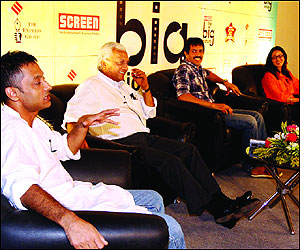
A Panel of eminent Bollywood filmmakers were unanimous that the multiplex wave in the country had allowed them to experiment more with themes and styles and draw audiences but urged that such films should not be typecast as multiplex films as that may end up doing injustice to the effort. The opinions were aired today at a panel discussion,urbane themes,gloss and technical savvy topped with high-end pricing; is Hindi cinema increasingly the preserve of NRIs and multiplex audience?, organised by the Express Groups film weekly Screen as part of its 58th anniversary celebrations. And the panel included filmmaker Kabir Khan,fresh from his success of New York,Sujoy Ghosh,maker of Jhankaar Beats and the upcoming Aladin,Little Zizou director Sooni Taraporewala and Chairman of Fame Cinema,Shyam Shroff.
Thanks to multiplexes,were now making films we couldnt possibly have made earlier, said Khan,who began as a documentary filmmaker and made a smooth transition to Bollywood with Kabul Express before delivering this years first commercial hit in New York. But asked what multiplex cinema really meant,the panelists were once again unanimous that the term is an artificial construct with no real meaning for filmmakers. Ghosh,however,agreed that certain kinds of films worked well only with a certain section of the audience. A multiplex audience is usually more accepting of different kinds of films and is more aware of trends in global cinema, he said.


Its a risk the distributor has to take, said Shroff,referring to the smaller films. A movie like Wanted or Dil Bole Hadippa can hope to have a reasonable run on all screens. But the same cant be said for a powerful,but small movie like Yeh Mera India,which wont fill the thousand-odd seats in a single screen.
The discussion also focused on whether Bollywood films no longer reflected concerns of small-town and rural India and were alienating audiences there. Khan pointed out that this has less to do with multiplexes than the fact that most filmmakers these days are starting out much younger. Very few new filmmakers have much in common with rural areas. We dont understand them and we dont want to make movies on something we cant comprehend. If I spend a year in a village and feel I know it well enough,I would make a movie about it. He also pointed out that unlike multiplex audiences at home,NRI audiences were more receptive to traditional family dramas. The diaspora is still about 10 years behind us.


Stay updated with the latest - Click here to follow us on Instagram


