Journalism of Courage



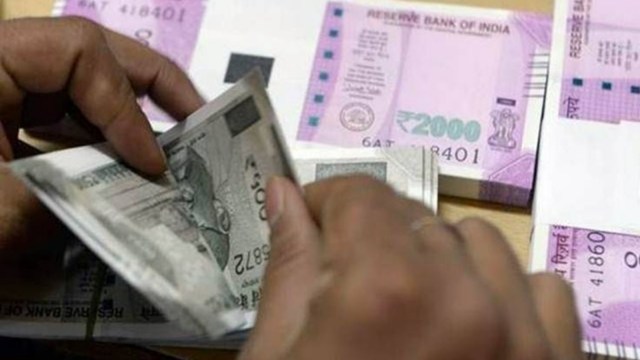 The mayor also said that the administration may release a certain share of taxes to the civic body.
Specifying that the civic body was facing “bad times” as far as financials are concerned, Chandigarh Mayor Kuldeep Kumar on Tuesday sought an additional release of Rs 200 crore from the Administrator Gulab Chand Kataria.
Kumar met Kataria on Tuesday and explained to him the financial crisis the Chandigarh Municipal Corporation has been going through.
“I requested the administrator for an additional release of Rs 200 crore to come out of the financial crisis. Every month we have been struggling to even pay the salaries of the employees. The grant every month and the revenue we collect is around Rs 45 crore a month, while the expenses are about Rs 70 crore. We are already in deficit and every month is a struggle,” Kumar said.
The mayor added that Kataria was “very positive” in his response and that he will speak with officials about it. “We are hoping for a positive reply soon,” Kumar added.
The mayor informed the administrator that the total revenue of the municipal corporation (MC) for the financial year 2023-2024 (2023-24) was Rs 1,042 crore, inclusive of grant-in-aid received from the Chandigarh Administration of Rs 560 crore.
The expenditure of the MC during 2023-24 was Rs 1,143 crore. The difference between the receipt and expenditure is short of approximately Rs 100 crore.
“Now for the coming financial year 2024-25, Rs 200 crores is required in addition to the sanctioned grant-in-aid, i.e. Rs 560 crore due to an increase in expenditure on account of arrears, salary and pension under 7th Central Pay Commission, increase in wages rate, electricity charges and other miscellaneous expenditure on the various ongoing projects,” the mayor said.
He also gave a letter written to Kataria requesting that the grant-in-aid that the civic body is being given by the administration on a monthly basis now should be given on a quarterly basis.
In a letter written to the administrator, the mayor raised that “as such, the Municipal Corporation, Chandigarh remained dependent on financial assistance provided by Chandigarh Administration in the shape of grant-in-aid”.
In addition to this, the MC’s own revenue is also being utilised to meet the day-to-day expenditure and other development works.
‘MC providing facilities on no profit, no loss basis’
Kumar also mentioned to the administrator that the civic body is providing facilities to the general public on a “no profit no loss basis”. It is further brought to notice that the municipal corporation has collected revenue following annual receipts approximately Rs 323 crore.
This includes revenue from residential and commercial property tax, water connections and bills, booking of community centres, booking of open spaces.
Other than this, it also earns revenue from Circus Ground in Sector 17; Circus Ground Manimajra-Housing Board Chowk and Exhibition Ground Sector 34, Chandigarh; and Apni Mandi and Day Market. The MC’s coffer also gets filled by money from providing space for construction materials, advertisements, auction of taxi stands, cable operators, car bazaar, enforcement penalties, auction of paid parking and rent from MC shops, tenement sites situated in Sector 52, 53, Vikas Nagar Mouli Jagran, and Gawala Colony Maloya.
The mayor also said that the administration may release a certain share of taxes to the civic body.
“Therefore, necessary instructions may be issued to the Chandigarh Administration to release the proceeds of taxes under the provisions of following Section 90(6) (a) (b) (c) (d) and (e) of Punjab Municipal Corporation Act, 1976 as extended to Chandigarh by the Punjab Municipal Corporation Law (Extension to Chandigarh) Act, 1994: Under the Indian Stamp Act 1899 on account of stamp duty on transfer of property situated within the local area of the city,” he wrote.
“Also, the same under the Punjab Motor Vehicles Taxation Act, 1924 as applicable to Chandigarh, from every person keeping a motor vehicle within the local area of the city, the same under the Punjab Electricity (Duty) Act, 1958, on the energy supplied within the local area of the city; under the Punjab Entertainments Duty Act, 1955 from every person admitted to an entertainment within the local area; under the Punjab Entertainments Tax (Cinematograph Shows) Act, 1954 from the proprietor of the premises where a public cinematograph exhibition is held within the local area of the city; were sought,” Kumar added.

 4 min read