Journalism of Courage



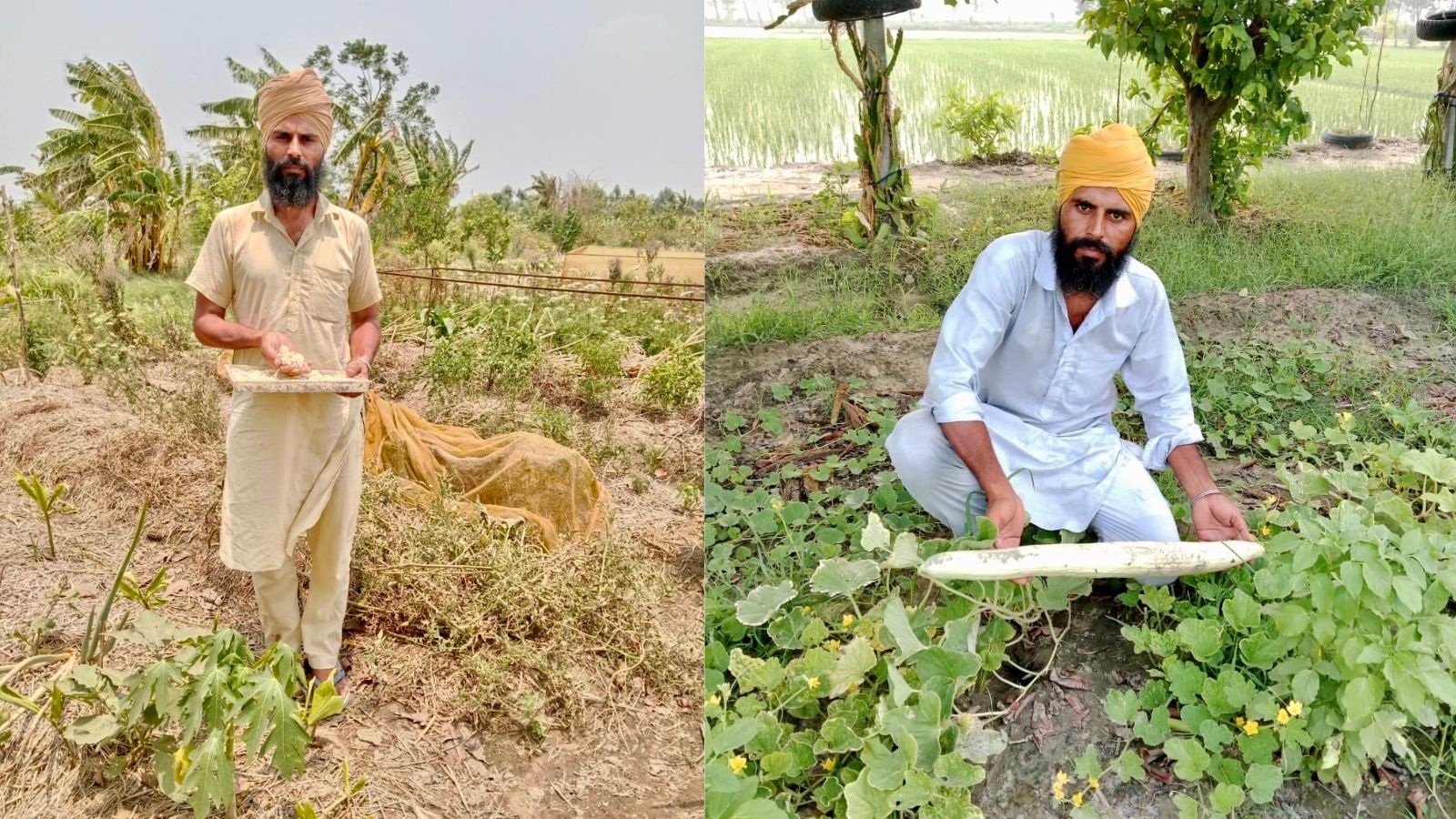 Chahal's farming journey began after he left a series of private-sector jobs following a BSc in computers, which he completed in 2012. (Express Photo)
In an era when monocropping and chemical farming have become the norm, a young farmer in Punjab’s Barnala district is leading a revolution that blends tradition with innovation.
Amrit Singh Chahal, 36, a progressive farmer from the Wahegurupura village, has redefined modern agriculture by adopting zero-budget natural farming on 8 acres of his 15-acre farm. But his efforts don’t stop there — he is also on a mission to preserve and promote rare traditional seed varieties, once staples of rural farming but now at risk of extinction, by breeding them on his fields. Chahal has built a seed bank with over 150 types of seed varieties, including rare ones like Veena Kaddu (pumpkin), Damru and Tumbi Kaddu, seeds of five coloured carrots, and much more.
On the remaining 7 acres, he grows sugarcane, wheat, and paddy, which he sells in the market during the season. Meanwhile, he stores the natural farming products for a longer period and sells them at the right time when demand is high, earning more than double the income from wheat and paddy farming with no input costs.
Chahal’s farming journey began after he left a series of private-sector jobs following a BSc in computers, which he completed in 2012. In 2016, he started zero-budget natural farming on a half-acre plot. By 2017, he fully quit his final job and committed to farming, taking over the land once worked by his father, Kulwant Singh, who practised chemical farming. While his father focused on wheat and paddy, Chahal shifted to other crops, organic and zero-budget methods.
“People used to laugh at me for leaving my job to pursue farming, but today, they show me a lot of respect and come to purchase various seed varieties from me,” said Chahal.
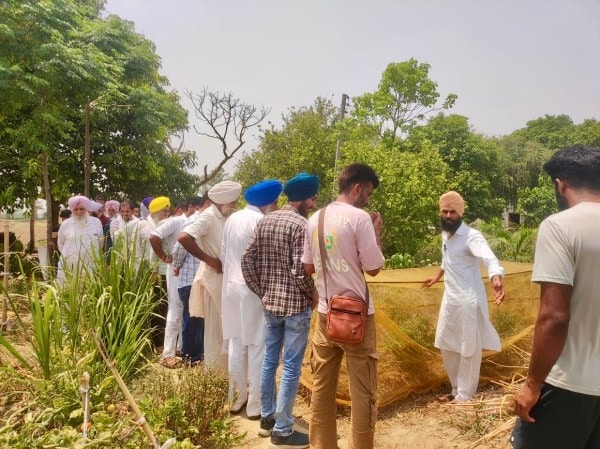 Amrit Singh Chahal training the young farmers about seed breeding. (Express Photo)
Today, his farm grows eight varieties of pulses, five types of oilseeds, several old wheat and basmati varieties, two dozen fruits, and 60-70 vegetable varieties. In addition to crops, he has preserved over 150 seed varieties, including 15 types of tomatoes, 12 varieties of brinjal like white, green, camouflage, long, small, big, etc. and 16 types of chillies, like long, round, and green, and purple, black and so on. His commitment to biodiversity is a direct response to the loss of traditional seeds due to monocropping farming practices.
According to Chahal, natural farming eliminates most input costs, with the only major expense being seeds, which he produces himself. His farming strategy is driven by weather conditions and market demand, allowing him to adjust crop areas accordingly.
How does he keep his crops healthy and protect them from pest attacks without using chemical fertilisers and pesticides?
His answer is understanding the delicate relationship between insects/pests and plants. “During one of my jobs with an NGO, I learned that there are 43 types of vegetarian insects and 162 types of carnivorous insects. Vegetarian insects feed on plant leaves and other parts, and when their population increases, the plant changes its fragrance to attract carnivorous insects. These insects, in turn, feed on the pests damaging the plants,” he explains.
This natural process eliminates the need for harmful chemicals, a stark contrast to the chemical-intensive farming methods prevalent in the state, which kill all types of insects/pests and no other way is left to control pests but to spray harmful chemicals.
He grows green manures like Barseem, Ginni grass, and others to maintain soil health and fertility. The residues from pulse crops are also left to decompose in the field, enriching the soil with nitrogen.
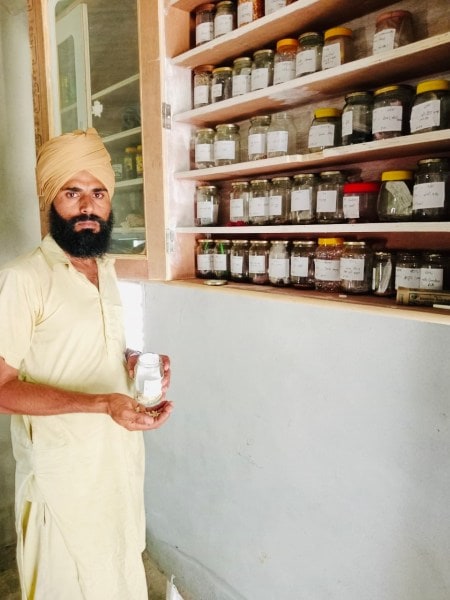 Farmer Amrit Singh Chahal showing his seed bank. (Express Photo)
As a seed breeder, Chahal is dedicated to preserving rare seed varieties, carefully setting aside beds for crops like pumpkins, brinjal, gourds, tomatoes, and chillies. To prevent cross-pollination, he ensures each bed maintains seed purity. For example, a single 18×3-foot bed (667th part of an acre) of pumpkins yields up to 9,000 seeds, sold in packets of 10 for Rs 20 each at Rs 18,000.
He rotates beds to breed different crops in their respective seasons. “I have created my own seed bank, and anyone can learn to do this, even in small areas, to become financially stable,” he says. He also grows rare pumpkin varieties like Veena Kaddu, Damru Kaddu, and Tumbi Kaddu, which are used in making musical instruments.
“I grow five types of carrots in different colours—certain colours of various food products help prevent cancer,” he adds.
In addition to vegetables, he grows traditional Basmati and wheat varieties like Sona-Moti and Bansi Gold, which fetch up to Rs 10,000 per quintal, compared to regular wheat at Rs 2,400-2,500 per quintal.
Chahal grows paddy and Basmati nurseries, where a single acre of paddy can produce enough seedlings for 100 acres of farmland, potentially earning a farmer Rs 1 lakh in a month, more than what can be earned from one acre growing both wheat and paddy in a year.
He also pointed out that large companies are sourcing seeds from farmers at a fraction of what they charge consumers in the market, often paying farmers ten times less.
Chahal is not alone in this journey. His wife Darshan Pal Kaur, an MA in history, and his mother Baljeet Kaur play instrumental roles in seed preservation. They carefully collect seeds from every vegetable or fruit they consume at home, washing and drying them before passing them to Chahal for breeding.
Chahal is passionate about the future of farming and regularly trains fellow farmers at his farm. “Understanding the role of insects and their relationship with plants is key to maximising yields in zero-budget farming,” he says.
As president of the Organic Club at Punjab Agricultural University (PAU), Chahal has received multiple awards, including recognition from the Indian Council of Agricultural Research (ICAR) and PAU, but now focuses on identifying innovative farmers in natural farming. “Rather than collecting awards, our club prefers to highlight new farmers making a difference,” he explains.
Chahal adds, “Had I not come into farming, my life would have been a waste. Now, I’m growing what I want and giving back through chemical-free food, rare seed varieties, and knowledge.” Formerly employed in various companies, he now employs four full-time and two dozen part-time workers.

 6 min read