


Stay updated with the latest - Click here to follow us on Instagram
© The Indian Express Pvt Ltd
Tags:


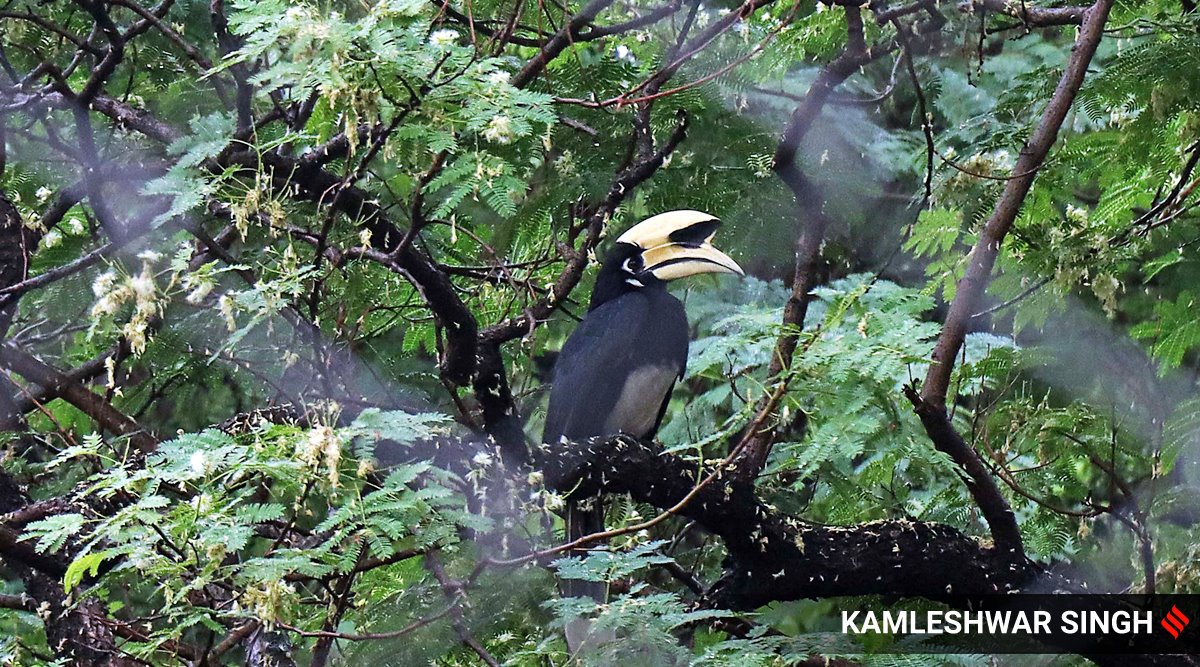
In what nature lovers see as a positive sign towards green cover, the number of Oriental Pied Hornbill (OPH) – a distinctive relative species of Indian Grey Hornbill (Chandigarh’s state bird)– has increased in Chandigarh in the last few years. The presence of OPH was recorded for the first time in Zirakpur near Chandigarh in 2014.
Although there are selective recorded sightings of this bird in the city, UT wildlife officials believe over the years, number of this bird increased and there are at least three pairs of OPH residing at Panjab University (PU), PGI and at Nagar Van.


“We are delighted to know about the presence of at least three-four pied hornbills around Chandigarh Nagar Van, where the Bird Park was situated. It is a good sign and shows the dense forest cover of Chandigarh”, Sekhon added.
Debendra Dalia, former chief conservator of forest, UT, also said that OPH is a native bird of the foothills in the northeast, “where around 90 per cent land area is forest”. However, Dalia said, “if this bird has settled down in Chandigarh, it means the bird found the city’s atmosphere suiting it”.
“As per the UT Forest department’s survey, three to four pied hornbills are in Chandigarh Nagar Van. Indeed, their sightings are not frequent,” Dalia further said.
In Kamleshwar Singh’s professional photography career of over two decades in Chandigarh, it was for the first time on May 2 that he spotted Oriental Pied Hornbill. “I was on a photo assignment when I saw it in Chandigarh Bird Park, a house of exotic birds kept in giant cages,” Singh said.
Sightings of the bird have been recorded at PU, PGI, Chandigarh Bird Park, Morni Hills and Sukhna forest reserve. Its ideal habitat includes forest, groves of mango trees and parks. Overall black in colour, it has a distinctive white eye-patch, yellow bill and a casque (found above the upper beak) which is flat from the front. It also has blue gular (throat) skin, white belly and outer tail feathers.
It is not easy to distinguish males and females as both genders look the same. Oriental Pied Hornbills breed in January and June, and feed on wild fruits, insects and shellfish. They like to stay in the cavities of trees.


Stay updated with the latest - Click here to follow us on Instagram


