Journalism of Courage



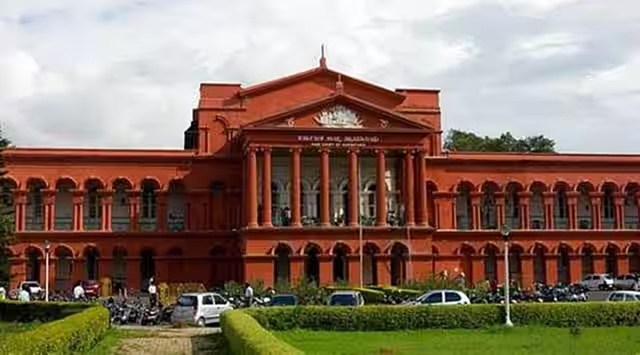 It was also pointed out that Indian Road Congress code had not been promulgated under any statute and would not give rise to justiciable action. The bench subsequently dismissed the petition. (Express File Photo)
 The Karnataka High Court has refused to interfere in the construction of a flyover in Hubli, noting that the matter is more in the nature of an executive decision than judicial and that merely because some among the petitioners had subject expertise, it would not warrant stopping the project.
A group of “public spirited citizens” had lodged a PIL in this case. The order was passed by a division bench consisting of Chief Justice Prasanna Varale and Justice Krishna Dixit on September 21.
The petitioner’s counsel argued that the project in question would end up increasing traffic congestion and was in contravention of the provisions of the Indian Road Congress in matters such as turning radius, width of cycle tracks, footpaths etc.
The respondent, the government, refuted the arguments of the petition and added that the court should not void the project when it was halfway through construction.
The court observed that it was inherently a matter for the executive to look into rather than the judiciary and said, “We decline indulgence in the matter in as much as the construction project in question essentially relates to the domain of Executive which will have the advantage of technology, feasibility and finance; courts by their very nature are ill-suited in deciding those factors, if called upon.”
The court added, ” We cannot ignore the fact that the estimated cost of the project in question is Rs 1,96,99,00,000 and such a huge project is finalised at the higher level of the Executive with all the expertise duly employed in framing it. It is not the case of petitioners that naïve personnel have finalised the project with no expertise in the field. Merely because some of the petitioners too have expertise in the matter arguably, they cannot arrogate to themselves all the wisdom and expertise and thereby brand the project in question as being unwise and not feasible.”
It was also pointed out that Indian Road Congress code had not been promulgated under any statute and would not give rise to justiciable action. The bench subsequently dismissed the petition.

 2 min read