3 min read
Stay updated with the latest - Click here to follow us on Instagram

Journalism of Courage



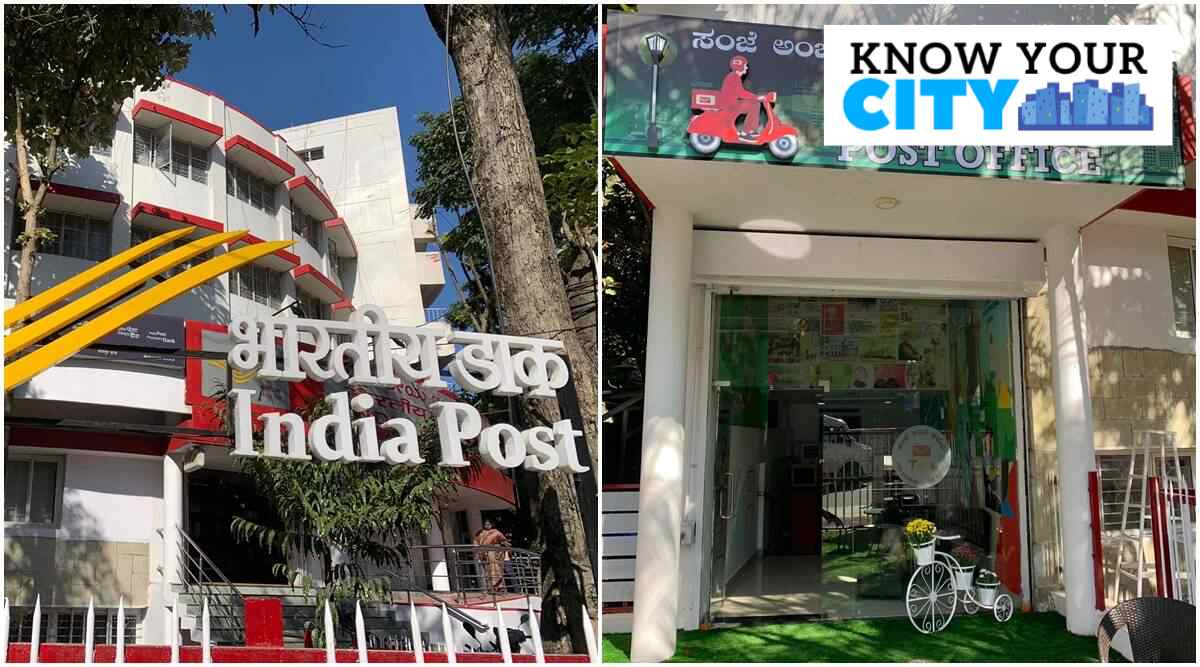 Bengaluru's first evening post office (Express Photo)
 When speaking of the remnants of the British colonial institutions surviving till date, an average Indian might think of the judiciary or the railway system. But one of the oldest survivors is in fact the postal system — surviving in the form of the General Post Office (GPO) on Raj Bhavan Road in Bengaluru.
However, although the GPO introduced a more systematic structure, the postal legacy in Karnataka does not begin and end with the British institution. It includes the ‘Anche’ postal system instituted by King Chikkadevaraja Wodeyar, a contemporary of Chhatrapati Shivaji, who also went on to purchase the city of Bengaluru from the Thanjavur Marathas for a sum of Rs 3 lakh. In Chikkadevaraja’s time, a harikara or news carrier would supervise the sending of letters, while also keeping an eye on matters that came to his notice.
Later, towards the end of the 19th century, the ‘Anche’ system was merged with the colonial postal system. It was incorporated with the then Imperial Postal Department on April 1, 1889, with a colonial report noting that it would be a net gain to the state of Rs 60,000 per month, an immense sum in those days. The report noted that with the expansion of roads and communications, it would only hamper the princely state to retain what was effectively a local system, leading to the amalgamation. Posts from the Mysore administration were still carried free of charge afterwards.
The General Post Office
Located near Cubbon Park, the GPO sits square in the heart of colonial Bengaluru. The GPO, apart from fulfilling the functions of a regular post office, is also the nerve centre of the postal system in the state which handles the administration required.
Unlike many buildings in the area, the GPO is fairly new, a product of the 20th century. According to post office records, the GPO was established here in 1862, but the current building was built after the demolition of its British-era predecessor in 1985. The new building was inaugurated by the then Prime Minister, Rajiv Gandhi.
The records also note that it was a part of the Residency in 1862, after which it was handed over to the postal service. The building was close to two centuries old at the time it was demolished and had also served as the first Imperial Post Office in the then princely state of Mysore. Other buildings which came up during this time (1871) were the Central Telegraph Office, which still stands adjacent to the GPO.
The new five-storey GPO building was built in a style echoing the Vidhana Soudha — with a domed structure and a number of large pillars made of granite and reinforced concrete.
City residents, with an interest in the history of the postal system, can also visit the Sandesha Museum of Communication on Museum Road. Interestingly, the museum is housed in the same building which contained the Government Museum in the 1870s — thus giving Museum Road its name.
Stay updated with the latest - Click here to follow us on Instagram