Premium
This is an archive article published on June 15, 2024

Sardar Sarovar Dam to be drained in preparation for above-avg rainfall

Similarly, 17 dams in Central Gujarat have 43.68 per cent water storage available with 1,025.39 MCM storage. Last year, Central Gujarat had 1,071 MCM water storage on June 13.

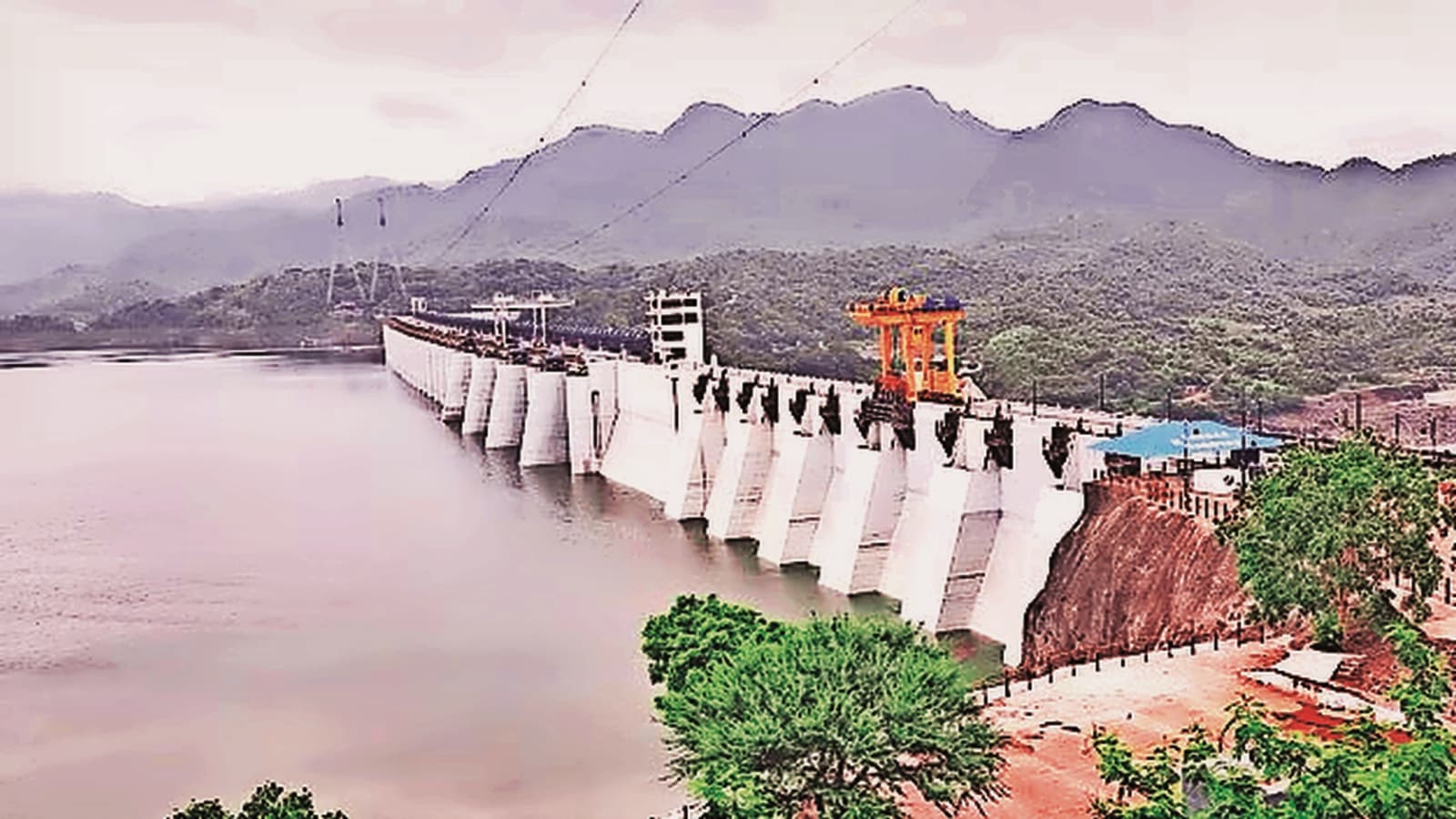
Sardar Sarovar Dam, Gujarat above-average rainfall, Gujarat rainfall, Sardar Sarovar Dam Project, SSP Narmada, SSNNL, Riverbed Powerhouse, Gujarat dams, gujarat water management, indian express newsThe SSNNL is also releasing water into the main canal to meet the demands for irrigation and drinking water. (File Photo)

With the constant inflow of water from Madhya Pradesh into the Sardar Sarovar Dam Project (SSP) in Narmada district, the Sardar Sarovar Narmada Nigam Limited (SSNNL) has decided to drain it by generating hydropower in order to prepare for monsoon. With an average inflow of about 25,000 cusecs per day from Madhya Pradesh, the SSP on Friday recorded a level of 122.28 meters with 56.35 per cent filling

The SSP is receiving an average inflow of 25,000 cusecs of water from Madhya Pradesh, where the Indirasagar and Omkareshwar dams are generating hydropower ahead of the monsoon.

The 1,200 MW Riverbed Powerhouse (RBPH) of the Sardar Sarovar Dam has also been operational since April, generating an average of 12 million units of electricity along with the Canal Head Power House (CHPH) — worth Rs 3 crores per day– to release a total of 26,000 cusecs from the dam in order to maintain the level.

Additionally, the SSNNL is also releasing water into the main canal to meet the demands for irrigation and drinking water.

SSNNL Chief Engineer RG Kanungo told The Indian Express that the dam level will be brought down to about 115 meters ahead of the monsoon in order to ensure a smooth run. “The dam is currently at a comfortable position at 122.28 meters. Since the monsoon is approaching and the forecast suggests an above-average rainfall, we have to prepare by draining the dams in order to utilise the rainwater that will come in. Therefore, Madhya Pradesh is generating hydropower to drain the two major dams upstream and the inflow received into SSP is being drained out by generating power by operating the six Francis-type reversible turbine generators of RBPH in turns. The power generation will benefit the government and also help us bring down the level of the dam to refill with the new rain water,” Kanungo said.

He added that the RBPH has been operational in limited capacity since April, as per the schedule handed out by the Sardar Sarovar Reservoir Regulation Committee of the Narmada Control Authority (NCA). “As of now, they have asked us to continue operating the powerhouses in order to release the water from the dam to ensure a safe filling up… We are only in the month of June and the new water year will begin in July. At this point, it is best to deplete the dam by generating power as the forecast for rain is above-average.”

The RBPH is releasing 17,529 cusecs of water downstream while the canal head powerhouse (CHPH) is releasing 8,214 cusecs of water into the main canal. Currently, the Sardar Sarovar dam has gross storage of 5,331.06 Million Cubic Meters (MCM) and is 56.35 per cent full with a live storage of 1,631 MCM (25.67 per cent). At 110 metres of water level, the SSP begins to draw from its dead storage.

Story continues below this ad

Out of the total gross storage of 25,323 MCM in 207 water schemes in Gujarat, including SSP, the total storage available is 10,109.56 MCM at 39.92 per cent, which is in deficit of 602 MCM as compared to the available storage in the state on June 13 last year.

According to the statistics of the Water Resources and Water Supply Department of Gujarat state, as on Thursday, dams in North Gujarat had 26.91 per cent water. A total of 15 dams in North Gujarat have a total gross storage capacity of 1929.20 Million Cubic Metres (MCM), out of which the current gross storage is 519.07 MCM, which is in deficit of 25.95 MCM compared to the gross storage in the 15 dams last year.

Similarly, 17 dams in Central Gujarat have 43.68 per cent water storage available with 1,025.39 MCM storage. Last year, Central Gujarat had 1,071 MCM water storage on June 13.

In Kutch, a total of 20 dams currently have 23.36 pper cent storage at 75.99 MCM gross storage In South Gujarat, 13 dams are filled up to 32.60 per cent with 2,805 MCM gross storage, which is 301 MCM lower than last year when the South Gujarat dams had recorded a storage of 3,107.94 MCM storage on June 13. In Saurashtra, 141 dams have a total gross storage of 352.85 MCM with 13.28 per cent filling.

Aditi Raja is an Assistant Editor with The Indian Express, stationed in Vadodara, Gujarat, with over 20 years in the field. She has been reporting from the region of Central Gujarat and Narmada district for this newspaper since 2013, which establishes her as a highly Authoritative and Trustworthy source on regional politics, administration, and critical socio-economic and environmental issues. Expertise: Core Authority & Specialization: Her reporting is characterized by a comprehensive grasp of the complex factors shaping Central Gujarat, which comprises a vast tribal population, including: Politics and Administration: In-depth analysis of dynamics within factions of political parties and how it affects the affairs in the region, visits of national leaders making prominent statements, and government policy decisions impacting the population on ground. Crucial Regional Projects: She consistently reports on the socio-economic and political impact of infrastructure projects in the region, especially the Statue of Unity, the Sardar Sarovar Project on the Narmada River, the Mumbai-Ahmedabad High Speed Rail bullet train project as well as the National Highway infrastructure. Social Justice and Human Rights: Her reporting offers deep coverage of sensitive human-interest topics, including gender, crime, and tribal issues. Her reports cover legal proceedings from various district courts as well as the Gujarat High Court (e.g., the Bilkis Bano case remission, POCSO court orders, Public Interest Litigations), the plight of tribal communities, and broader social conflicts (e.g., Kheda flogging case). Local Impact & Disaster Reporting: Excels in documenting the immediate impact of events on communities, such as the political and civic fallout of the Vadodara floods, the subsequent public anger, and the long-delayed river redevelopment projects, Harni Boat Tragedy, Air India crash, bringing out a blend of stories from the investigations as well as human emotions. Special Interest Beat: She tracks incidents concerning Non-Resident Gujaratis (NRIs) including crime and legal battles abroad, issues of illegal immigration and deportations, as well as social events connecting the local Gujarati experience to the global diaspora. ... Read More

Stay updated with the latest - Click here to follow us on Instagram

Latest Comment
Post Comment
Read Comments
Advertisement
Loading Taboola...
Advertisement