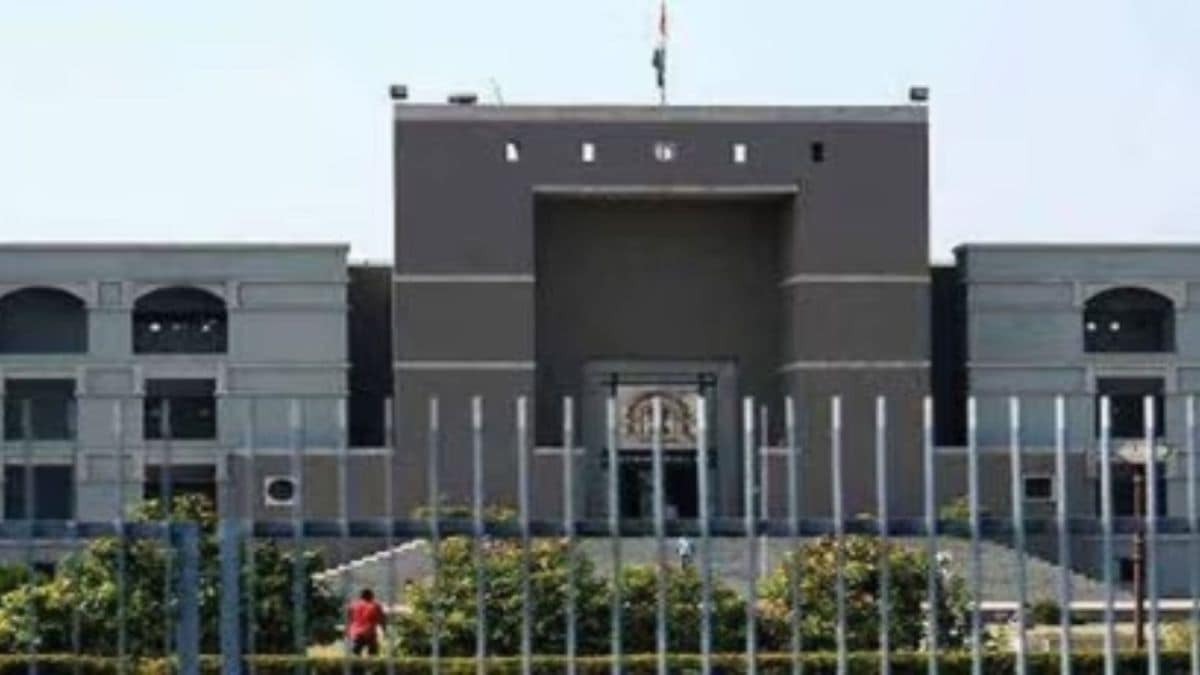
The HC has granted the petitioners time until October 16 to produce relevant documents in support of their claim.
The Gujarat High Court on Thursday ordered a seven-day status quo on the proposed demolition of eight shops in Bahiyal village of Dehgam taluka of Gandhinagar district, which, the state authorities claim, encroach on a public road.
A petition challenging the individual notices served by the Deputy Executive Engineers on October 6 was moved by the shop owners. The notice had directed the petitioners to remove encroachments on a public road within a period of two days. The HC has granted the petitioners time until October 16 to produce relevant documents in support of their claim.
You’ve Read Your Free Stories For Now
Sign up and keep reading more stories that matter to you.
After hearing the submissions of the lawyers representing the eight petitioners as well as the Government Pleader, Justice Mauna Bhatt orally ordered that the notices of October 6 be “quashed and set aside” and “be treated as a show cause notice granting seven days time to the petitioner to produce documents in support of the claim, if they have any”.
The court clarified that since the Gandhinagar administration had already passed an order of demolition of around 186 other shops in the area – the demolition of which was carried out until Thursday evening – except the eight shops due to the petition before the HC, it would be “open for the (authorities) to pass appropriate action in accordance with law after October 16”, should the petitioners fail to justify the contention of non-encroachment.
In an order dictated in the open court, Justice Bhatt said, “The petitioners have contended that the notices issued to individual petitioners is bad in law since under the said notice the petitioners have been given only two days time to remove the notice… The (petitioners) also disputed the previous notice issued to petitioners, stating that no opportunity was provided to justify their right… The petitioners are in possession of the properties and doing business for a long time. Due to the paucity of time, they were unable to produce the documents called for by the respondents…”
The court took note of the submission made by the petitioners that the October 6 notice was “abrupt” and a fall out of the communal clashes that were witnessed in the area during Navratri and “aimed at punishing one community”. The court orally said, “The said section for removal of encroachment… requires some procedure to be followed and admittedly in this case, the said procedure not being followed, the notice deserves to be quashed and set aside… Citing Rule 55 of Gujarat Panchayat (Procedural) Rules, 1977, (the petitioner’s lawyer) submitted that for taking any action under the provisions, the procedures prescribed… have to be followed… The learned advocate further submitted that there had been some communal incident during Navratri 2025 in the area where the petitioners shops are situated and this being the offshoot of that incident, this is a case of a kind of punishment to the petitioners…” The petitioners also relied upon precedents in similar cases to support their contention, which was considered by the HC.
The court also noted the submissions of the government pleader that the eight shops are part of the encroachment on the road that comes under the R&B department and have been causing traffic snarls. The government pleader also contended that since the road comes under the R&B department, the provisions of the Gujarat Panchayat Act “may not be applicable” in the case.
Aditi Raja is an Assistant Editor with The Indian Express, stationed in Vadodara, Gujarat, with over 20 years in the field. She has been reporting from the region of Central Gujarat and Narmada district for this newspaper since 2013, which establishes her as a highly Authoritative and Trustworthy source on regional politics, administration, and critical socio-economic and environmental issues.
Expertise:
Core Authority & Specialization: Her reporting is characterized by a comprehensive grasp of the complex factors shaping Central Gujarat, which comprises a vast tribal population, including:
Politics and Administration: In-depth analysis of dynamics within factions of political parties and how it affects the affairs in the region, visits of national leaders making prominent statements, and government policy decisions impacting the population on ground.
Crucial Regional Projects: She consistently reports on the socio-economic and political impact of infrastructure projects in the region, especially the Statue of Unity, the Sardar Sarovar Project on the Narmada River, the Mumbai-Ahmedabad High Speed Rail bullet train project as well as the National Highway infrastructure.
Social Justice and Human Rights: Her reporting offers deep coverage of sensitive human-interest topics, including gender, crime, and tribal issues. Her reports cover legal proceedings from various district courts as well as the Gujarat High Court (e.g., the Bilkis Bano case remission, POCSO court orders, Public Interest Litigations), the plight of tribal communities, and broader social conflicts (e.g., Kheda flogging case).
Local Impact & Disaster Reporting: Excels in documenting the immediate impact of events on communities, such as the political and civic fallout of the Vadodara floods, the subsequent public anger, and the long-delayed river redevelopment projects, Harni Boat Tragedy, Air India crash, bringing out a blend of stories from the investigations as well as human emotions.
Special Interest Beat: She tracks incidents concerning Non-Resident Gujaratis (NRIs) including crime and legal battles abroad, issues of illegal immigration and deportations, as well as social events connecting the local Gujarati experience to the global diaspora. ... Read More