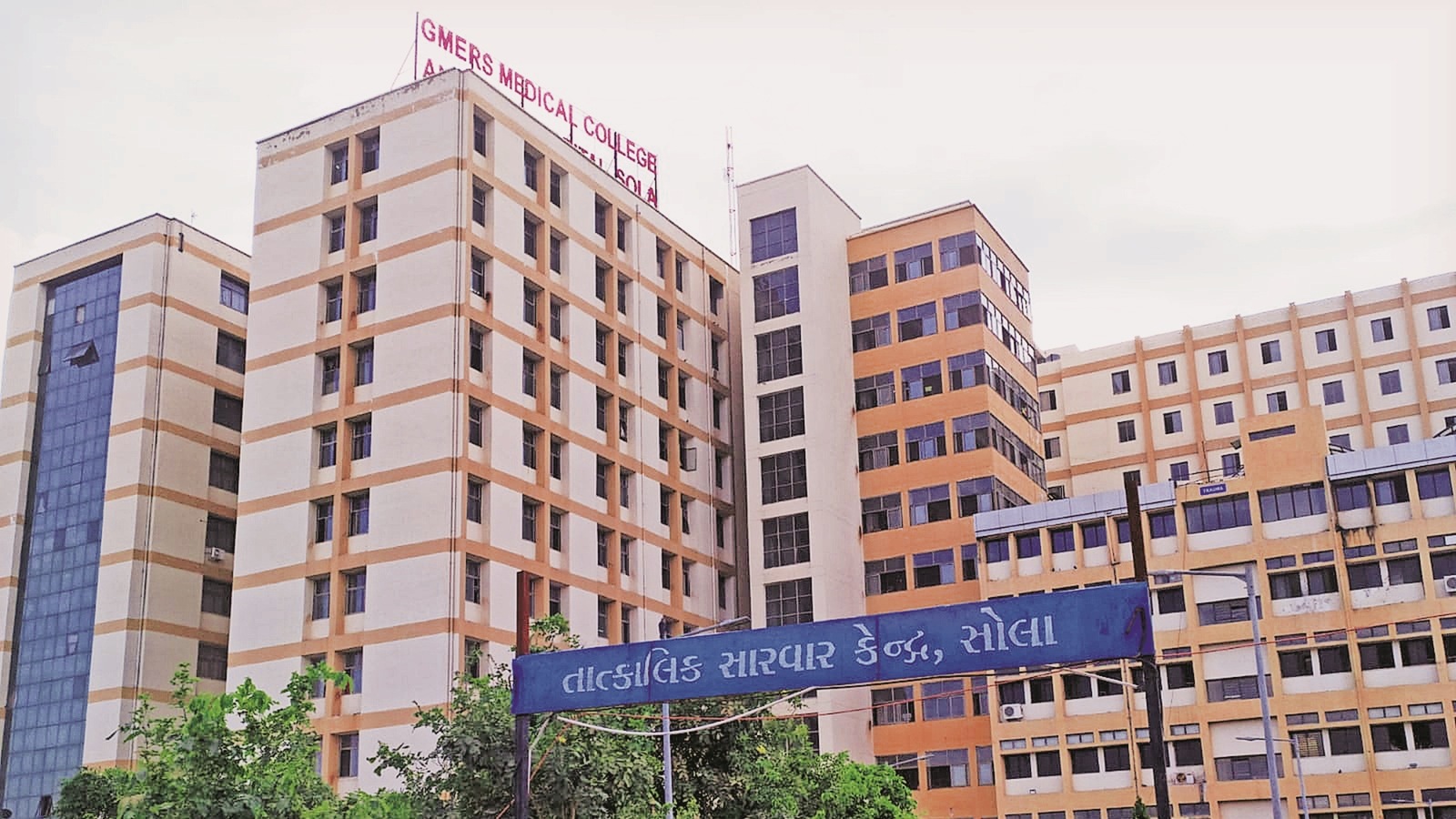
Less than two weeks ago, the Gujarat Medical Education and Research Society (GMERS)-run medical college and hospital in the state capital of Gandhinagar saw a major reshuffle in a single day. Long time in-charge Medical Superintendent Dr Niyati Lakhani as well as Dean Dr Shobhana Gupta were replaced by two professors on an “interim” basis on September 23. The rejig happened even as both Dr Lakhani and Dr Gupta had served in these roles for more than six years.

In September, Dr Yogeshanand Goswami, who held interim charge as the CEO of the Society, was replaced by Dr Manish Ramavat. The appointment, however, was yet again, on an interim basis.
Meanwhile, Dr Goswami was transferred and appointed as the dean of GMERS Sola Medical College and Hospital in Ahmedabad. This made it the only medical college of the 13 run by the Society to have a full time dean.
At all 13 hospitals linked to these medical colleges, the posts of medical superintendents are also still waiting to be filled.
Lone full time chief
The GMERS was set up through a government resolution dated August 20, 2009, under the Societies Registration Act 1960 for the management of new medical colleges that were coming up in the state. Its governing body has the Additional Chief Secretary or Principal Secretary, Health and Family Welfare, as the Chairperson besides six other government officials, by virtue of their offices.
The Society has Chief Minister Bhupendra Patel and Gujarat Health Minister Rushikesh Patel as members.
Story continues below this ad
The premise of setting up the GMERS was to “speed up” management decision making and “staff recruitment” by decentralising authority. While the state government remains in control of the institutions, the dependence on government for finances reduces as the cost of running the establishment is recovered by student fees.
As per the GMERS website, the society was set up to “meet the national need for more doctors and to improve the Human Development Index in the state by increasing the availability of qualified doctors”.
However, the on-ground situation is quite the opposite. There is only one full-time Class-I officer at the rank of dean or superintendent at the institutions operated by the GMERS — Dr Yogeshanand Goswami. Dr Goswami is the last remaining full time senior most ranking doctor at the GMERS. Other full time doctors who were given regular appointments at GMERS in 2011-12 have since been selected as professors.
Many have served for several years as the heads of their departments (HODs) while waiting for the Departmental Promotion Committees (DPCs) to elevate them to the top rank.
Story continues below this ad
Regarding departmental promotions, Dr Rajesh Desai, President, GMERS Faculty Association, says, “Recently, about 200 doctors were promoted through DPC. This is a parallel effort. However, it is high time that regular recruitment happens. We have also made a representation to conduct DPCs to promote professors to the rank of deans/ superintendents so that all the top posts that are vacant can be filled.”
In earlier interviews to select deans and superintendents, the government, on the day of the interviews, handed out fresh interim charge of these posts to other professors, leaving the candidates frustrated and dismayed at this action.
Five types of doctors
There are five types of doctors at GMERS. These include the contractual doctors who were transferred from government medical colleges and regularised after an uproar in 2014. Then, there are those on 11-month contracts. There are also those doctors who were brought on lien (loan) from government medical colleges 2013 onwards.
There are also those who were part of the merit-based ad hoc recruitment of 2019, who were regularised in 2021.
Story continues below this ad
Finally, there are those doctors – 146 of them — who were hired in an “ad hoc” recruitment process in 2022-23, when GMERS started the five new medical colleges and hospitals.
To regularise them and possibly others who aspiring to join GMERS full time, a written exam needs to be held by the next academic year.
Notably, another ad hoc recruitment was announced in January 2023 but was eventually abandoned by the Society.
The vacant posts were filled on contractual basis later, including by giving incentives of 50 per cent higher salaries in eight peripheral medical colleges and hospitals (MCH) in Valsad, Vadnagar, Junagadh, Porbandar, Godhra, Rajpipla, Morbi and Navsari.
Story continues below this ad
In September 2023, these salaries were further raised by 142 per cent in Godhra, Rajpipla and Morbi; and further by 183 per cent in clinical subjects at GMERS Porbandar MCH in what was known as a “special recruitment drive”.
While these incentives helped get contractual doctors for these peripheral institutions that otherwise had large number of vacancies, it has led to some level of disappointment among medical teachers in MCHs of major cities, who are still earning less than their counterparts in spite of doing the same work, said a doctor in Gandhinagar.
Impact on medical education, healthcare
Speaking about the contractual system, Dr Desai says, “The government has been hiring doctors on contractual basis to fill vacancies on an urgent basis and this has resulted in more doctors at the hospitals. In the long run, however, that is harmful.”“Till the time there is no regular recruitment, the contractual doctors have insecurity about their jobs and they cannot deliver at their maximum capacity. This, in turn, impacts patients and students. It also has an impact on the allocation of Masters seats at these institutions,” he adds.
While earlier there used to be rampant transfers of doctors, sometimes up to 150-200 in a single order during inspections, this year heavy fines have also been imposed by the National Medical Commission (NMC) on several medical colleges during inspections over the lack of adequate teaching staff.
Story continues below this ad
A retired professor tells The Indian Express, “The GMERS was set up to make sure there are enough medical seats in Gujarat and that students are able to avail these seats at costs lower than private colleges. However, lack of regular medical teachers, constant transfers that have been taking place for the last many years and the increase in fees that led to student protests last year and this year have eroded the good intentions with which the Society was set up.”
Meanwhile, Dr Desai says, “While contractual hiring is fast, it has been five years since the last (ad hoc) regular recruitment through the merit list. We have received assurance from the government that they are trying to conduct regular recruitment in GMERS. This will bring greater accountability, give them job security and the government can demand proper work from them. Currently, there is no adequate staff in any MCH.”
The strength of the GMERS Faculty Association is only about 650 doctors, who are regularised in the service. Meanwhile, there are more than 2,300 sanctioned posts of Class-I and Class-II medical teachers from professors to tutors in the 13 GMERS institutions.
No exam, no pay commission
“The last time there was a regular merit-based recruitment was in 2019,” says Dr Desai. “These doctors were taken on ad hoc basis and regularised in 2021. However, there has been no merit-based recruitment after that. The doctors taken on ad hoc basis in 2022-23 will have to give the upcoming written exam for regularisation,” he added.
Story continues below this ad
It was only in the academic year 2022-23 that GMERS conducted an “ad hoc recruitment” in order to fill posts at the five new medical colleges and hospitals at Morbi, Navsari, Porbandar, Rajpipla and Godhra. It was said that selected candidates would be given full time posts pending an exam equivalent to the Gujarat Public Service Commission (GPSC). Other contractual doctors are also said to be eligible to give the exam and be appointed as regularised medical teachers at GMERS upon clearing the test.
Sources said this is mandated by the terms of the 7th Central Pay Commission. A senior official who has dealt closely with the issue, tells The Indian Express, “The clause was that the 7th CPC would be implemented only if the doctors are recruited through a written exam, which has to be held within three years of hiring.”
However, two years since the last ad hoc recruitment, the draft of this plan is yet to be approved by the state government, nor has an examiner been finalised to conduct this exam, confirmed sources in the medical education branch of the Gujarat Health Department. A source privy to the development reveals, “The pattern of the examination is ready and the draft has already been placed before the Gujarat government some time ago. However, it is yet to be approved. We believe that the exam will be held by the end of this academic year itself in a mixed pattern with help from the Gujarat Public Service Commission (GPSC).”
Principal Secretary of Health Dhananjay Dwivedi who is also chairperson of GMERS, as well as Additional Director of Medical Education Dr Raghvendra Dixit remained unavailable for comment.


 9 min read



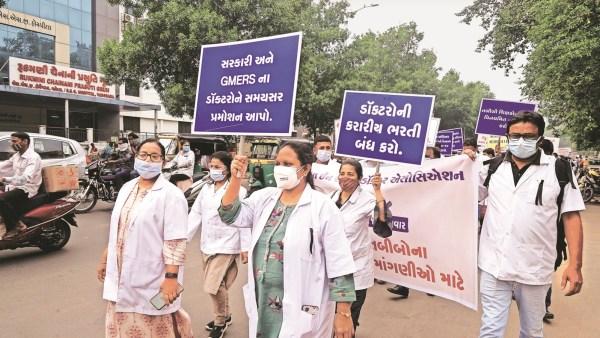 The doctors have been raising a slew of demands under the Gujarat Government Doctors Forum. (File Photo)