Health officials have repeatedly attributed "delayed case reporting" as a reason for high mortality rate. Experts, including AIIMS director Dr Randeep Guleria, echoed it and mentioned the phenomenon of happy hypoxia when the patient may appear to be mildly symptomatic even with critically low oxygen level in blood.
Written by Sohini Ghosh
Ahmedabad | May 12, 2020 01:11 AM IST
4 min read
Whatsapp
twitter
Facebook
Reddit
On May 2, the Gujarat health department made it mandatory for a person to produce approval from the chief district health officer for COVID-19 testing at any of the private laboratories. (Representationl)
On May 1, a 30-year-old professional from Ghodasar area in Ahmedabad got symptoms of coronavirus infection and called up the 104 fever helpline after recording a body temperature of 101 degrees. But he could get his samples taken at an urban health centre (UHC) only on May 6 and got his report confirming him to be COVID-19 positive on May 9.
Speaking on condition of anonymity, the patient told The Indian Express, “I called the fever helpline where I was told they would get back in 24-48 hours. I called them again the next day. They said they won’t be able to come to take samples and suggested that I go to the nearest urban health centre or to either SVP or Civil Hospital. The latter was not possible for me and to be tested at the UHC, an AMC testing team had to be available at the said UHC. I teleconsulted a doctor on May 4 who suggested COVID-19 testing for me. I tried approaching a private laboratory but they informed that teleconsultation prescriptions are not accepted.”
On May 2, the Gujarat health department made it mandatory for a person to produce approval from the chief district health officer for COVID-19 testing at any of the private laboratories. This was in addition to a doctor’s prescription, identity, address proof and Aadhaar card.
According to a private laboratory, while approval comes in within half-an-hour or an hour in the system, the process has been put in place to double-check if the person being tested has multiple symptoms and “genuinely” requires a test. “According to the government, a single symptom is not enough reason for COVID-19 test. We have seen some rejections of test requests where the patient may have had only fever but no sore throat or cough,” a private lab official said on condition of anonymity.
Additional director at health department Prakash Vaghela, on whose letterhead the May 2 notification was published, explained the rationale behind the move. “We noticed that private labs were not informing us about the tests on time and our system was not getting to know if someone tests positive there. Such a positive patient would then risk infection in many others,” said Vaghela.
In government facilities, Vaghela says, persons with suspected symptoms are admitted and are allowed to go home only if they test negative.
By May 3, the Ghodasar resident’s fever subsided though cough and sore throat persisted. After pulling some strings at AMC, he was informed that an AMC team woudl come to a UHC near his residence on May 6. Subsequently, his samples were collected.
Story continues below this ad
“They told me that if I tested positive, I would be notified within 48 hours, and if I don’t receive a communication by then, the report would be negative. I was on self-isolation from May 1. By May 8 evening, I did not receive any message. I assumed it was negative and I went back to my family. The next morning, I received a call from 104, seeking confirmation of my address. When I asked whether I tested positive, they said they did not have information on that. I called up certain AMC officials and it turned out I had tested positive.”
The patient was asked if he prefers to be hospitalised or be in home isolation. He chose the latter. Although he was with his family of 65-year-old diabetic and hypertensive father as well as his four-year-old child on May 8, the authorities said they won’t be tested unless they exhibit symptoms. The ICMR guidelines prescribe testing of symptomatic contacts of laboratory confirmed cases. It also permits testing of asymptomatic direct and high-risk contacts of a confirmed case, between day 5 and 14 of coming in contact with a laboratory-confirmed case.
“No one checked my oxygen levels or vitals when a team of three persons came on May 9 afternoon,” he added.
Health officials have repeatedly attributed “delayed case reporting” as a reason for high mortality rate. Experts, including director AIIMS Dr Randeep Guleria, echoed it and mentioned the phenomenon of happy hypoxia when the patient may appear to be mildly symptomatic even with critically low oxygen level in blood.
Sohini Ghosh is a Senior Correspondent at The Indian Express. Previously based in Ahmedabad covering Gujarat, she recently moved to the New Delhi bureau, where she primarily covers legal developments at the Delhi High Court
Professional Profile
Background: An alumna of the Asian College of Journalism (ACJ), she previously worked with ET NOW before joining The Indian Express.
Core Beats: Her reporting is currently centered on the Delhi High Court, with a focus on high-profile constitutional disputes, disputes over intellectual property, criminal and civil cases, issues of human rights and regulatory law (especially in the areas of technology and healthcare).
Earlier Specialty: In Gujarat, she was known for her rigorous coverage in the beats of crime, law and policy, and social justice issues, including the 2002 riot cases, 2008 serial bomb blast case, 2016 flogging of Dalits in Una, among others.
She has extensively covered health in the state, including being part of the team that revealed the segregation of wards at the state’s largest government hospital on lines of faith in April 2020.
With Ahmedabad being a UNESCO heritage city, she has widely covered urban development and heritage issues, including the redevelopment of the Sabarmati Ashram
Recent Notable Articles (Late 2025)
Her recent reporting from the Delhi High Court covers major political, constitutional, corporate, and public-interest legal battles:
High-Profile Case Coverage
She has extensively covered the various legal battles - including for compensation under the aegis of North East Delhi Riots Claims Commission - pertaining to the 2020 northeast Delhi riots, as well as 1984 anti-Sikh riots.
She has also led coverage at the intersection of technology and governance, and its impact on the citizenry, from, and beyond courtrooms — such as the government’s stakeholder consultations for framing AI-Deepfake policy.
Signature Style
Sohini is recognized for her sustained reporting from courtrooms and beyond. She specialises in breaking down dense legal arguments to make legalese accessible for readers. Her transition from Gujarat to Delhi has seen her expand her coverage on regulatory, corporate and intellectual property law, while maintaining a strong commitment to human rights and lacuna in the criminal justice system.
X (Twitter): @thanda_ghosh ... Read More


 4 min read


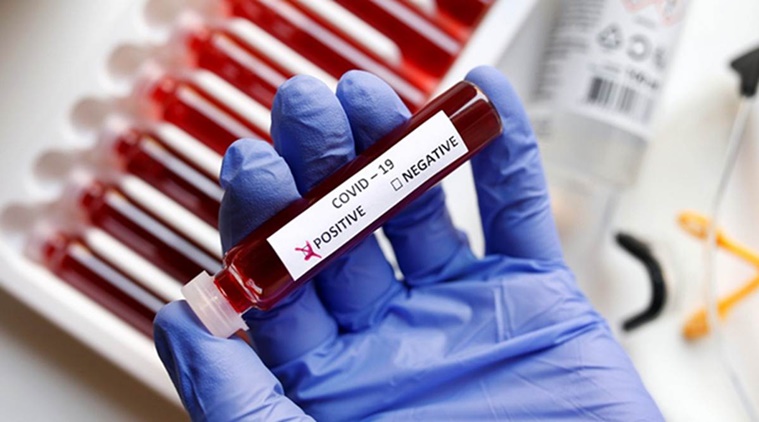 On May 2, the Gujarat health department made it mandatory for a person to produce approval from the chief district health officer for COVID-19 testing at any of the private laboratories. (Representationl)