2 min read
© IE Online Media Services Pvt Ltd



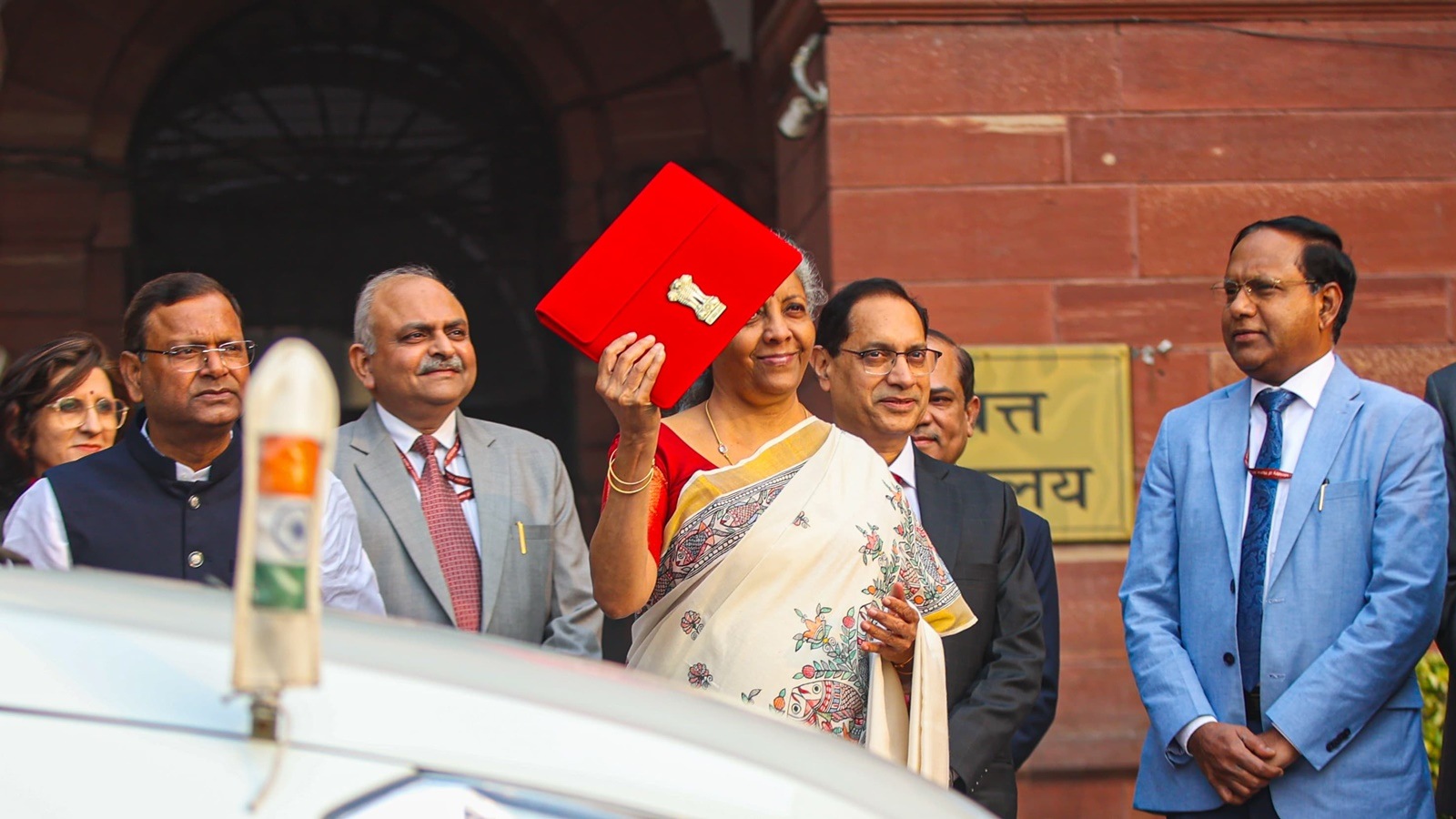 Union Minister Nirmala Sitharaman's Budget speech is underway in Parliament. (Express photo)
Union Finance Minister Nirmala Sitharaman announced that a new Income Tax Bill will be introduced in Parliament next week. While presenting the Union Budget in Parliament on Friday, Sitharaman urged Income Tax department officials to “trust first and scrutinise later.”
During the Budget speech, Sitharaman said, “In respect of criminal law, our Government had earlier ushered in Bharatiya Nyaya Sanhita replacing Bharatiya Danda Sanhita. I am happy to inform this August House and the country that the new income-tax bill will carry forward the same spirit of ‘Nyaya’. The new bill will be clear and direct in text with close to half of the present law, in terms of both chapters and words. It will be simple to understand for taxpayers and tax administration, leading to tax certainty and reduced litigation.”
In a major relief to taxpayers, Sitharaman announced that those with annual income upto Rs 12 lakh will not have to pay tax. The new tax slab is as follows: Rs 0-4 lakh — Nil, Rs 4-8 lakh — 5%, Rs 8-12 lakh — 10%, Rs 16-20 lakh — 20%, Rs 20-24 lakh — 25%, above Rs 24 lakh — 30%.
In the Budget presented by Sitharaman last year, soon after Prime Minister Narendra Modi assumed power for the third time, the new tax regime got better for the middle class with hike in standard deduction to Rs 75,000 from Rs 50,000. The tax slabs also witnessed a major change with those falling in Rs 3-7 lakh income bracket requiring to pay 5 per cent as tax while those falling in Rs 7-10 lakh and Rs 10-12 lakh to pay 10 and 15 per cent of their income as tax respectively.
Notably, the NDA government had initiated a major review of the Income Tax Act, 1961 in Budget 2024. Targeted to simplify and modernise the tax system, the reforms focussed on getting rid of ambiguities, streamlining compliance, and setting up a more predictable framework, promising a fairer and more efficient tax regime. The move gained significance as a stable and equitable tax system is crucial for investor confidence and economic competitiveness.