© The Indian Express Pvt Ltd
 6 min read


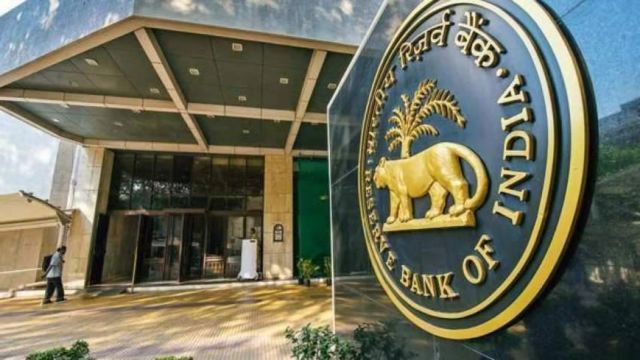 Municipal revenue receipts, which were subdued during 2020-21, grew by 22.5 per cent in 2021-22 mainly due to a rise in non-tax revenues. (PTI)
If municipal corporations across most of urban India struggle to level potholed roads or unclog drains, there is good reason for that. Urban India may well be contributing almost 60 per cent of the country’s economic output, but municipal corporations — essential service providers in urban areas — are faced with debilitating financial constraints, with property tax revenues mobilisation pegged at an abysmally low 0.12 per cent of GDP.
Result: Most municipalities have ended up becoming mere extensions of the state governments, relying heavily on transfers from the state administration or the central governments just to stay solvent, and, in the process, struggling to retain their operational autonomy. Despite significant responsibilities, municipal corporations’ revenue receipts were quite modest — just 0.6 per cent of GDP in 2023-24 — and pale in comparison to those of the Central and State governments at 9.2 per cent and 14.6 per cent of GDP in 2023-24, respectively.
Against this backdrop, if things have to change for the better, MCs need to boost their own-source revenue stream through tax reforms, rationalising user charges, and strengthening collection mechanisms to meet the rapid growth in urbanisation and the increased demand for high-quality reliable public services in cities, a new Reserve Bank of India (RBI) study said. The report said that municipal corporations should not rely heavily on the government for revenues as it can limit their financial autonomy and capacity to plan and execute long-term projects.
“Own sources of revenues afford municipalities increased financial autonomy, stability, and enhanced capacity to strategise and execute urban development initiatives more efficiently and effectively,” the Report on Municipal Finances, released by the RBI earlier this month said. The MCs need to enhance their own sources of revenue through reforms in property tax, the rationalisation of user charges, and better collection mechanisms.
Municipal revenue receipts, which were subdued during 2020-21, grew by 22.5 per cent in 2021-22 mainly due to a rise in non-tax revenues. The growth in the revenue receipts moderated to 3.7 per cent in 2022-23 (Revised Estimate (RE)) and was budgeted to increase by 20.1 per cent in 2023-24
Despite significant responsibilities, MCs’ revenue receipts were quite modest (0.6 per cent of GDP in 2023-24) and pale in comparison to those of Central and State governments (9.2 per cent and 14.6 per cent of GDP in 2023-24, respectively).
The report said that the revenue receipts of MCs exhibit concentration, with the top 10 MCs accounting for over 58 per cent of total municipal revenue receipts. The consolidated budgets of the municipalities indicate a surplus on the revenue account. The surplus fell to Rs 1,034 crore in the pandemic year 2020-21 from Rs 4,914 crore in 2019-20. It was budgeted higher at Rs 20,819 crore in 2023-24.
It further said that the elasticity of property tax revenues, the predominant source of tax revenue for municipal corporations, can be improved through adopting property tax formulae which are more reflective of property valuation. Property taxes constitute more than 16 per cent of revenue receipts of municipal corporations and more than 60 per cent of their own tax revenue. Own tax revenue includes property tax, water tax, electricity tax, education tax, and other local taxes.
“The introduction of GIS (Geographic Information System)-based property tax mapping and digital platforms for tax collection can help improve compliance and plug revenue leakages,” the report said.
The MCs can boost their non-tax revenue streams through periodic adjustments in user charges/fees for services such as water supply, sanitation, and waste management to ensure cost recovery, while also bringing about improvements in the provision of services to the public, the report stated.
Better monitoring to stop pilferage, use of technology for enhanced efficiency, and public communication campaigns can also augment collections of user fees and charges, it said.
Non-tax revenue is dominated by fees and user charges, followed by income from investment and other income.
The total grants from the Central government and the State governments to the MCs increased by 24.9 per cent and 20.4 per cent, respectively, in 2022-23. Transfers from the Central government accounted for 2.5 per cent of the total revenue receipts of the MCs during the recent years.
“The MCs rely heavily on the upper tiers of government for revenues, which can limit their financial autonomy and capacity to plan and execute long-term projects,” the RBI report said.
This, it said, underscores the need for state-specific strategies to strengthen MC revenues and finances and achieve better urban development outcomes through reforms in local taxation, better enforcement of tax laws, and innovative non-tax revenue streams.
At the same time, given the large dependence on transfers from the state governments, timely, adequate and rule-based frameworks for transfers from the upper tier authorities would help the MCs to fulfil their functional obligations effectively and efficiently and contribute to urban development.
According to the report, it is essential that the MCs are compensated adequately and predictably through a clearly defined formula that accounts for the revenue foregone, adjustments for inflation, and the growth potential of the city economy.
The report highlighted that streamlining committed expenditures, mainly through digitalisation and process automation, can free up additional resources for capital expenditure for municipal corporations.
“The creation of public-private partnerships (PPPs) for infrastructure projects, particularly in sectors like urban transport, waste management, and renewable energy, will also help attract private investments, and permit the MCs to deliver more effectively on their objectives,” it said.
While the larger MCs are already using the municipal bonds for financing some of their infrastructure projects, other MCs can also explore municipal bonds and innovative financing instruments for capital investment for diversification of their funding sources, the report suggested.
As of March 2024, the total municipal bonds outstanding at Rs 4,204 crore was just 0.09 per cent of the total corporate bonds outstanding.
The report said that creation of mechanisms that allow MCs to pool resources for large-scale infrastructure projects will help overcome the fiscal constraints of individual corporations.