5 min read


© The Indian Express Pvt Ltd



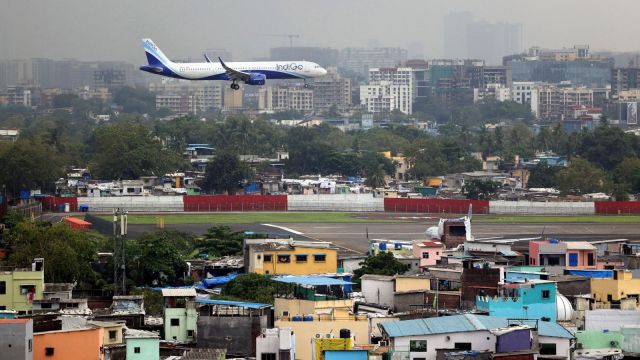 IndiGo’s under-preparedness for the second phase of the new rest and duty norms for pilots is being seen as a major reason for the crisis. (Express Photo by Amit Chakravarty)
India’s antitrust watchdog Competition Commission of India (CCI) has decided to launch a probe into the network-wide disruption faced by IndiGo earlier this month to see if India’s largest airline had violated competition rules. The CCI is likely to investigate whether IndiGo, which commands a 65 per cent share in the domestic air passenger market, had abused its dominant position in the market, according to industry insiders. A separate probe into the disruption, which brought the country’s aviation system to its knees, is underway by an inquiry panel set up by aviation regulator Directorate General of Civil Aviation (DGCA).
“The Competition Commission of India (CCI) has taken cognizance of Information filed against IndiGo in the context of the recent flight disruptions witnessed in the aviation sector, across various routes. Based on the initial assessment, the Commission has decided to proceed further in the matter in accordance with the provisions of the Competition Act, 2002,” the Commission said Thursday in a release, but did not elaborate further.
There were demands from some quarters for a CCI inquiry to determine whether IndiGo indulged in anti-competitive practices or abuse of dominant position in view of the massive operational disruption that the airline grappled with in the first week of December. The disruption led to scores of flights getting cancelled on a daily basis, leaving thousands of passengers stranded at airports across the country. On the worst day of the disruption—December 5—over 1,600 of the airline’s 2,300-plus daily flights were cancelled.
IndiGo’s under-preparedness for the second phase of the new rest and duty norms for pilots is being seen as a major reason for the crisis. The situation has since stabilised after the DGCA allowed IndiGo a temporary exemption till February 10 from a few night duty-related changes in the new Flight Duty Time Limitation (FDTL) rules for pilots. IndiGo’s operations have been stable for the past week, with the airline now operating over 2,200 daily flights. As per the DGCA, IndiGo admitted that it was short on pilots vis-à-vis the requirement under the new FDTL norms and that the disruptions arose “primarily from misjudgement and planning gaps in implementing” the rules’ second phase that took effect on November 1.
According to experts, a company’s dominance by itself is not considered anticompetitive, but abuse of dominant position is. Abuse occurs when one or more companies use their dominant market position in an exclusionary or an exploitative manner—like predatory pricing and denial of market access—that negatively impacts competition. The CCI first examines the available information to conclude whether or not there appears to have been a contravention of competition law. In cases where it infers that the rules were likely flouted, the antitrust watchdog orders a formal investigation into the matter. Among other actions, the CCI can impose hefty financial penalties—up to 10 per cent of the average turnover of the company for the past three years—if its probe reveals abuse of dominant position.
In all, Indian airlines fly around 1,200 domestic routes, of which IndiGo has over 950 routes in operation. Notably though, nearly 600—or 63 per cent—of these are monopoly routes, and about 200 (21 per cent) are duopoly routes where IndiGo has just one competitor. But experts point out that IndiGo’s monopoly on a significant number of routes and the duopoly in India’s airline sector is not really by design, and much of it can be attributed to the failure of other domestic airlines to compete effectively, and even survive. Many have gone under over the past couple of decades—Go First and Jet Airways being the biggest examples over the past few years. To that extent, it can be argued that the presence of a dominant airline means that many routes, which would otherwise shut down, are in operation.
Even beyond aviation, for India, where a growing number of sectors—for instance telecom, cement, steel, private ports, private sector airports, and specific segments within the larger e-commerce space—have seen an increase in market concentration over the past few years, the IndiGo crisis is a wake-up call about the perils of monopolies and duopolies, say experts.
They point out that while large, strong, and stable companies are desirable in every sector for efficiency, stability, and competitiveness, it gets problematic if their share of the market expands to such an extent that it smothers other players and creates a high entry barrier.
Notwithstanding the reasons for this high market concentration, such a skewed market share ratio in any industry is concerning, according to experts and some senior officials in the government. Being a customer-facing industry, the impact is far more immediate and easy to spot in the airline sector than various other sectors in the business-to-business (B2B) domain. High market concentration risks include systemic risk if the dominant players falter, fewer choices for consumers due to low competition, higher prices, less innovation, and lower quality.