


© The Indian Express Pvt Ltd
Tags:


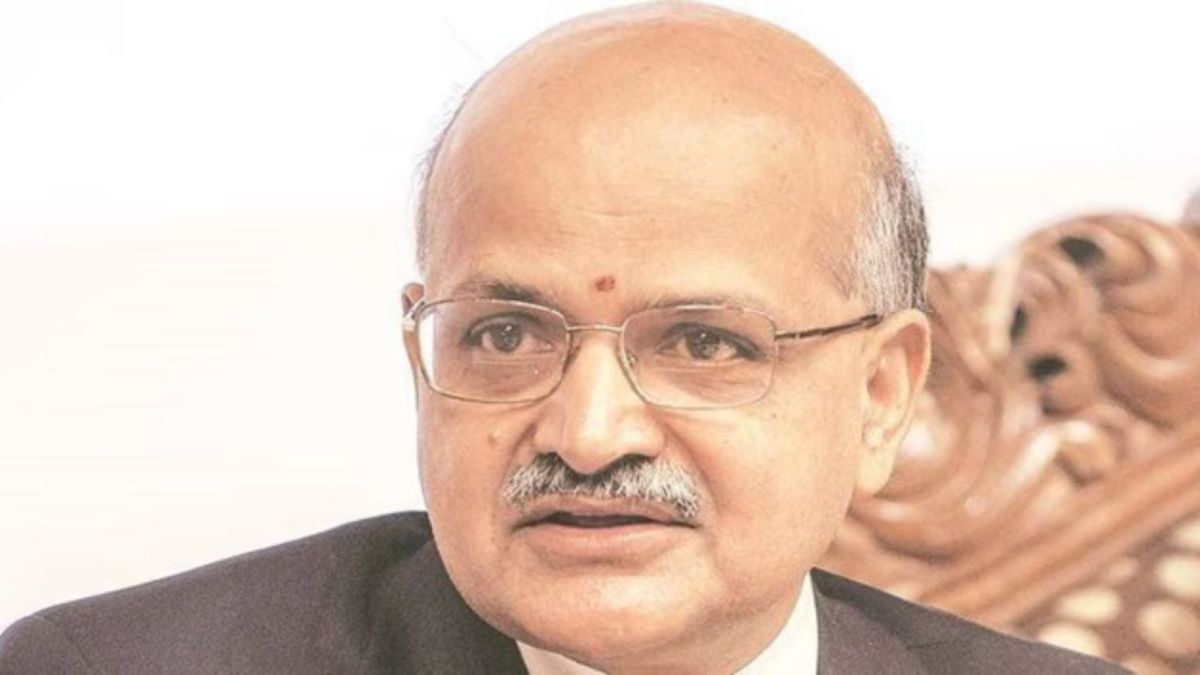
Non-tariff barriers such as the European Union’s Carbon Border Adjustment Mechanism (CBAM) are not meant to cut off trade and domestic industries must adjust to these changes in order to stay competitive, NITI Aayog CEO BVR Subrahmanyam said Friday. During his address at a business summit, Subrahmanyam also advocated for lower tariffs to enable India to become a part of global value chains and the need for fast tracking legal processes to spur greater private investments in infrastructure.
In his address at the Confederation of Indian Industry’s (CII) Annual Business Summit 2024, Subrahmanyam highlighted the need for India to get into global value chains (GVCs) to boost exports and secure supply chains.

“India is not a part of global value chains in any significant way… And to get into GVCs means a fundamental change in a lot of things. It means low tariffs and low procedures. Things have to move smoothly, seamlessly across borders. And I think there has to be a concerted effort to make India part of GVCs… We look back and we get very happy about our performance. But if you look left and right, you see our performance can be much better,” Subrahmanyam said.
In response to a question on how India should address non-tariff barriers (NTBs) such as the EU’s CBAM, which imposes a cost on the import of carbon intensive goods like steel and cement, Subrahmanyam said that he does not see these as barriers.
“If you want to sell a product in a particular location, you have to meet the standards of that place. I don’t think these barriers are put up to cut off trade because they apply equally to local as well as foreign [industries]. If there’s a CBAM in Europe… they have to meet those standards themselves and just because people from abroad don’t face the local taxes, the neutralisation happens through CBAM. I think it is time to realise that NTBs are not barriers. Labour, environment, and other issues are a part of society and if a society actually imposes conditions there, industry has to adjust. That’s the only way to be competitive. To think that we will be able to change that is futile,” he said.
On trade, Subrahmanyam also cautioned against protectionism and called for India to sign more free trade agreements (FTAs) with key trade partners. “Let wind come from all sides, from multiple doors, multiple windows. The breeze will blow outwards also… And in trade, we should go for very low tariffs. India should sign many more FTAs. We should not try to protect anybody. Sectors which have protected themselves end up getting more Ambassador cars,” he said.
Notably, average tariffs in India have jumped to 18.1 per cent in 2022 from 13 per cent eight years ago in 2014, which in turn has made India uncompetitive vis-a-vis countries such as Vietnam, Thailand and Mexico. The Indian Express had earlier reported that a section within the government is in favour of a more nuanced approach towards using tariffs as a diplomatic tool, failing which there is a possibility of squandering away gains made in India’s manufacturing-focused thrust that includes the Production Linked Incentive (PLI) scheme.

In his address, Subrahmanyam also underscored the government’s significant capex in infrastructure over the last few years but emphasised the need for greater private capital into the sector. “I think private investment in infrastructure is not there. We need to come up with new models and arrangements in which private capital is enthused into investing in infrastructure. That will also require a lot of improvements in contract management, dispute resolution, and in fast tracking our legal processes. Anybody who has run into a situation where they feel that legal redress will take 3 to 5 years, that is a cost. And that automatically is a disincentive,” Subrahmanyam said.
The NITI CEO also added that the country’s apex public policy think tank is working on three reforms which will be unveiled soon. The reforms cover the financial sector, trade, and education. “We need much bigger banks. We need a financial sector which has the muscle to service Indian firms, not just in India but across the world. We need our own JP Morgans and our own Citibanks around the world,” he said.


