This is an archive article published on February 20, 2024
Developed world using climate concerns as smokescreen to cut imports: Abhijit Das
Trade-climate policies major flashpoint between developed and developing nations at WTO’s MC13, says Abhijit Das, expert on international trade
Written by Ravi Dutta Mishra
New Delhi | Updated: February 20, 2024 11:02 PM IST
5 min read
Whatsapp
twitter
Facebook
Reddit
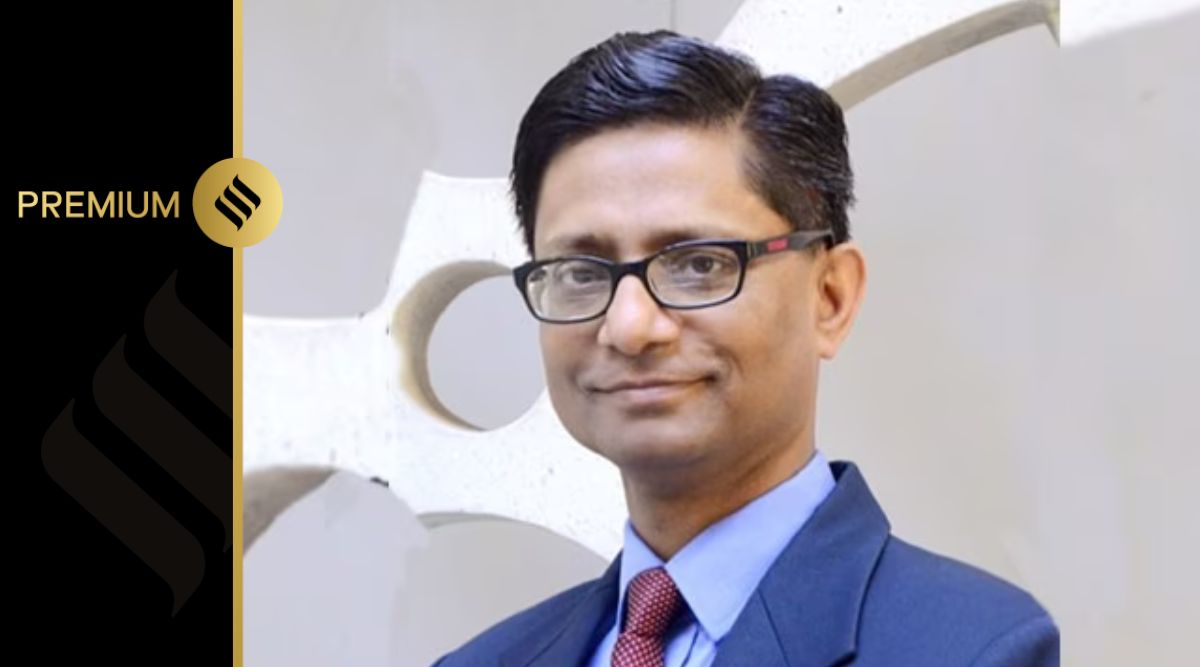
Abhijit Das, Former head, Centre for WTO Studies, Indian Institute of Foreign Trade (Express File Photo)
Stringent policies with trade-climate linkage such as European Unions (EU’s) carbon tax is less about protecting the environment, but more about promoting the commercial interests of the developed world, Abhijit Das, expert on international trade and former head, Centre for WTO Studies, Indian Institute of Foreign Trade (IIFT) said in an interview with The Indian Express.
With climate policies and food security set to take the center stage at the upcoming 13th WTO Ministerial Conference (MC 13) this month-end, Das said that India will have to rally support of WTO members as rich countries including the US have shown little political will to address issues related to food security in developing nations. Edited excerpts:
How close are we to getting a permanent solution for public stockholding at WTO amid US opposition?
During COVID-19India was able to provide free foodgrains to almost 80 crore of its population because of its public stockholding programme. India has a safety net due to the Bali Peace Clause of 2013 but there are attempts by countries with export interest in foodgrains to undermine the Bali Peace Clause. It is, therefore, important to arrive at a permanent solution to this problem. However, the developed countries, particularly the US, have not shown the necessary political will and sensitivity to address this issue. Not only have these countries failed to engage constructively and in good faith in negotiating a permanent solution, but are also trying to divert attention to other issues in agriculture. If India succeeds in rallying the support of 80 countries who had supported its stand in the past, then at MC13 we can expect some forward movement on a permanent solution.
Developed nations are increasingly merging environmental issues with trade policy. Why should India be concerned?
The developed countries are seeking to use environmental concerns as a smokescreen for impeding exports from the developing countries. It is relevant to mention that a study by the United Nations Conference on Trade and Development (UNCTAD) has estimated that the EU’s controversial carbon tax would reduce global carbon emissions by merely 0.1 per cent, but would substantially impede exports of the developing countries. The trade-climate linkage is less about protecting the environment, but more about promoting the commercial interests of the developed world. At the forthcoming MC13, India must explicitly articulate its concern on unilateral trade measures taken ostensibly for protecting the environment, such as carbon tax Further, it must not endorse any negotiation on trade and environment at the WTO.
The US has dropped some of its key demands at WTO plurilateral negotiations on digital trade. What does this mean for India in MC13 as far as e-commerce is concerned?
Story continues below this ad
Despite the US no longer pushing for provisions including cross-border data flows and prohibition on localisation, the outcome of the plurilateral negotiations on e-commerce, frequently referred to as the Joint Statement Initiative on Digital Trade, would do very little to promote India’s interests. There are many provisions in these negotiations which would prevent governments from effectively regulating big tech. While MC13 is likely to see a push to conclude these negotiations, it would be in India’s long-term interest not to endorse the final outcome on this issue.
There is an impression that a dysfunctional dispute settlement mechanism is not hurting India..
I disagree. A dysfunctional dispute settlement mechanism at the WTO adversely affects countries who cannot match the political or economic clout of the developed countries. It is in India’s interest to have a well-functioning dispute settlement mechanism. The reason why the US agreed to settle cases with India was because we had imposed retaliatory tariffs on the US.
At the WTO informal discussions are being held to reform the dispute settlement mechanism. Unfortunately, restoration of the Appellate Body, which is mandated to hear appeals against the finding of WTO dispute settlement panels, is not even figuring in these talks.
Story continues below this ad
How can India best protect the interest of fisherfolks at WTO?
At the last Ministerial Conference of the WTO held in 2022, a partial agreement on fisheries subsidies was finalized. However, negotiations on subsidies that contribute to over-capacity and over-fishing (OCOF) could not be concluded at that meeting. These negotiations have gathered considerable momentum over the past few months and some outcome on OCOF subsidies could be expected at MC13. India has been pushing hard to curtail the subsidies provided by large fishing nations, while seeking to protect the interests of its own small and poor fisherfolks. However, recent developments at the negotiating table suggest that there may not be any meaningful disciplines on countries who have contributed to the problem of dwindling fish stocks. India would have to play hardball to preserve its flexibility to provide subsidies to its poor fisherfolks
Ravi Dutta Mishra is a Principal Correspondent with The Indian Express, specializing in economic policy and financial regulations. With over five years of experience in business journalism, he provides critical coverage of the frameworks that govern India's commercial landscape.
Expertise & Focus Areas: Mishra’s reporting concentrates on the intersection of government policy and market operations. His core beats include:
Trade & Commerce: Analysis of India's import-export trends, trade agreements, and commercial policies.
Banking & Finance: Covering regulatory changes and policy decisions affecting the banking sector.
Professional Experience: Prior to joining The Indian Express, Mishra built a robust portfolio working with some of India's leading financial news organizations. His background includes tenures at:
Mint
CNBC-TV18
This diverse experience across both print and broadcast media has equipped him with a holistic understanding of financial storytelling and news cycles.
Find all stories by Ravi Dutta Mishra here ... Read More


 5 min read