Journalism of Courage
 3 min read


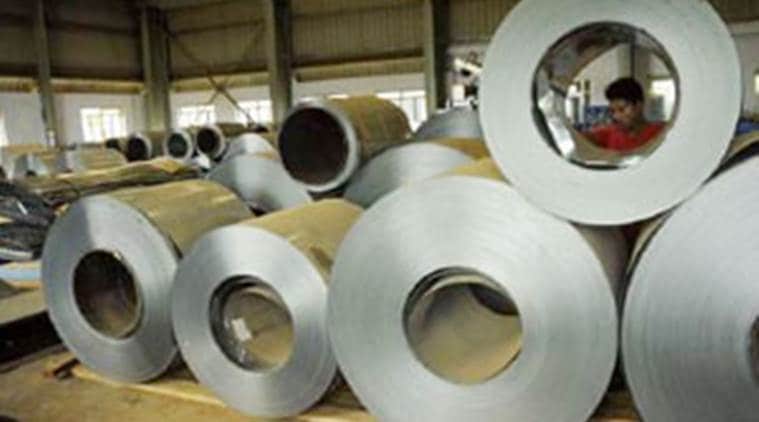 Bhushan Steel, which owes banks a whopping Rs 44,447 crore had earlier objected to the insolvency proceedings alleging that SBI had inflated the dues by around Rs100 crore. Representational Image.
The New Delhi bench of the National Company Law Tribunal (NCLT) on Wednesday admitted two separate insolvency petitions — State Bank of India (SBI) versus Bhushan Steel and Punjab National Bank (PNB) versus Bhushan Power and Steel. The two companies together owe banks more than Rs 80,000 crore, according to data sourced from Capitaline.
The principal bench comprising President M M Kumar and Member Deepa Krishnan appointed Vijaykumar V Iyer as the interim resolution professional (IRP) for Bhushan Steel and Mahender Kumar Khandelwal as the IRP for Bhushan Power and Steel. Iyer has also been appointed the IRP for Binani Cement.
Bhushan Steel, which owes banks a whopping Rs 44,447 crore had earlier objected to the insolvency proceedings alleging that SBI had inflated the dues by around Rs100 crore.
The company’s counsel had said that SBI classified both term loans and working capital as default debt but the company had not received a recall notice for the entire amount.
The counsel claimed 65 per cent of the debt referred to as default was in the form of working capital.
“By no stretch of imagination, the NCLT has been entrusted with the function to determine the amount of default. The only issue for us to examine is whether in terms of Section 4 of IBC the amount of default is rupee Rs 1 lakh or more than that, then the requirement stands satisfied,” the bench observed in its final order.
The IRP, along with a committee of creditors (CoC), will come up with a resolution plan. If the committee is unable to find a solution within 180 days — this can be extended to 270 days — the company will be liquidated.
Other companies to be admitted to the NCLT include Jyoti Structures, Monnet Ispat, Alok Industries, Amtek Auto, Era Infra and Electrosteel Steels.
Last week, the privately held Bhushan Power, which owes lenders a little over Rs 37,000 crore had not objected to the insolvency proceedings but requested the court to ensure the company was treated as a ‘going concern’. Having heard the arguments, the tribunal had reserved its order at the previous hearing.