


© IE Online Media Services Pvt Ltd
Tags:


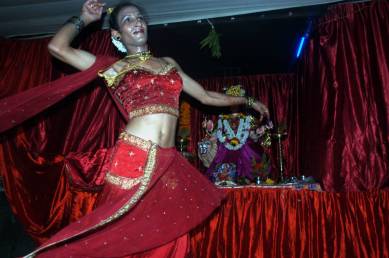
Member of Parliament Shashi Tharoor, will on Friday, move a bill for scrapping Section 377 which criminalises homosexuality between consenting adults. Earlier, DMK MP Tiruchi Siva had proposed a bill on transgender rights which Rajya Sabha had passed. As the bills move through the Houses, conversations about transgender and homosexual rights must take into account the rights of the long-marginalised eunuch community in India. Ostracised by society and ignored by the State – with discrimination in terms of access to education, employment and health care – most eunuchs eke out a living by performing in weddings and birth ceremonies or begging.
Thus, they face regular harassment and abuse by the police under allegations of nuisance, soliciting and sex work.


The historical records show their long recognition, if not wholesome acceptance in the society. It is believed that in the ancient and medieval periods of Indian history eunuchs were an existing institution. Eunuchs were employed by the kings to as guards of the queen’s quarters or of the royal kitchens. Many in these courts rose to positions of political importance and were very active in court politics, especially during the reign of Khiljis. The Mughal period further brought the eunuchs into prominence especially during the rule of Shah Jahan and Akbar. Eunuchs could become leaders of military or civil departments. Similar institutions were also in place among the Rajputs. However, it should be noted that these instances were exceptions rather than rule and these accounts present little assistance in explaining the present state of eunuchs in India.
Democracy has meant that eunuchs have begun mobilising politically in the hope that increased political participation leads to transformative politics. Shabnam Mausi was the first eunuch to be elected the member of the Madhya Pradesh (MP) legislative Assembly from 1998 to 2003. She said that eunuch upliftment – particularly the issue of AIDS (awareness as well as discrimination) forms her central concern apart from fighting corruption, unemployment and poverty. In 2003, Eunuchs in MP announced establishing their own political party called ‘Jeeti Jitai Politics’. In 2004 Shweta, another eunuch and chief of the District Kinnar (Transgender) Association in Uttar Pradesh had contested Lok Sabha elections from Ballia Parliamentary constituency as an independent candidate. In the past, voters of Gorakhpur had elected Asha Devi, a eunuch, as the Mayor. In January 2015, independent candidate Madhu Bai Kinnar was elected as the mayor of Raigarh, Chhattisgarh.
However, the real achievement thus, of the eunuch political parties and candidates will not be just the facilitation of economic opportunities but will be in forcing the societal re-examination of gender and sex roles and classifications it operates by. Also while cross cultural research has begun to question the content of gender categories and the mutual exclusivity of masculine and feminine, the view that sex is dichotomous and unchanging over the individual’s lifetime continues to maintain its authoritative position in the societal understanding with little dissent. The existence of eunuchs in the society, challenges the system not only to acknowledge multiple sexes, but also to accept the idea, in myth and reality, that sex and gender can be changed within an individual’s lifetime. Also important is re working of the discourses on ‘normative’ or heterosexuality. Such a re-examination by the society will bring about greater tolerance and acceptance by the mainstream of the diversity.


