THERE is a tiny island in the heart of this city, around Zero Bridge that links the posh Rajbagh area to the centre. It hasn’t seen any protests.
At 10 am on Sunday, a spool of concertina wire blocks the bridge and police send back people who want to cross over. One says his aunt has died, another says his relative is in hospital, yet another shows a curfew pass.

Across the bridge, longer spools of wire and a larger posse of police and paramilitary men block the road. And yet, suddenly, an hour later, the road is open, the concertina wires are gone and traffic policemen replace security men who carried assault rifles and pellet guns.
Looks like just another rush-hour day in just another city.
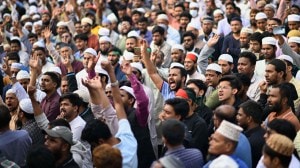
Nothing illustrates the confusion gripping the state government better than how it guards Zero Bridge, a blow hot-blow cold after more than 50 days of unrest and a death toll that has touched 70.
The Indian Express spoke to four senior Cabinet ministers in the Mehbooba Mufti government, a senior functionary and local leaders of the PDP and several partymen in villages across Pulwama, Shopian, Anantnag, Bijbehara, Bandipore, Kupwara, Lolab and Baramulla.
The big picture that emerges is that the J&K Chief Minister may have done some clear, hard talk at the press conference with Union Home Minister Rajnath Singh — in sync with its ruling ally’s traditional stance on Kashmir — but in her party, the lines aren’t so sharply defined.
Story continues below this ad
Instead, there is confusion in the PDP ranks and a growing feeling that the party, already questioned for its alliance with the BJP, may be compromising on its core politics.
Its hope is that the shortage of food and fuel, and closure of schools and businesses would ultimately set off fatigue and force people to return to ‘normalcy’.
And with the 51-day curfew, the longest such spell in the Valley, coming to an end on Monday — except in Pulwama town and a few areas of Srinagar — the PDP hopes that Eid on September 13 will mark a thaw.
“Once the markets are opened for the festival, we will try to ensure they remain open everyday and everyone breathes easy,” said a senior PDP Cabinet Minister. With a strict diktat from the top to its leaders to refrain from expressing any contrarian views on the government’s response to the current uprising, senior PDP ministers and party functionaries speak on the condition that they not be named.
Story continues below this ad
“We know this strategy will work. It is not much of a strategy though. Ultimately, people will be forced to go back to resume normal life,’’ a senior PDP Minister said. “But will that solve our problem?”
“This is perhaps the biggest crisis inside me because this is not what I had bargained for when I joined politics,” the Minister said.
“We have abandoned our core political stance on the Kashmir issue and there are no takers here for the politics of development,” he said. “In my constituency, a village had no road connectivity even though it is just a two-hour journey from Srinagar. I ensured a beautiful and wide black-top road was built as soon as we took over. The villagers came to me with gifts, to thank me. Today, those very villagers cut that road up so that jeeps and Army trucks can’t reach there. I was shocked. How could people who got a road for the first time in their life do such a thing?’’ the Minister said.
That’s the question everyone seems to duck.
Then there is the issue of the proposed arrests, especially under Public Safety Act — 169 people have been identified by police headquarters, as reported in The Indian Express last week. “Many of these people have helped us in recent elections. It is true they were angry with us for aligning with BJP. Now we are arresting those very people.”
Story continues below this ad
Another top PDP Minister said that the PDP leadership was “parroting the Centre’s new hardline position” and had “abandoned its own politics”. “It is clear that as our political graph goes down, there is a view in the Centre to safeguard the mainstream space by making Omar Abdullah and NC credible on ground. They are helping him do popular politics even as it comes at our cost.”
He also spoke about the Army’s call for dialogue. “Never before has a top commander leading the Army issued a call for dialogue in Kashmir. When the Northern commander called for dialogue, it was a clear rebuff to us politically. It was also a clear message to us that we are disposable,” he said. He said that “the party (PDP) has completely ceded its political space to the BJP, which has stuck to its politics and definition of peace”. “Hum sirf han mein han mila rahe hain (We are only nodding to everything),’’ he said.
A PDP leader from Pulwama said that the situation for “known PDP workers” is extremely precarious. “There are (Azadi) rallies organised every day in the villages across south Kashmir. The government’s presence is limited to the highway and few town headquarters alone,’’ he said. “Whenever the security forces confront the protesting villagers, they open fire and kill or injure people. That time, we squeeze ourselves inside our homes. Though PDP workers and our sympathisers till recently have joined the protests, those who are well known would be lynched by angry people if they venture out.”
He said that the statements issued by the top PDP leadership are adding fuel to the fire. “When Mehbooba ji said that only a few people are inciting the public, she wasn’t providing the correct position on the ground, especially in the south,’’ he said. “She should have accepted our (PDP’s) failure to make any real beginnings to address the larger Kashmir issue.”
Story continues below this ad
Another senior Minister, however, disagreed that the government’s response was lacking. He said that Mehbooba Mufti was “on the right track” because “only an iron fist can bring normalcy here”.
“We know we cannot give Azadi to people. We can’t even help in that. We must not forget that we exist only in the pro-India camp here. We must not mislead anybody,’’ he said. “We realise we are politically in a very difficult situation. We had to make a course correction if we want to stay in power and we did.public memory is very short. In 2010, Omar Abdullah and NC were exactly at the same place where we find ourselves now. Today he is speaking the way we did in 2010 when 120 young men were killed under his watch. His graph has gone up,’’ he said.
“We need to take harsh measures and somehow bring the situation back to normal. We will be in power till 2020. Four years is a long time to help heal the wounds”.
He expressed confidence that when the bypoll is held for the Anantnag Lok Sabha seat, which was vacated by Mehbooba Mufti, “we will win again”. “Don’t you remember 2008? People came out to vote only a few months after a similar uprising. We don’t need to show any tolerance for these protests. We need to arrest everyone who is identified for leading the protests or pelting stones. We know things will return to normalcy sooner or later and once things are calmer, these very people will come, pleading for help.”
Story continues below this ad
After the current uprising spread across Kashmir, the ruling PDP has reached out to Cabinet Minister and a close BJP ally Sajjad Lone. While Lone was earlier seen as an adversary by the PDP, sources now reveal that CM Mufti now consults Lone regularly and his “advice is taken very seriously”. “Sajjad sahib’s input has helped to develop a new discourse; since Sajad gave the 5 per cent and 95 per cent theory about the current protests, Mehbooba ji has been using it everywhere,’’ a PDP Minister said.


 8 min read


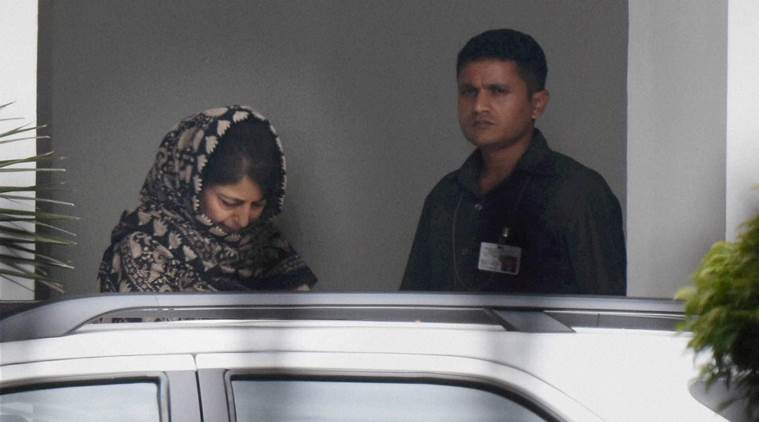 There is confusion in the PDP ranks and a growing feeling that the party, already questioned for its alliance with the BJP, may be compromising on its core politics. PTI Photo