5 min read
Stay updated with the latest - Click here to follow us on Instagram

Journalism of Courage



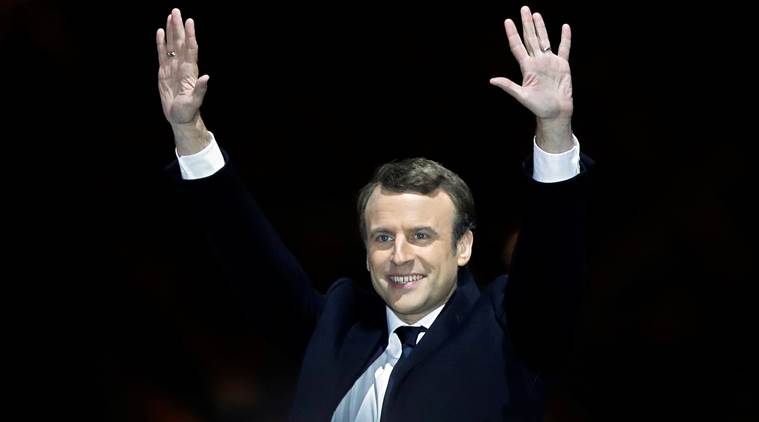 The euro hit a roughly six-month high when Macron beat Le Pen and another anti-euro candidate, Jean-Luc Melenchon, in the first round last month. (Source: Reuters Image)
In December, one of the trades of 2017 for investors who play on global political and economic risk was the the spread of populism in Europe and the threat that might pose to the future of the euro.
Six months and two elections on, and with only a relatively traditional policy fight in prospect for Germany’s vote in September, the risks have receded and the “meltdown trade” looks over. Emmanuel Macron’s victory on Sunday night follows defeat for Geert Wilders’ Party for Freedom in the Netherlands and heads off Marine Le Pen’s promises to pull Paris out of the euro and potentially the European Union.
Looking threatened six weeks ago by Martin Schulz’s reboot of Germany’s Social Democrats (SPD), Angela Merkel is again 6-8 points ahead in the polls and, after a regional win on Sunday, perhaps worrying chiefly about the shape of her next coalition.
Even if he recovers, major global investors say the worst they expect of a Schulz-led government is it might borrow and spend more – as many mainstream economists and its international partners have been saying Berlin should for a decade.
Support for the anti-euro Alternative for Germany has faded to just 5 percent of the vote.
“For this year for sure it is the end of political risk for Europe,” said Timothy Graf, head of European macro strategy with State Street Global Investors in London.
“The risk for the rest of the year, if anything, is not euro downside, it is euro upside.”
According to Citi’s equity strategy team, Europe’s political risk premium made up half of the overall equity risk premium of 6 percent earlier this year.
But the Dutch and French elections have changed that, and Macron’s win will release the “political handbrake” which has had a major impact on investor, corporate and policymaker behaviour.
“We expect lower political risk to show in a lower PRP and ERP. A significant ‘risk off’ surge has been avoided,” they wrote in a note to clients on Monday, reiterating conviction in their MEGA trade – “Making Europe Great Again”.
The details of Monday’s reaction on global financial markets suggest many came to this conclusion weeks ago and are moving back to other concerns – about China, global commodities or the shape of U.S. and European monetary policy for the next year.
The euro hit a roughly six-month high when Macron beat Le Pen and another anti-euro candidate, Jean-Luc Melenchon, in the first round last month. By the time European traders got to their desks on Monday any new boost had largely dissipated.
European stock markets also looked firmly in profit-taking mood, down around half a percent after a year which has seen them gain more than a fifth in value.
MERKEL’S RIVAL DISAPPOINTED
President of the European Parliament until January, Schulz’s decision in January to return to domestic politics forced global investors to face the risk of the removal this year of Merkel – a key political constant through years of euro zone turbulence.
A decisive victory in Germany’s northern state of Schleswig-Holstein on Sunday, however, boosted Merkel’s prospects of winning the national election in September and left Schulz admitting bluntly he was “disappointed”. It follows another win for Merkel in the western state of Saarland. In both she has increased her share of the vote while that for the SPD has fallen.
A third regional vote, in the western state of North Rhine-Westphalia (NRW) next Sunday, offers Merkel’s conservatives a chance to defeat the incumbent SPD again and build momentum in her bid to win a fourth term in office.
“These state elections will have a signal effect on what will happen,” said Martin Lueck, Chief Investment Strategist for Germany with giant global asset manager Blackrock. 5-STAR
Italy has been a perennial pressure-point for Europe through almost a decade of crisis – yet one that has never quite come to a head. Recent opinion polls give a clear and growing lead to the anti-establishment 5-Star Movement, which wants to hold a referendum on Italy’s continued membership of the euro zone if it wins elections due early next year.
“I am nervous about Italy already because of the way 5-Star are polling,” said Roger Hallam, Chief Investment Officer for currencies with JP Morgan Asset Management in London.
“It is one of the things which stopped us from forecasting the euro materially higher this year. However, you would say that elections are unlikely to be held this year, so there are maybe nine months before we need to worry about it.”
Stay updated with the latest - Click here to follow us on Instagram