26 min read

© IE Online Media Services Pvt Ltd



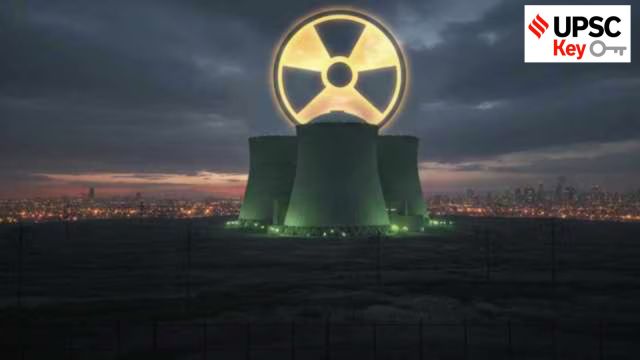 The multiple amendments proposed to the two overarching atomic power laws aim to align the new legislation with legal provisions globally in a bid to address festering investor concerns. Know more in our UPSC Key.
Important topics and their relevance in UPSC CSE exam for December 17, 2025. If you missed the December 16, 2025, UPSC CSE exam key from the Indian Express, read it here.
Syllabus:
Preliminary Examination: Current events of national and international importance.
Mains Examination: General Studies-II, III: Government Policies and Interventions, Science and Technology- developments and their applications and effects in everyday life.
What’s the ongoing story: Building on the clear directional push to open up the restricted nuclear power sector to private sector participation, the rules that will follow the passage of the proposed Sustainable Harnessing and Advancement of Nuclear Energy for Transforming India Bill, 2025 (SHANTI) are likely to make a provision for potential foreign funding in the nuclear sector.
Key Points to Ponder:
— Know the key highlights of SHANTI Bill, 2025.
— What are India’s nuclear liability laws?
— The Civil Liability for Nuclear Damage Act, 2010 (CLNDA)-know its key features.
— Read about India’s nuclear power programme.
— What are the legal barriers posed by the Atomic Energy Act and CLNDA to private and foreign participation in India’s civil nuclear sector?
— What are Small Modular Reactors (SMR)?
Key Takeaways:
— The new Bill, which was tabled in Parliament Monday and aims to repeal both the Atomic Energy Act, 1962 and the Civil Liability for Nuclear Damage Act, 2010, comes amid India’s move to look outward for collaborations on nuclear that is driven by two clear policy imperatives: the desperate need for base load alternatives to coal-fired capacity to tide over the limitations of renewables; and more importantly, the need for capital to scale up nuclear capacity addition.
— Foreign funds, including sovereign funds from West Asia, have expressed early interest to put in capital to part-finance the country’s stated objectives to scale up nuclear power, including getting into the manufacturing value chain of SMRs, or small modular reactors.
— SMRs are increasingly being seen as important for nuclear energy to remain a commercially competitive option into the future. The legal amendments are also being seen as a part of India’s efforts to strengthen its negotiating stance with the US, amid efforts underway to revive the stalled trade talks.
— The multiple amendments proposed to the two overarching atomic power laws – the Atomic Energy Act 1962 and the Civil Liability for Nuclear Damage Act, 2010 (CLNDA) – aim to align the new legislation with legal provisions globally in a bid to address festering investor concerns.
— There are two key proposed amendments that are particularly significant. One is an amendment aimed at diluting a specific provision – Section 17 (b) of the CLNDA, which was seen to be at odds with similar nuclear liability legislations enacted worldwide.
— According to Section 17 of the CLNDA, the operator of the nuclear installation, after paying the compensation for nuclear damage, shall have the right to recourse where – (a) such right is expressly provided for in a contract in writing; (b) the nuclear incident has resulted as a consequence of an act of supplier or his employee, which includes supply of equipment or material with patent or latent defects or sub-standard services; and (c) the nuclear incident has resulted from the act of commission or omission of an individual done with the intent to cause nuclear damage.
— Provision (b) is the one that is a specific insertion in the Indian context and has been cited as an impediment by foreign vendors, none of whom have invested in a single project in India since the legislation came into force. This is a cause for worry for Indian sub-vendors too, since the term “supplier” is seen to be too broad in scope.
Do You Know:
— India enacted The Atomic Energy Act, 1962 after repealing the Atomic Energy Act, 1948. Since then, the Act has been amended four times, with the latest amendment being in 2015. However, the sector was confined to the Central government.
— In 2010, the Civil Liability for Nuclear Damage Act, 2010 was enacted to provide for civil liability for nuclear damage and prompt compensation to the victims of a nuclear incident through a no-fault liability regime.
— SMRs are essentially advanced small nuclear reactors that have a power capacity of 30MWe to 300 MWe (megawatt electrical) per unit. Conventional nuclear reactors, the kind which are currently installed in India and elsewhere, usually have capacities to produce 500 MW of electricity or more.
— The relatively simpler and modular design of SMRs—enabling their components to be assembled in a factory instead of being constructed on-site—lowers costs and allows flexible deployment, making them a much more attractive proposition in recent years.
— While lots of different types of SMRs are being developed, there are currently four main types, each using a different coolant to manage the extreme heat of a nuclear fission reaction — light water, high temperature gas, liquid metal, and molten salt.
— The most common type, though, are light water reactors, which are very similar to traditional nuclear power plants being built in Russia, France and the US that are all water-cooled. That makes light water SMRs much easier to design and get approved, as today’s nuclear regulations are mostly based on water-cooled reactors.
Other Important Articles Covering the same topic:
📍Cabinet nod to key amendment sets stage to open up n-power
📍N-power Bill introduced; permits pvt operators, limits supplier liability
UPSC Prelims Practice Question Covering similar theme:
(1) With reference to the Small Modular Reactors (SMRs), consider the following statements:
1. They are suitable only for on-grid and not for off-grid applications.
2. These are cost-effective alternatives to conventional large nuclear reactors.
3. India is extensively researching Small Modular Reactors (SMRs) to achieve net-zero emissions while maintaining energy security.
How many of the statements given above are correct?
(a) Only one
(b) Only two
(c) All three
(d) None
Previous year UPSC Mains Question Covering similar theme:
With growing energy needs should India keep on expanding its nuclear energy programme? Discuss the facts and fears associated with nuclear energy. (UPSC CSE 2018)
Syllabus:
Preliminary Examination: Current events of national and international importance.
Mains Examination: General Studies-II: Bilateral, regional and global groupings and agreements involving India and/or affecting India’s interests.
What’s the ongoing story: Jordanian Crown Prince Al Hussein bin Abdullah II personally drove Prime Minister Narendra Modi to the Jordan Museum in Amman in a special gesture reflecting the warmth of ties between India and the Arab nation.
Key Points to Ponder:
— Know the history of India-Jordan relations.
— What is the significance of Prime Minister Narendra Modi’s recent visit to Jordan for India–West Asia relations?
— What are the areas of cooperation between both the nations?
— What is Digital Public Infrastructure?
— How can India’s Digital Public Infrastructure strengthen India–Jordan cooperation?
— Map work: Locate Jordan on a world map.
Key Takeaways:
— In a post on X, Modi said he is “grateful” to Al-Hussein for showing him different aspects of Jordan’s history and culture at the museum. He said he “interacted extensively’’ with the Crown Prince and “his passion towards Jordan’s progress is clearly visible”.
— Earlier in the day, the PM and Jordan King Abdullah II addressed the India-Jordan Business Forum, where Modi asked business leaders from both the countries to invest and collaborate on IT, infrastructure and agriculture areas.
— Highlighting India’s Digital Public Infrastructure and IT sector, he said, “India’s experience in this domain can be of significant value to Jordan as well. India has transformed digital technology into a model for inclusion and efficiency. Frameworks such as UPI, Aadhaar, and Digi Locker have today become global benchmarks. His Majesty and I discussed the possibility of aligning these frameworks with Jordan’s systems. Together, our two countries can directly connect startups across sectors such as fintech, health-tech, and agri-tech. We can build a shared ecosystem, one that links ideas with capital, and innovation with scale.”
— He said there are significant opportunities in the “pharma and medical devices sectors”. “If Indian companies manufacture medicines and medical devices in Jordan, it will benefit the people of Jordan, while also enabling the country to emerge as a reliable hub for West Asia and Africa. Whether it is generics, vaccines, Ayurveda, or wellness, India brings trust and Jordan brings reach,” he said.
— On agriculture, the PM said India has extensive experience in farming under dry climatic conditions and this experience can make a real difference in Jordan. “We can collaborate on solutions such as precision farming and micro-irrigation. We can also work together to develop cold chains, food parks and storage facilities. Just as we are undertaking joint ventures in fertilisers, we can move forward together in other areas as well,” he said.
Do You Know:
— The joint statement issued after PM Modi’s visit to Jordan did not have any reference to terrorism, extremism and radicalisation, nor did it mention the Gaza situation and the peace process. It appears there were differences of language formulation on the issues and Jordan wanted to focus on bilateral areas in the joint statement.
— India imports a significant amount of fertiliser from Jordan— making it a key part of India’s food security push — and has also invested in the potash and phosphate sectors there. There is further potential for such investments to secure India’s requirements.
— The Jordan India Fertilizer Company, a joint venture between IFFCO India and the Jordan Phosphates Mines Company, was set up with an investment of $860 million and produces and exports phosphoric acid to India. The JV is a major source of phosphoric acid for India.
— In terms of investment, more than 15 garment companies, owned by NRIs, with a cumulative investment of $500 million are located in the Qualified Industrial Zones.
— India and Jordan also signed an MoU on defence cooperation in 2018. Jordan is home to an Indian community of around 17,500, mostly in the garment, construction and manufacturing sectors and in the UN and other multilateral organisations.
Other Important Articles Covering the same topic:
📍Terrorism, food security on the agenda as PM Modi arrives in Jordan: Why the visit matters
📍PM, Jordan King meet: ‘Share common stance against terror’
Previous year UPSC Mains Question Covering similar theme:
Analyse the complexity and intensity of terrorism, its causes, linkages and obnoxious nexus. Also suggest measures required to be taken to eradicate the menace of terrorism. (UPSC CSE 2021)
Syllabus:
Preliminary Examination: Current events of national importance and social development.
Mains Examination: General Studies-II, III: Government policies and interventions, social development, Indian Economy and issues relating to planning, mobilization of resources, growth, development and employment.
What’s the ongoing story: The proposed amendments to the insurance law — Sabka Bima Sabki Raksha (Amendment of Insurance Laws) Bill, 2025 — significantly strengthen the enforcement and supervisory powers of the Insurance Regulatory and Development Authority of India (IRDAI), giving it wider authority to crack down on violations by various insurance intermediaries.
Key Points to Ponder:
— Read about the IRDAI in detail.
— What is the status of the insurance sector in India?
— IRDAI and SEBI- Compare.
— What are the key objectives of the Sabka Bima Sabki Raksha (Amendment of Insurance Laws) Bill, 2025?
— What is “Insurance for all by 2047”?
— How can 100% FDI in insurance contribute to India’s goal of ‘Insurance for All by 2047’?
— What are the potential benefits and challenges of globalising India’s insurance sector through higher FDI?
— What are the major initiatives taken by the government to increase insurance penetration in India?
Key Takeaways:
— Under the revised provisions, the IRDAI Chairperson will be empowered to order searches, seizures and inspections if there is reason to believe that insurers and related entities have failed to produce documents, are withholding information relevant to an investigation, or are likely to tamper with records. These powers can be invoked in cases involving suspected violations of the law, illegal payment of commissions or rebates, or attempts to falsify or destroy books, accounts, vouchers, survey reports or other records.
— Insurance intermediaries include agents, brokers, corporate agents like banks, NBFCs, fintechs, and other companies distributing insurance products, web aggregators like online platforms that compare and sell insurance policies, third-party administrators (TPAs), who manage health insurance claims and services, surveyors and loss assessors and insurance marketing firms (IMFs).
— The IRDAI Chairperson may authorise a senior officer — no lower than the rank of Deputy Director — to enter and search premises where such documents are believed to be kept, break open locks if keys are unavailable, seize relevant records, and mark or copy documents required for investigation, the proposed Bill says. The authority will also be able to deploy staff at various locations to scrutinise returns, statements, and information submitted by insurers to ensure effective regulatory oversight.
— Currently, market regulator SEBI has the power to search and seize documents and relevant papers if it suspects violation of rules and regulations.
— IRDAI is also set to receive enhanced enforcement powers, including the authority to disgorge wrongful gains made by insurers or intermediaries.
— In addition, the amendments reinforce IRDAI’s power to issue binding directions to insurers in the public interest, to protect policyholders, prevent mismanagement, or ensure sound governance. While insurers must comply with such directions, they will be given a reasonable opportunity to be heard before any action is taken against them individually.
— The regulator will also have enhanced powers to regulate commissions and remuneration paid to insurance agents and intermediaries, including setting limits, prescribing disclosure norms, and specifying payment structures, with the objective of curbing mis-selling and protecting policyholder interests.
From Parliament Winter Session Page- “LS passes Bill to raise FDI limit to 100% in insurance sector”
— The Lok Sabha on Tuesday passed the Sabko Bima Sabko Raksha (Amendment of Insurance Laws) Bill, 2025, that seeks to reform India’s insurance framework through changes in the Insurance Act, 1938, the Life Insurance Corporation Act, 1956, and the IRDAI Act, 1999.
— The amendment will increase the FDI limit in Indian insurance companies from 74% to 100% to attract investment, facilitate technology transfer, increase insurance penetration and social protection.
— The requirement of Net Owned Funds for foreign reinsurers will also be reduced from Rs 5,000 crore to Rs 1,000 crore.
Other Important Articles Covering the same topic:
📍Big reset for insurance sector as govt readies sweeping reform Bill
📍New Insurance Bill: Major reforms it seeks to bring
UPSC Mains Practice Question Covering similar theme:
What are the primary challenges confronting the insurance sector in India, and what strategies can be implemented to address them?
Syllabus:
Preliminary Examination: Current events of national and international importance.
Mains Examination: General Studies-II: Government policies and interventions for development in various sectors and issues arising out of their design and implementation.
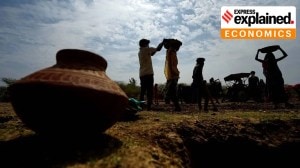
What’s the ongoing story: The Narendra Modi government’s Viksit Bharat-Guarantee for Rozgar and Ajeevika Mission Gramin (VB-G RAM G) Bill, introduced in Parliament on Tuesday, has a provision to restrict the undertaking of rural employment generation works under the planned new law during the “peak agricultural seasons of sowing and harvesting”.
Key Points to Ponder:
— What is the MNREGA scheme and its significance?
— What are the major changes proposed under the VB-G RAM G Bill compared to MNREGA?
— How does the new Centre-State funding pattern for the scheme impact cooperative federalism?
— What are the challenges associated with the scheme?
— How does the shift from a demand-driven to a top-down allocation model affect the scheme?
— Why does the VB-G RAM G Bill propose restrictions on rural employment during peak agricultural seasons?
Key Takeaways:
— The curbs on commencing or executing any such work, for a period aggregating 60 days in a financial year and to be notified in advance by state governments, have been proposed in order to “facilitate adequate availability of agricultural labour” during the peak planting and picking time of crops.
— The existing Mahatma Gandhi National Rural Employment Guarantee Act (MGNREGA) of 2005 — which the VG-G RAM G Bill seeks to repeal and replace with a new statutory wage works programme — has been criticised by many (including the Union Agriculture Minister during the previous UPA administration, Sharad Pawar) for contributing to labour shortages in farms.
— MGNREGA is believed to have led to a tightening of the rural labour market and enhanced the bargaining power of both farm and non-farm workers. This does not, however, seem to be reflected in wages.
— The accompanying table shows the growth in rural wages for the ten years ended 2024-25 (April-March). It is based on daily wage rate data for 25 occupations, compiled by the Labour Bureau and collected from 600 sample villages spread over 20 states of India.
— The Labour Bureau has 12 occupations categorised under agriculture (ploughing/tilling, sowing/planting, watering/irrigation, plant protection, harvesting/threshing/winnowing, picking of commercial crops, horticulture labour, animal husbandry work, crop/produce packaging, logging/wood cutting, inland fishing and coastal/deep-sea fishing).
— The remaining 13 non-agricultural occupations are: Plumber, electrician, mason, weaver, blacksmith, carpenter, tractor/light motor vehicle driver, beedi maker, bamboo/basket maker, handicraft worker, porter/loader, construction labourer and sweeper/cleaner.
— What is clear from the above is that agricultural wages have grown more than overall rural wages. But even in this case, the growth in nominal wages has just about kept pace with inflation. The data does not point to any significant surge in wages — at least during the past 10 years under the Modi government’s term. This was in spite of MGNREGA.
— Why has rural wage growth been tepid? One reason could be the rising Labour Force Participation Rates (LFPR) among women in rural India. LFPR refers to the percentage of the population aged 15 years and above that is either employed or actively seeking to work for a relatively long part of any particular year.
— According to the official Periodic Labour Force Survey (July-June period), the all-India rural female LFPR was a mere 24.6% in 2017-18. That rose to 26.4% in 2018-19, 33% in 2019-20, 36.5% in 2020-21, 36.6% in 2021-22, 41.5% in 2022-23 and 47.6% in 2023-24.
— The Finance Ministry’s Economic Survey for 2023-24 had attributed the sharp jump in the rural female LFPR mainly to the Modi government’s schemes such as Ujjwala, Har Ghar Jal, Saubhagya and Swachh Bharat.
— These flagship programmes, the survey claimed, had not just substantially expanded household access to clean cooking fuel, electricity, piped drinking water and toilets. They also freed up rural women’s time and efforts that went into collecting firewood and dung or fetching water.
Do You Know:
— Launched across India’s 200 most backward rural districts in 2006-07, the MGNREGS was extended to an additional 130 districts during 2007-08; and to the entire country from financial year 2008-09.
— Section 3 (1) of the MGNREG Act provides for “not less than one hundred days” work per rural household in a financial year. But it has become the de facto upper limit as the NREGA software does not allow data entries for employment above 100 days to a household in a year unless specifically requested by the State/UT.
— The government, however, allows additional 50 days of wage employment (beyond the stipulated 100 days). For instance, every Scheduled Tribe household in a forest area is entitled to get 150 days’ work under NREGS, provided that such families have no other private property except for the land rights granted under the Forest Right Act, 2016.
— Besides, the government, under Section 3(4) of the MGNREGA, can also provide an additional 50 days of unskilled manual work in a year, over and above the 100-day in such rural areas where drought or any natural calamity (as per Ministry of Home Affairs) has been notified.
Other Important Articles Covering the same topic:
📍Govt changes NREG terms: States to pay, pause for farm work
📍MGNREGA Revamp Explained: Key features of VB-G RAM G Bill, how its different from earlier scheme
Previous year UPSC Prelims Question Covering similar theme:
(2) Among the following who are eligible to benefit from the “Mahatma Gandhi National Rural Employment Guarantee Act”? (UPSC CSE 2011)
(a) Adult members of only the scheduled caste and scheduled tribe households.
(b) Adult members of below poverty line (BPL) households.
(c) Adult members of households of all backward communities.
(d) Adult members of any household.
Syllabus:
Preliminary Examination: Indian and World Geography-Physical, Social, Economic Geography of India and the World.
Mains Examination: General Studies-I, II: Important Geophysical phenomena such as earthquakes, Tsunami, Volcanic activity, cyclones etc., geographical features and their location-changes in critical geographical features, government policies and interventions, disaster management.
What’s the ongoing story: Rising global temperatures, rapid urbanisation, and deforestation exacerbated the impact of floods triggered by cyclonic storms in Sri Lanka, Malaysia, Indonesia, and Thailand last month, leading to the death of at least 1,600 people in the four countries, according to a new study. While Cyclone Ditwah struck Sri Lanka on November 27, Cyclone Senyar made landfall first on November 26 in Indonesia and then in Malaysia on November 27.
Key Points to Ponder:
— Read about Cyclone Ditwah and Senyar and their impact.
— What are tropical cyclones?
— What is the impact of global warming on rainfall in South and Southeast Asia?
—What is the role of rising sea surface temperatures in the formation and intensification of tropical cyclones?
— How does deforestation exacerbate flood risk?
— What measures have been taken globally and nationally to tackle the issue of climate change?
— What measures can be taken to mitigate the effects of climate change?
Key Takeaways:
— The study, ‘Increasing heavy rainfall and extreme flood heights in a warming climate threaten densely populated regions across Sri Lanka and the Malacca Strait’, was published on Thursday (December 11). It was carried out by a team of researchers with the World Weather Attribution (WWA) group.
— The analysis highlighted that although the affected countries experience annual floods during the monsoon season, this year, the proportions of the flood reached unprecedented levels.
— Role of global warming: The researchers found that extreme rainfall events, such as those triggered by Cyclones Ditwah and Senyar, had become more intense in the affected regions in recent years.
— This has primarily happened due to rising global temperatures — the world has become about 1.3 degrees Celsius warmer since the mid-1800s. Higher temperatures cause evaporation of water not only from land but also from oceans and other water bodies, meaning a warmer atmosphere holds more moisture. For every 1 degree Celsius rise in average temperature, the atmosphere can hold about 7% more moisture. This makes storms more dangerous as it leads to an increase in precipitation intensity, duration and/or frequency, which ultimately can cause severe flooding.
— Note that the researchers could not estimate the precise contribution of climate change to the extreme weather events that occurred in Sri Lanka, Malaysia, Indonesia, and Thailand last month. This happened as there were other factors at play, such as the El Niño–Southern Oscillation, and there was a lack of data on some of the key features of the climate in the region.
— Role of deforestation: The study found that the impact of extreme rainfall was exacerbated in the affected regions due to an increase in deforestation.
— The key drivers of decline were encroachments for plantation crops, such as tea, rubber, and coconut, cinnamon cultivation, at the forest fringes, infrastructure development projects, as well as illicit timber felling, according to the WWA study.
— Loss of forest cover accelerated runoff, which occurs when there is more water than land can absorb, exacerbating flood peaks.
— Role of rapid urbanisation: The study revealed that rapid urbanisation was also a key player in the large-scale devastation triggered by extreme rainfall in the affected regions.
— It found that Sri Lanka and Indonesia had seen an increase in the number of people living in high-intensity flood-risk zones. Critical infrastructures such as roads, railways, and cropland have also increased in these areas.
— That’s why when Cyclone Senyar hit Indonesia, it not only killed hundreds of people but also led to economic losses worth $4.13 billion. Reports suggest around 1,21,000 houses were destroyed, along with 405 bridges, 270 health facilities, 509 educational facilities, and 1,100 public facilities.
Other Important Articles Covering the same topic:
Previous year UPSC Prelims Question Covering similar theme:
(3) In the South Atlantic and South-Eastern Pacific regions in tropical latitudes, cyclone does not originate. What is the reason? (UPSC CSE 2015)
(a) Sea surface temperatures are low
(b) Inter-Tropical Convergence Zone seldom occurs
(c) Coriolis force is too weak
(d) Absence of land in those regions
(4) Consider the following statements: (UPSC CSE 2020)
1. Jet streams occur in the Northern Hemisphere only.
2. Only some cyclones develop an eye.
3. The temperature inside the eye of a cyclone is nearly 10ºC lesser than that of the surroundings.
Which of the statements given above is/are correct?
(a) 1 only
(b) 2 and 3 only
(c) 2 only
(d) 1 and 3 only
Previous year UPSC Mains Question Covering similar theme:
Tropical cyclones are largely confined to the South China Sea, Bay of Bengal and Gulf of Mexico. Why? (UPSC CSE 2014)
ALSO IN NEWS |
|
| LS clears Bill to repeal 71 Acts; 1,562 archaic laws revoked since 2014 | Lok Sabha Tuesday passed The Repealing and Amending Bill, 2025, aimed at repealing 71 laws on Day 12 of Parliament’s Winter Session. While introducing the Bill, Minister of Law and Justice Arjun Ram Meghwal said that it repeals outdated and obsolete laws. He said that 1,562 such Acts have been repealed since Narendra Modi came to power, and 15 have been amended. These changes are aimed at reversing the effects of colonisation, he said. |
| SC notice on plea by Justice Varma against parliamentary probe | The Supreme Court Tuesday issued notice on a writ petition challenging the legal validity of the committee set up by Lok Sabha Speaker to probe the charges of corruption against Allahabad High Court judge Justice Yashwant Varma, following the discovery of unaccounted cash at his official residence during a fire incident in March this year. Justice Varma contended that, though the notices for his impeachment were given in Lok Sabha and Rajya Sabha, the Speaker set up the committee even before the Upper House chairman admitted it, and without holding joint consultation. He contended that the Speaker acted in derogation of the proviso to Section 3(2) of the Judges (Inquiry) Act, 1968, by unilaterally constituting a committee on August 12 this year after admitting a motion given before Lok Sabha on July 21, as on the very same day, a separate motion was given in Rajya Sabha which had not been admitted. |
| Why curbing vehicular pollution is key to the fight against foul air | The Delhi government’s decision to bar non-BS VI private vehicles registered outside the capital from entering the city has come after three days of ‘severe’ air quality and as evidence mounts that vehicular emissions is one of the biggest and most stubborn contributors to air pollution in the NCR. According to the Commission for Air Quality Management (CAQM), as many as 93% of the 2.88 crore vehicles on the road in Delhi-NCR are light motor vehicles (LMVs; essentially cars) and two-wheelers. More than a third – around 37% – of this fleet comprises Bharat Stage (BS) III or even older vehicles, which have a significantly higher emissions potential. |
| PRELIMS ANSWER KEY |
| 1. (b) 2. (d) 3. (b) 4. (c) |
Subscribe to our UPSC newsletter. Stay updated with the latest UPSC articles by joining our Telegram channel – Indian Express UPSC Hub, and follow us on Instagram and X.
🚨 Click Here to read the UPSC Essentials magazine for November 2025. Share your views and suggestions in the comment box or at manas.srivastava@indianexpress.com🚨

Read UPSC Magazine