Sony Float Run review: Open headphones, with a twist
Sony Float Run takes the concept of open ear headphone and combines it with innovative formfactor to create a truly unique wireless earphone experience.
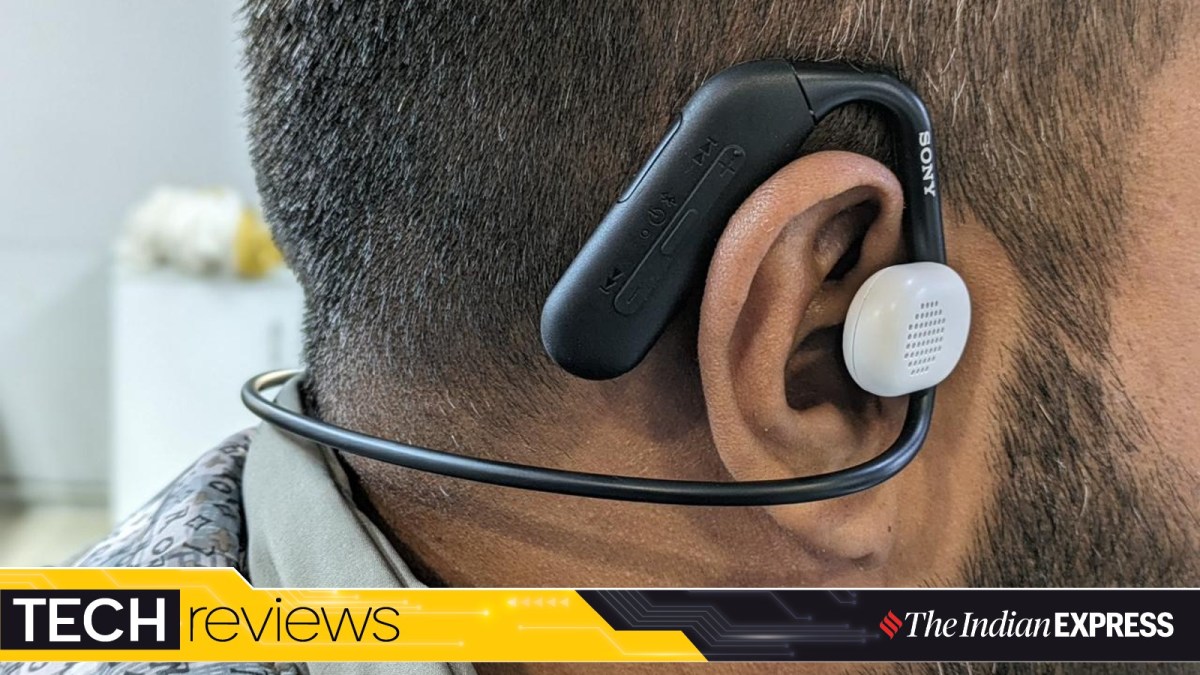
The Sony Float Run are IPX4 rated, and offer a 10-hour battery life (Image credit: Anuj Bhatia/The Indian Express)
As I waited for my dad to step out of the shop, a lady approached me and politely said, “Sir, can you step aside? We need to park our car.” I nodded my head, removed my TWS from my right ear, and made way for the car to park. That day, I recalled a similar incident that had happened when a gentleman sitting next to me on the Metro asked me to vacate a seat for an elderly person, but I barely understood his words. You may blame me for being ignorant, but the truth is when you wear truly wireless earbuds and listen to music, they simply cancel the noise and cut you off from the outside world. However, Sony’s new Float Run wireless headphones are different.
You’ve Read Your Free Stories For Now
Sign up and keep reading more stories that matter to you.
They have an open design, which allows outside sounds to pass through your ears, making you aware of your surroundings. Because they are designed differently from traditional wireless earbuds or any headphones available on the market, I wanted to give them a try and understand whether this concept actually works. Here is my review of the Sony Float Run.
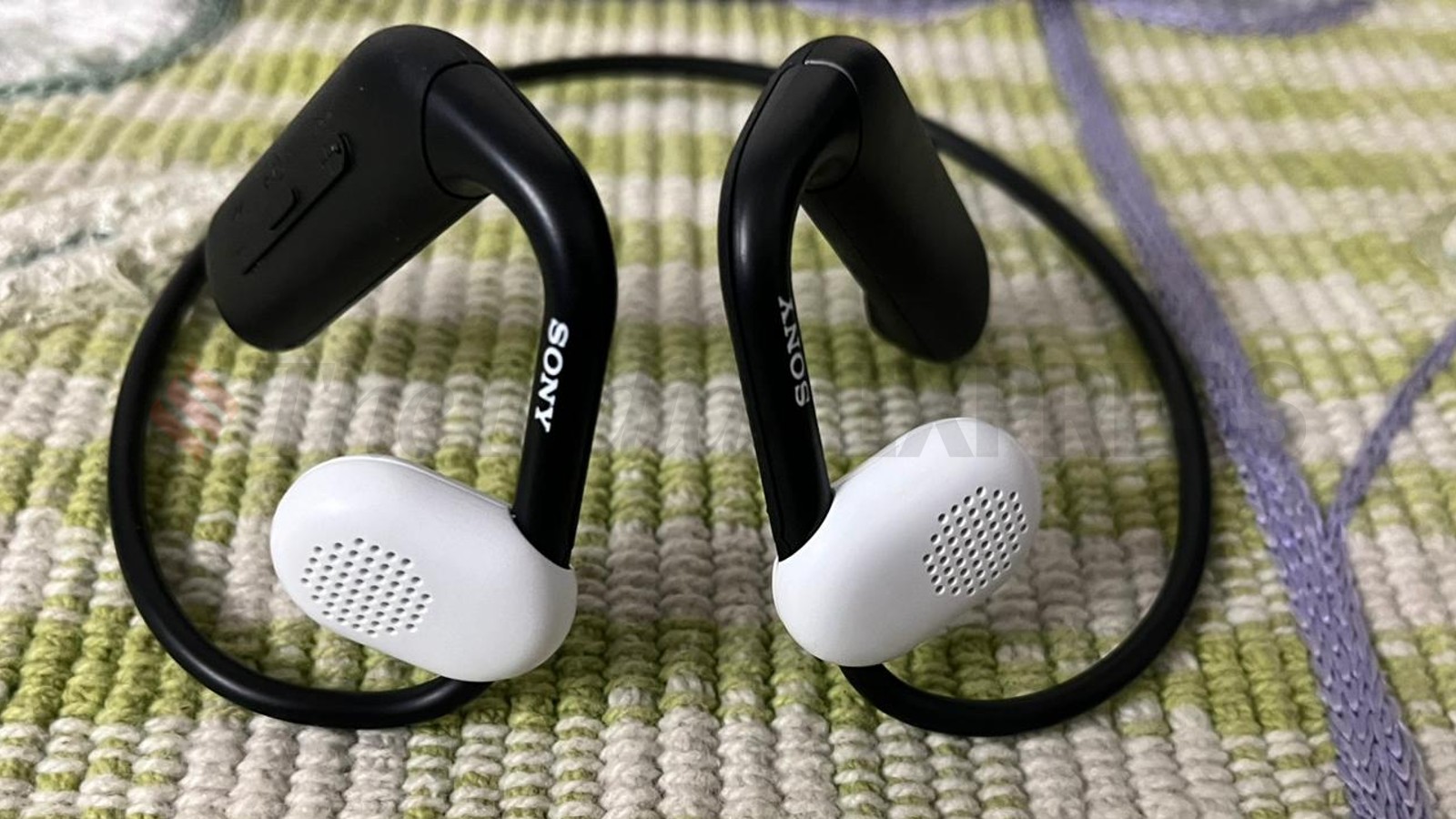
As the name suggests, these earphones float over the ear (Image credit: Anuj Bhatia/The Indian Express)
Sony Float Run price in India (as reviewed): Rs 10,990
Design: When I first received the Float Run, I was a little surprised. They neither look nor feel like TWS (True Wireless Stereo) nor a traditional pair of headphones. Instead, they come close to neckband sports earphones, but again, Float Run has a unique design. They have an ear hook that wraps around the front of your ear and connects to the neckband.
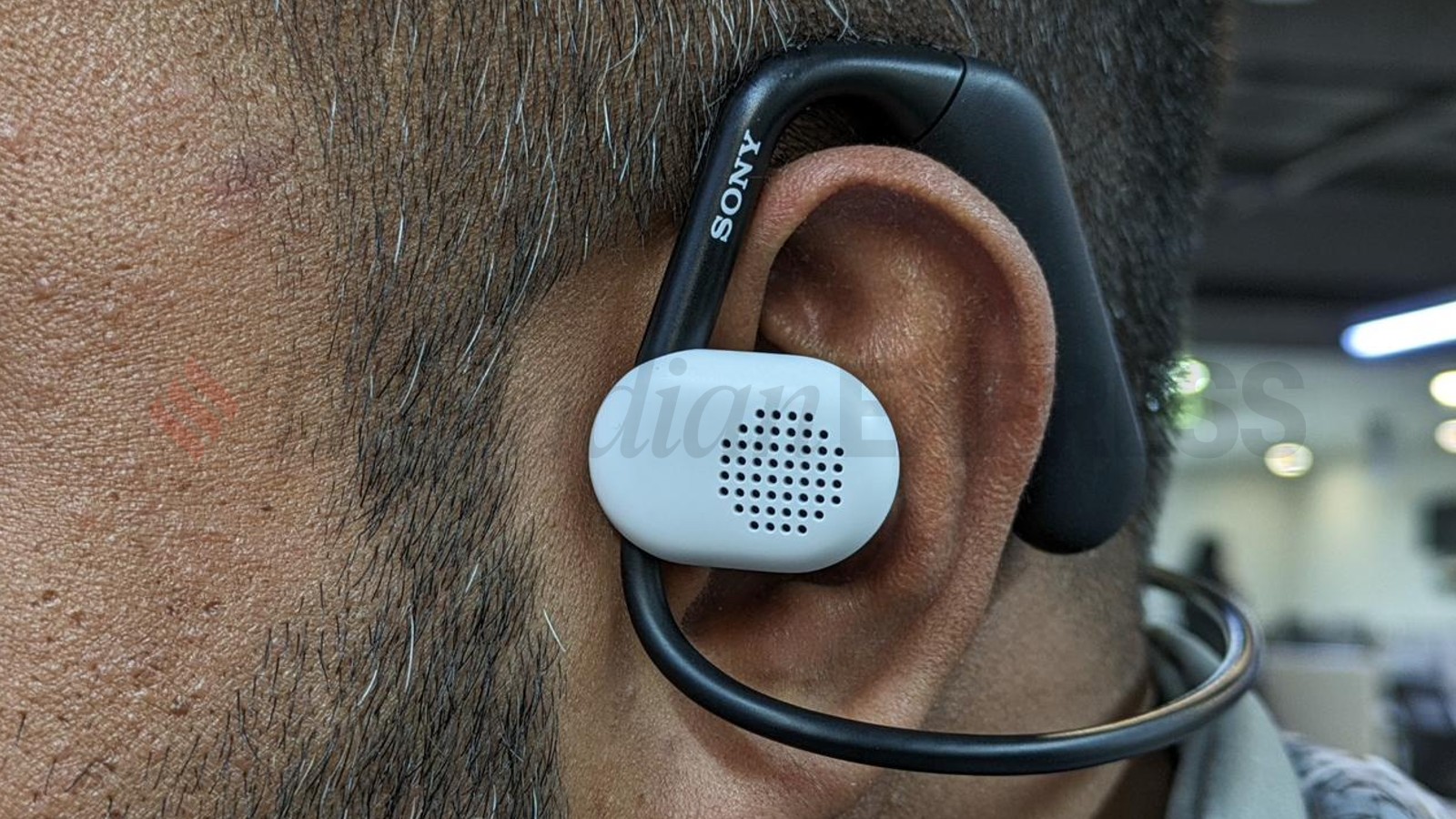
To be clear, they don’t enter the ear but are also different from bone-conduction headphones. The concept behind these headphones is to make you aware of your surroundings when the music is still on, and that’s reflected in how they are designed. I wore them all day and jogged with them. They never caused discomfort, although I would like to add that they might be a little uncomfortable to wear if you have glasses.
That being said, they are lightweight but don’t fold like headphones or become as compact as TWS. However, you can take these out of your ears and let them hang. In terms of controls, you will find three buttons to control playback and volume. Frankly, it takes some time to get used to the button layout. They have good tactile feedback, but because they are located on the extreme right end of the hook, it can be challenging to operate them as swiftly as you would with your TWS or headphones. The Float Run does not support Sony’s Headphones Connect app, meaning there is no way you can adjust EQ or other settings. They come in only “black”, and Sony provides a case for storing them.
For me, though, the biggest advantage of Float Run is that they stay in my ears more securely. You also don’t have to worry about the perfect fit. Just wear them and forget. No need to change the fins or adjust the buds you would often do with your TWS. Sony says the Float Run are IPX4 splashproof, so they can be used for workouts and runs.
Story continues below this ad
The earphone just weighs 33 grams (Image credit: Anuj Bhatia/The Indian Express)
Sound: “How do they sound?” That was my reaction when I first tried them. I genuinely had so many questions about the Float Run because I hadn’t tried wireless sports headphones with an open design ever. But if you ask me now, well, they sound good but not as good as the WF-1000XM4.
They do make listening to music sound more open and natural, something I liked about the Float Run. These headphones have a nice, well-balanced sound with good details, but don’t expect the same level of bass as you get with TWS and headphones.
For example, when I was listening to “Teri Yeh Baatein” from the movie “Kho Gaye Hum Kahan,” the vocals and instruments seemed more distinct. The sound is precise and crisper when I am listening to the song in my room, with no distractions around—away from the noisy environment.
That’s not to say I didn’t enjoy listening to music on every version of the Float Run. It’s just that the quality of the sound and music changes the moment you step out of home and come to an open space. They have the same issue that all open wireless earbuds have in noisier environments. They let sound in, and since they lack active noise cancellation or transparency mode, some people may not like how loud the Float Run plays music. The thing is, even though Sony has added 16mm drivers to the Float Run, because the speaker drivers are positioned outside the ears (and not inside), you can hear the ambient noise, and that affects the sound quality. Just think about a small speaker attached to headphones, and the sound is beamed directly to your ears.
Story continues below this ad
Comfortable headphones designed for runners (Image credit: Anuj Bhatia/The Indian Express)
Should you buy the Sony Float Run?
As I said in the beginning, Float Run is not your typical wireless earbuds. The idea is to make you aware of the outside world when the music is still on. Again, some people are in favour of it, and some people may not like this concept at all. The Float Run is the first-generation model, but there is room for substantial improvements for future models. Open headphones are comfortable to wear, and although they don’t get as loud in noisier environments, they sound excellent if you can live with certain limitations.
Pros:
*Fit comfortably and securely with a lightweight design
*Good sound for open earbuds
*Open design allows you to hear the outside world
*Excellent headphones for taking calls
*Solid battery life (up to 10 hours)
*IPX4 splash proof
Cons:
*May not get as loud as TWS and other headphones
*Missing app support
Anuj Bhatia is a seasoned personal technology writer at indianexpress.com with a career spanning over a decade. Active in the domain since 2011, he has established himself as a distinct voice in tech journalism, specializing in long-form narratives that bridge the gap between complex innovation and consumer lifestyle.
Experience & Career: Anuj has been a key contributor to The Indian Express since late 2016. Prior to his current tenure, he served as a Senior Tech Writer at My Mobile magazine and held a role as a reviewer and tech writer at Gizbot. His professional trajectory reflects a rigorous commitment to technology reporting, backed by a postgraduate degree from Banaras Hindu University.
Expertise & Focus Areas: Anuj’s reporting covers the spectrum of personal technology, characterized by a unique blend of modern analysis and historical context. His key focus areas include:
Core Technology: Comprehensive coverage of smartphones, personal computers, apps, and lifestyle tech.
Deep-Dive Narratives: Specializes in composing longer-form feature articles and explainers that explore the intersection of history, technology, and popular culture.
Global & Local Scope: Reports extensively on major international product launches from industry titans like Apple and Google, while simultaneously covering the ecosystem of indie and home-grown tech startups.
Niche Interests: A dedicated focus on vintage technology and retro gaming, offering readers a nostalgic yet analytical perspective on the evolution of tech.
Authoritativeness & Trust
Anuj is a trusted voice in the industry, recognized for his ability to de-jargonize trending topics and provide context to rapid technological advancements. His authority is reinforced by his on-ground presence at major international tech conferences and his nuanced approach to product reviews. By balancing coverage of the world's most valuable tech brands with emerging startups, he offers a holistic and objective view of the global technology landscape.
Find all stories by Anuj Bhatia here.
You can find Anuj on Linkedin. ... Read More