HP Inc’s Imagine conference this week is centred on yet another attempt to generate enthusiasm around artificial intelligence personal computers. However, this time the positioning of AI-powered PCs has moved beyond hardware, emphasising how to market these new computers to enterprises and businesses with a focus on software.
The Palo Alto, California-based PC maker is actively expanding its offerings into software and services, with plans to develop an ecosystem of AI-integrated applications, collaborate with Independent Software Vendors (ISVs), and enhance its security and restoration capabilities to support the future of work and help enterprises leverage AI effectively.
 Services are becoming critical to HP’s long-term growth. (Image credit: Anuj Bhatia/Indian Express)
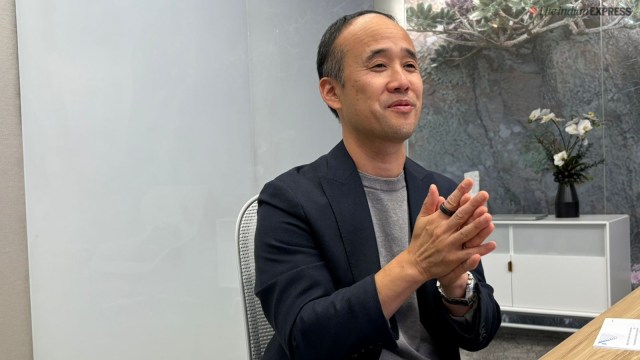
The Indian Express’s Anuj Bhatia sat down with Alex Cho, President (Personal Systems Business), at the company’s headquarters in Palo Alto to discuss who these new-age AI PCs are aimed at and where the future of PCs is headed.
Here are the edited excerpts from the interview with Cho.
Q: More than the hardware itself, HP’s Imagine event this year brought the spotlight on many ISVs who are working closely with your company to develop solutions that take advantage of the new processing power of AI PCs to run workloads locally. Was the intention to create an AI PC ecosystem of your own, parallel to the work being done by Microsoft and others to create a market for these new AI-focused PCs and software solutions?
Cho: We are working across the industry with ISVs to showcase and elevate what these new AI PCs can do. We believe this benefits the entire category and ecosystem. We work very closely with Microsoft, Intel, and AMD. The reason we collaborate with them is that we believe the world needs to see and experience that our latest AI PCs are not just devices, but tools that can offer new capabilities and add new value. In the short term, our goal is to elevate and help catalyse the entire industry, particularly ISVs, in leveraging the value of AI PCs.
However, we also believe that, in doing so, we will be able to demonstrate to ISVs the unique value of our AI PCs. These devices will have the highest performance, offer enhanced security, and be better designed for key tasks like audio and video. They will be part of a broader solution or portfolio of products that an IT manager can manage — whether it’s a PC, a printer, or a room. So, we believe there’s a unique value we offer. But right now, our focus on working with ISVs is to help people understand what can be done differently on an AI PC.
Story continues below this ad
Q: AI isn’t only coming to PCs. It is also making smartphones smarter by adding generative artificial intelligence capabilities. Now that AI is available on both smartphones and PCs, how do you ensure that the use cases on each device will be different from one another?
Cho: I feel AI is going to be very much a hybrid experience. You’ll run AI in the cloud, which already provides a lot of value—this is how most people use AI today. The phone is becoming a device through which you can run AI, with much of that processing happening in the cloud. Or, in some cases, you might run AI locally as well, which also has value. The phone’s smaller form factor, it’s always with you, and its integration into your daily apps offer distinct advantages.
The value of the PC is that, yes, it can access AI in the cloud, but it can also run AI locally for many use cases. We believe there’s a unique value in running AI locally on the PC. First, it’s faster for many tasks compared to constantly accessing the cloud. Second, it can be more cost-effective in many cases, especially if you’re dealing with cloud subscriptions or sending data back and forth to the cloud. Third, and particularly important for our customers, is that it can be more private and secure because you can keep your data local. Many people want to use AI models with their personal or company data, and keeping it local provides that privacy and security.
A customer will likely use both cloud-based and local AI, depending on the use case. This is why we see a huge innovation opportunity around AI PCs. We have traditionally been a hardware company, but we don’t see ourselves as a hardware company going forward. In fact, we can be a work company; we could be a work solutions provider. We help enable companies to embrace the future of work. It is a combination of hardware, yes, software like AI Studio, and services as well. The combination of these elements is the solution we offer to our customers.
Story continues below this ad
Q: HP Inc CEO Enrique Lores said the company is doubling down on its commercial business, and I believe AI PCs will be a big part of that. Does that mean businesses will be the first to adopt AI PCs compared to regular customers until use cases are developed?
Cho: Well, a lot of the current use cases and our work with ISVs show that they are very much productivity-oriented. We believe that the commercial space has a high probability of leaning in a bit more because the ISV applications are already there. Let me emphasise that the AI PC is not just about being a faster PC; it can do new things. These new capabilities are reflected in ISV applications. There are more ISV applications related to productivity, and you could argue that the commercial space is probably the first to adopt them.
That being said, almost every ISV we’re talking to is rapidly trying to figure out how to integrate AI models into their applications, so that could shift. However, particularly because of the unique value of keeping your data private, local, and secure, the productivity gains from AI — such as the ability to take vast amounts of information and summarise and synthesise it — represent a very commercial use case.
Z by HP Boost is a new collaboration tool that allows AI workstations to share GPU power on demand. (Image credit: Anuj Bhatia/Indian Express)
Q: The user interface on PCs hasn’t changed much; it feels like PCs are stuck in the past. Will that change with AI PCs, or will the interface continue to remain the same as it is today?
Story continues below this ad
Cho: Look, generative AI is multimodal, which means it can ingest or utilise unstructured data, including voice and camera input. All of these elements create a rich set of contextual information for inferencing. I believe there is an opportunity to interface with your device in more natural ways, such as through gestures and camera interactions. Today, the PC hasn’t really changed very much. However, I think it’s now possible to evolve this because we have a much more unstructured, agentic workflow and many more ways to interact with your device.
Q: Does that also mean that the form factor of PCs will evolve?
Cho: Because generative AI is more multimodal and allows for more natural interfaces, we can reinvent the human-computer interface. This means the form factor or structure of the device has a lot more diverse opportunities. That’s why some of the things we’ve explored in the past, such as foldables, were always based on the existing UI. We believe there are many more opportunities ahead, even more so in the future.
Q: The semiconductor space is fighting for dominance, with three players, Intel, AMD, and Qualcomm, supplying chips to PC vendors like you. Does that make it difficult to design different PCs with different chips?
Story continues below this ad
Cho: We look at the unique attributes of the silicon and also consider segments, personas, and use cases, focusing on how to engineer the entire PC stack based on those needs. Different silicon players offer a variety of values, so we spend a lot of time collaborating with them. They’re great partners. Intel is a fantastic partner and AMD is also a valuable partner. We work together to identify their unique attributes for different segments.
For gamers, we consider what would be useful; for data scientists, what would be beneficial; and for knowledge workers, what would be helpful. We strive to capitalise on that in our total solution. There’s a lot more potential out there. At the end of the day, customers win. It really requires us to partner even more closely to ensure we understand the best solution ingredients for each of our customers.


 9 min read



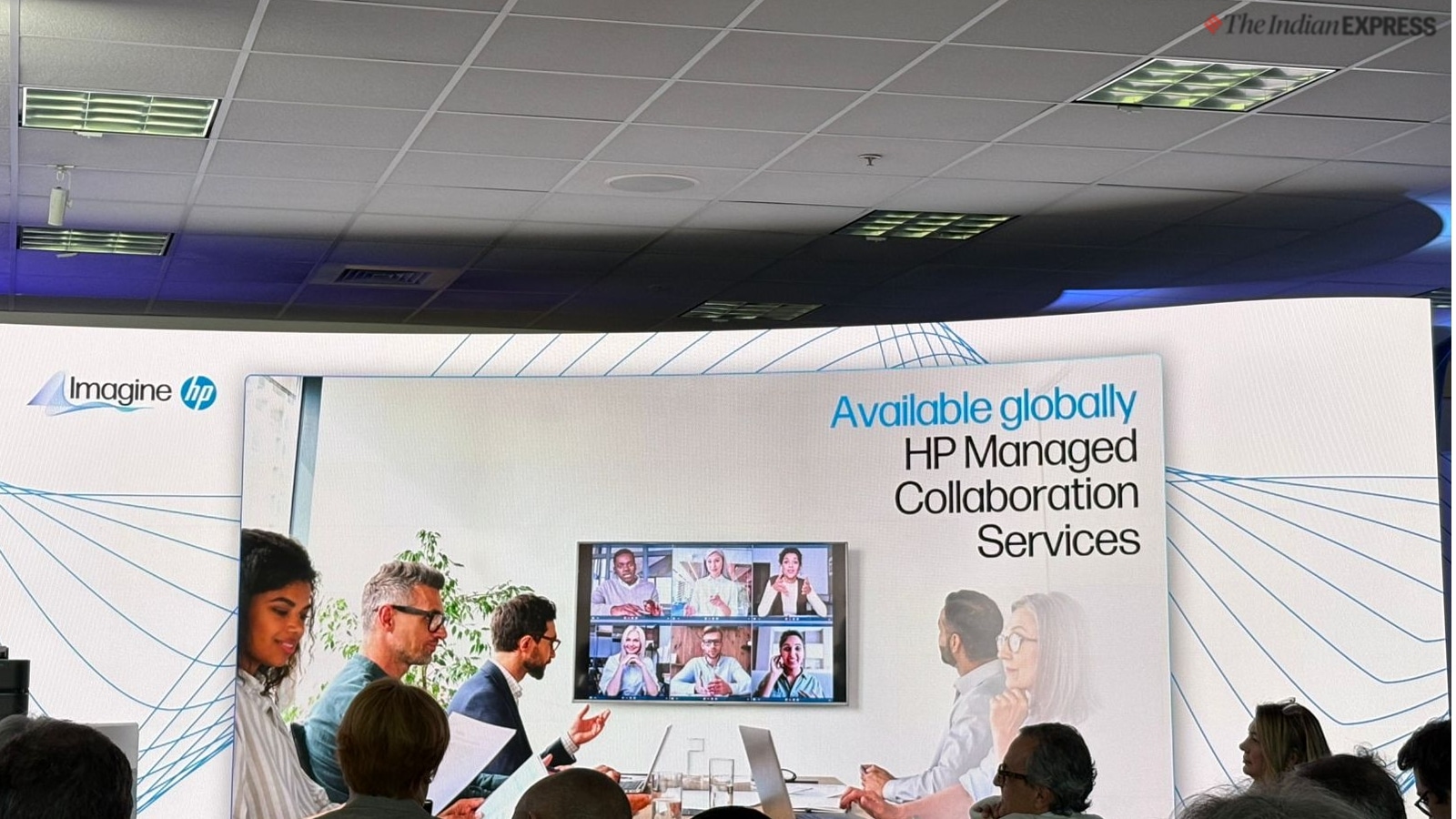 Services are becoming critical to HP’s long-term growth. (Image credit: Anuj Bhatia/Indian Express)
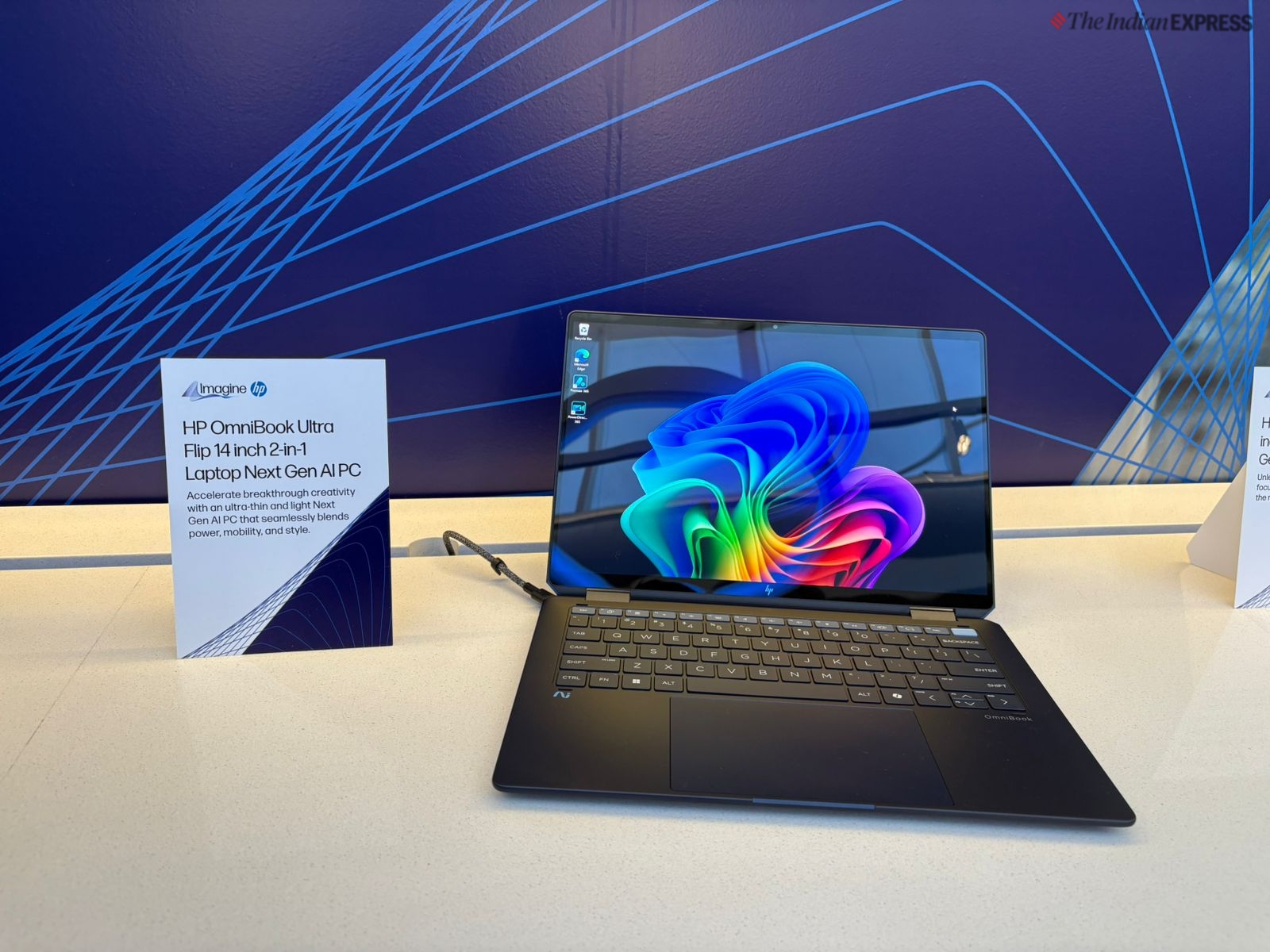 HP’s OmniBook Ultra Flip has a 3K OLED display, a haptic touchpad and Intel’s 200V Core Ultra series processors with a dedicated AI engine. (Image credit: Anuj Bhatia/Indian Express)
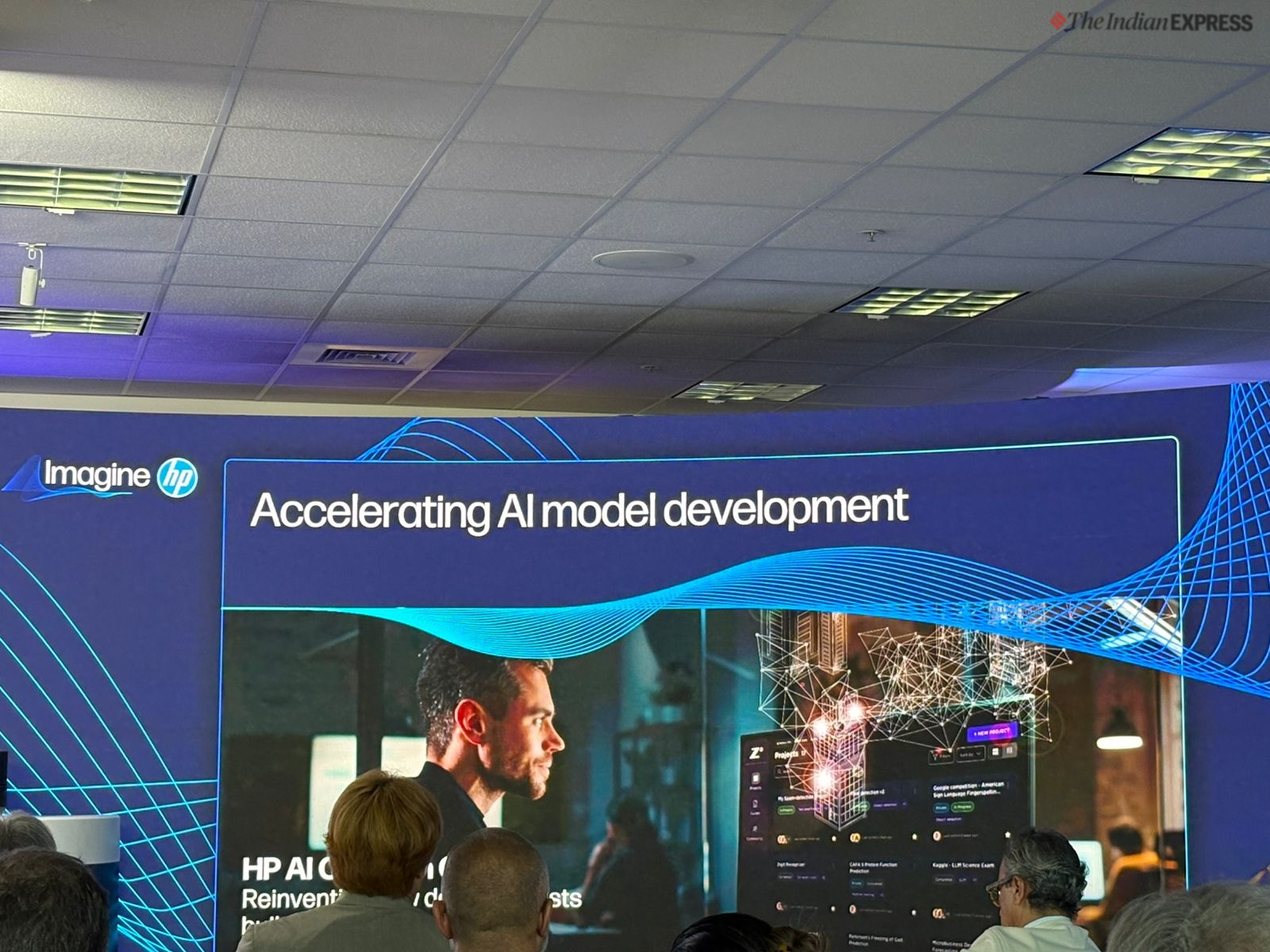 Z by HP Boost is a new collaboration tool that allows AI workstations to share GPU power on demand. (Image credit: Anuj Bhatia/Indian Express)