15 min read
© The Indian Express Pvt Ltd



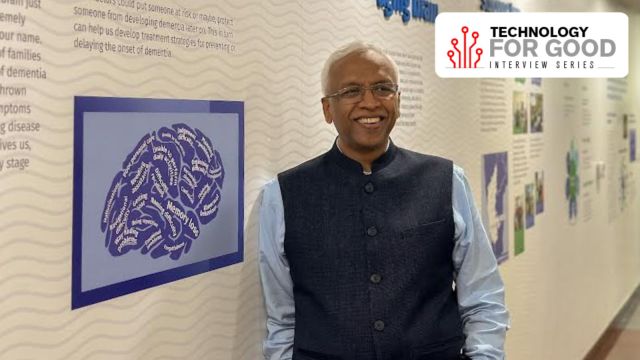 KVS Hari, the director of the Centre for Brain Research (CBR) at IISc. (Express Photo)
KVS Hari is the director, Centre for Brain Research (CBR), an autonomous, non-profit research organisation at IISc, Bengaluru.
The centre, which began with the generous gift from the Pratiksha Trust of Kris Gopalakrishnan of Infosys, is a unique initiative that conducts research on the aging brain and age-associated brain disorders.
Hari has an engineering degree from Osmania University, an M.Tech from IIT Delhi and a PhD from UC San Diego. His current research interests are centred on data science and applications of signal processing to solve problems in neuroscience and medicine.
Hari spoke to indianexpress.com on CBR’s work, its focus, and the need for collecting large amounts of health data to predict and prevent dementia. Edited excerpts:
Prof KVS Hari: India is undergoing a demographic shift. By 2030, the elderly population would be around 340 million, with dementia affecting roughly 7.4% of older adults.
Despite this scale, dementia is largely ignored in India. It is viewed as a normal part of ageing rather than a distinct disease, leading to limited societal and policy attention. While India currently benefits from a demographic dividend, over the next 10-20 years, it will transition rapidly into an ageing society, making dementia a major public health challenge.
Although some neurodegeneration occurs in normal ageing, dementia involves distinct disease mechanisms that must be understood. Dementia is an umbrella term that includes conditions such as Alzheimer’s disease, the most common form, characterised by memory loss, as well as Parkinson’s disease and vascular dementia.
By the time dementia or even a pre-dementia state is clinically diagnosed, the underlying disease process has typically been progressing for 15-20 years. This long, silent phase makes early detection difficult.
Our work focuses on understanding the disease progression and identifying early intervention opportunities, with the aim of halting or preventing dementia before irreversible damage occurs.
We are not a conventional academic department; we are a focused, mission-oriented centre. We pursue this mission by leveraging the data we collect and applying advanced statistical methods, machine learning, and AI.
Prof KVS Hari: Much of Alzheimer’s research has relied on animal and mouse models, yet despite decades of effort, there is still no cure. While several drugs have shown success in mouse models, these results have largely failed to translate to human clinical trials. The most recent drug, approved in 2024, delays disease onset by only six to eight months.
Given this reality, our focus is on collecting data directly from humans to identify early and composite biomarkers, using multimodal data, that can predict the onset of dementia.
Once the disease progresses beyond a certain point, effective treatment becomes difficult. Early detection, however, opens the possibility for intervention, primarily lifestyle-based interventions such as exercise, diet, sleep, and related factors, especially in the absence of effective drugs.
Our goal, therefore, is to build a composite biomarker for the early detection of dementia in the Indian population and to design interventions that can prevent or postpone disease onset.
Prof KVS Hari: Human anatomy is broadly similar across populations, and if a drug works, there is a strong likelihood it will work elsewhere. However, pharmaceutical companies recognise that large populations remain underrepresented in research. For example, certain genes associated with dementia risk have been well established, but largely in Caucasian populations.
Even in Western research, scientists are now examining race- and population-specific genetic effects. In some groups, genes previously identified as risk factors do not show the same association, indicating that genetic susceptibility can vary across populations. The same may well be true for India.
We therefore need to understand whether the Indian genetic profile confers different levels of dementia risk, and whether known risk genes operate similarly in this population. This remains understudied. While there is some data from South Asian migrant populations in the West, these datasets are small and insufficient.
Overall, global genomic data is heavily biased toward Western populations, making it essential to study dementia risk in the Indian context. Although drugs that work in Western populations are likely to work in India, pharmaceutical companies seek confirmation. This is why clinical trials in India are important, since some drugs have shown variable efficacy in different genetic groups.
Prof KVS Hari: While dementia research follows a standard pipeline: from basic science and animal models to human studies, work focused on the Indian population and Indian genomics remains limited. This is the key gap we aim to address.
In India, conditions such as diabetes and hypertension typically appear about a decade earlier than in Western populations, and as life expectancy increases, people live longer with these comorbidities. Together, these trends are likely to accelerate the burden of dementia.
Given this convergence of early-onset chronic disease and population ageing, India must address brain health now. Although dementia research is advancing globally across academia, industry, and epidemiology, India’s evidence base remains insufficient for a population of 1.4 billion.
Prof KVS Hari: Dementia has attracted significant attention from researchers and industry worldwide. However, it is important to understand how the disease manifests in India.
The acceleration of ageing — particularly brain ageing — is shaped by multiple factors, including diabetes, hypertension, cardiovascular disease, diet, environmental stress, lifestyle, air pollution, and genomics. While extensive cohort studies exist in other countries, India still lacks a comprehensive understanding of how these factors interact to drive dementia risk.
India has important ageing-related studies such as the Longitudinal Ageing Study of India (LASI), as well as dementia-focused research at institutions like NIMHANS and the All India Institute of Medical Sciences. However, what remains missing is a focused effort to understand how Indians age, especially in relation to brain health, so that appropriate interventions can be designed.
The centre focuses on how Indians age in terms of brain health. Although ageing affects multiple organs, our work concentrates specifically on the brain. Given India’s immense diversity in lifestyles, diets, and environments across regions, it is essential to study brain ageing within this uniquely Indian context.
We have a multidisciplinary team that includes geriatric clinicians and psychiatrists, neurochemists and neurobiologists, data scientists, neuroimaging experts, and biostatisticians, supported by social field workers who engage with participants. In rural areas, we work closely with ASHA workers, and the team is further supported by technicians and other staff.
Prof KVS Hari: In 2015, the centre, with support from the Tata Trusts, launched India’s first urban longitudinal cohort focused on brain ageing. The study targeted 1,000 participants who had lived in Bengaluru for at least five years.
Participants in this cohort are followed annually and undergo multi-modal assessments. Each participant meets a clinician for a detailed clinical evaluation. Blood samples are collected, and a psychologist administers comprehensive cognitive assessments covering memory, reasoning, logic, and spatial abilities. Social field workers support participant engagement and follow-up. In addition, we collect MRI data, optical coherence tomography (OCT), audiometry, gait analysis, carotid Doppler data, and plan to include EEG.
All data are de-identified, with participants assigned unique barcodes; no personally identifying information is stored with the data. Participants are over 45 years of age and may have comorbidities such as diabetes or hypertension, but individuals with diagnosed dementia are excluded.
To examine the role of lifestyle and environment, the centre also initiated a rural cohort in 2018 in Kolar district, about 100 kilometres from Bengaluru. A dedicated centre was set up with mobile units that reach approximately 200 villages. This cohort aims to follow 10,000 participants at two-year intervals, and the first-round enrolment of all 10,000 participants was completed in February 2025.
Together, the urban and rural cohorts allow us to compare how factors such as lifestyle, education, and environment influence brain ageing and disease progression. Unlike most hospital-based studies that recruit patients after disease onset, our cohorts focus on healthy individuals, enabling us to observe the transition from normal ageing to pre-dementia and, in some cases, dementia over time.
Prof KVS Hari: The first challenge is that this is a longitudinal study. We aim to understand how identified markers change over time and how these trajectories differ across people with varying educational backgrounds, lifestyles, and environments.
The difficulty is in retaining the same participants over long periods, say 10-15 years, with repeated data collection every one or two years. This is inherently challenging as participants age, relocate, or pass away, as was particularly evident during the COVID pandemic. Ensuring high-quality longitudinal data, especially among older populations, is a challenge.
There is also a research challenge: we need sufficiently large and diverse datasets to build reliable predictive models. If data are drawn only from Bengaluru or from a single rural taluka in Karnataka, the resulting models will be context-specific.
To address this, we are partnering with other research groups that focus on conditions such as diabetes, hypertension, and cardiovascular disease, but may not currently assess cognition or brain ageing. By adding cognitive assessments to these existing cohorts, we aim to generate data that support a truly pan-India model.
Prof KVS Hari: Our approach focuses on non-pharmacological, lifestyle-based interventions because these are the most viable options in the absence of effective drugs.
Brain health cannot be viewed in isolation — the body functions as an interconnected system, and overall health directly influences brain health.
Research has shown strong links between the brain and other systems, including the gut, kidneys, cardiovascular system, and metabolic health. Conditions such as diabetes and cardiovascular disease significantly affect brain function.
We want to define a minimum viable, India-specific protocol that enables non-neurologists to systematically assess cognitive decline. Current assessments are often limited; we want to make them more structured and comprehensive.
A second output is the development of personalised lifestyle interventions. Because individuals respond differently to diet, physical activity, sleep, and other factors, these interventions need to be tailored rather than generic.
Prof KVS Hari: Yes. The key is early screening, and for this, we are exploring various tools, including diagnostic devices.
Dementia is caused by abnormal proteins that clump together in the brain and interfere with communication between nerve cells. Most drug research has focused on removing these protein clumps. Earlier, doctors could track the progress of the disease only by testing cerebrospinal fluid, which requires an invasive procedure and is not suitable for routine screening. In recent years, advances in technology have made it possible to detect these proteins in blood, even though they are present in very small amounts.
Our goal is to evaluate whether blood-based plasma protein biomarkers can be used for population-level screening.
For individuals over 50, we aim to determine whether these biomarkers can distinguish normal ageing, pre-dementia, and dementia states. This requires establishing India-specific reference ranges, similar to how HbA1c thresholds are used in diabetes.
We are also developing digital biomarkers. Cognition is not a single function but a composite of multiple brain systems, and cognitive demands vary across occupations. Annual assessments miss important changes. Digital and wearable technologies allow for continuous monitoring.
Digital biomarkers such as speech patterns, gait, and movement offer additional insight. A person may have motor impairment yet remain cognitively intact, or vice versa. Subtle changes in speech or walking may precede clinical symptoms. Continuous monitoring allows us to capture these early signals.
The tools based on digital biomarkers could take the form of an app or platform that integrates multiple data streams.
We also plan for device-based solutions where individuals can be assessed during routine visits. We are exploring markers such as eye tracking, speech patterns, and movement to determine whether continuous or repeated monitoring can reliably reflect cognitive status.
We are also exploring simple, scalable screening tools that include minimally invasive blood-based tests, potentially using pinprick sampling and dried blood spot technology, alongside digital markers.
Prof KVS Hari: Yes and no. Today, data belongs to the patient, with hospitals acting as custodians. As a result, data is fragmented across individual hospitals, clinics, and care settings. While large volumes of health data are routinely collected, they cannot be used to study cognitive decline unless cognition itself is assessed, and in most cases, it is not.
Although assessments exist for many other health dimensions, cognition is typically missing. By adding standardised cognitive assessments across hospitals, we can generate cognitive data and integrate it with the rich clinical and lifestyle data already being collected.
This is what we are now pursuing, at the national level. We are engaging hospitals, wellness centres, and other institutions that collect health data but do not routinely assess cognition, and inviting them to join a coordinated initiative.
Historically, the absence of routine cognitive testing has been a major gap. Our goal is to address this gap by embedding cognition into standard data collection practices. While assessment tools for cognition exist — developed by NIMHANS and supported by ICMR — there is currently no national-level repository or registry that brings this data together.
This is where we come in: by connecting multiple cohorts and institutions to create a shared, national repository to advance dementia research.
Prof KVS Hari: In the dementia space, activity around blood-based biomarkers is largely being driven by established companies rather than startups, as these technologies require advanced platforms to detect low-concentration proteins.
Current startups in the field broadly fall into two categories: caregiving and research/diagnostics. On the diagnostics side, startups are developing speech-based markers to detect cognitive decline, with notable efforts in the UK and the US. Others are exploring gait and movement as diagnostic signals.
Imaging is another area of innovation. Conventional MRI is expensive and difficult to deploy widely, so low-field, portable MRI systems are being developed, potentially deployable via mobile units. The technical challenge, however, is reduced signal quality. As a result, significant work is underway to extract meaningful information from lower-resolution MRI data. While these systems have applications beyond neurology, their potential for brain imaging is also being explored.
On the caregiving side, startups are developing tools for continuous support and engagement. For example, some are creating “memory vaults” where individuals store personal preferences, such as favourite songs or films, while they are healthy. These can later be used by caregivers to provide comfort and engagement when dementia progresses.
Prof KVS Hari: AI, particularly machine learning, is valuable because it can detect patterns that may be missed by other approaches. In healthcare today, AI is largely applied in siloed domains such as radiology, where algorithms are trained on images like X-rays to generate specific predictions.
These systems function much like specialists and are not intended to replace doctors. In ageing brain research, however, the challenge is inherently multi-modal. We must integrate imaging data, such as MRI, with speech, gait, and other behavioural signals. This complexity makes the problem especially well-suited to AI-driven approaches.