2 min read
© IE Online Media Services Pvt Ltd



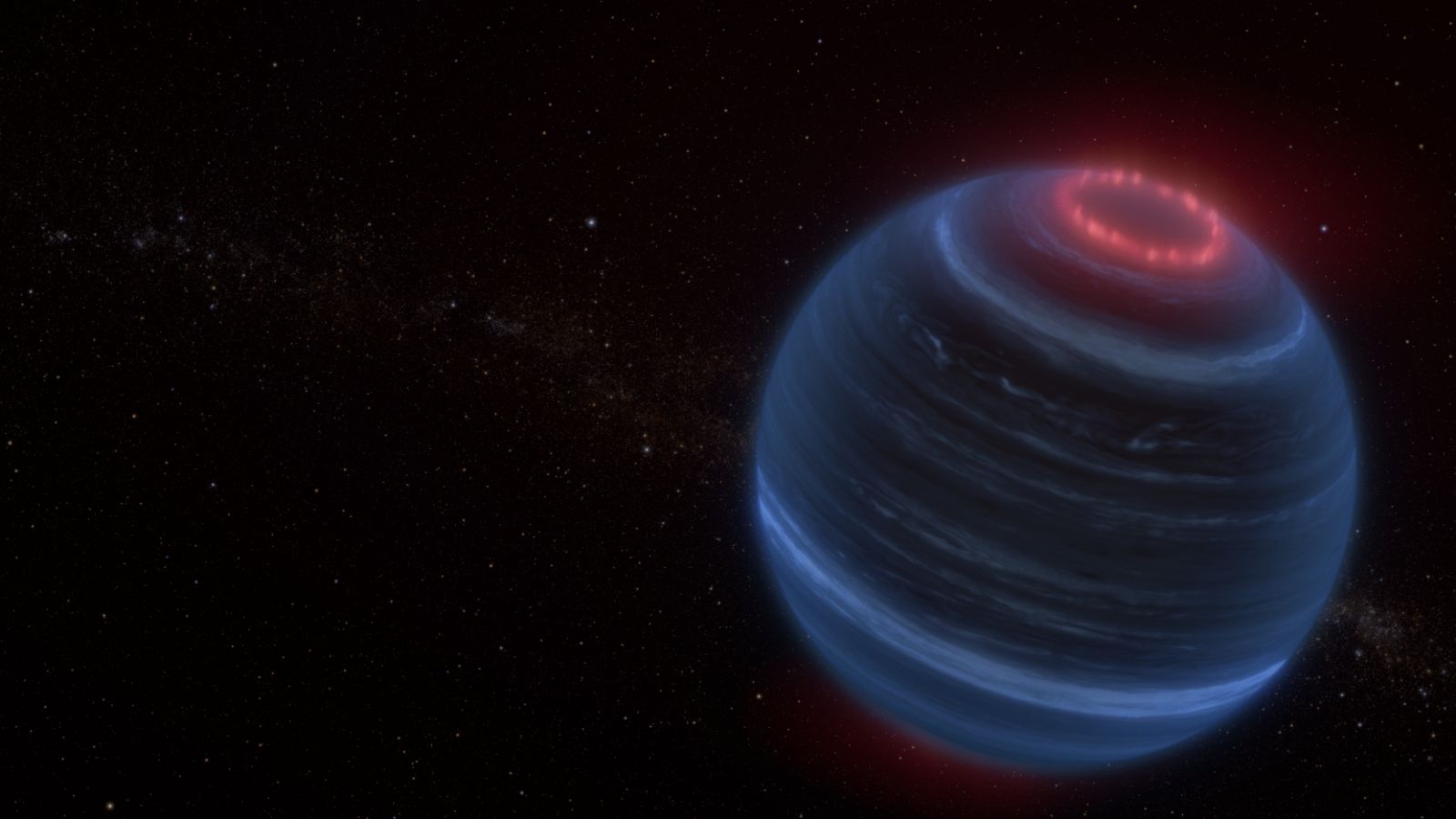 This artist concept portrays the brown dwarf W1935, which is located 47 light-years from Earth. (NASA)
Astronomers used the James Webb Space Telescope to find a brown dwarf with infrared emission from methane. This is unexpected because the brown dwarf, larger than Jupiter and smaller than a star, is cold and does not have a host star. The researchers propose that the methane may be there due to processes generating auroras.
To solve the enigma of methane on the planet W1935, scientists turned to our solar system. Methane emissions are fairly common from gas giants like Saturn and Jupiter. The upper-atmosphere heating that causes the emissions is linked to aurorae.
The beautiful aurorae of our planet that you have seen pictures of are created when energetic particles from the Sun crash into the gas molecules in our atmosphere. Both Jupiter and Saturn have similar auroras that are caused by solar wind but particles also come from nearby active moons like Jupiter’s Io and Saturn’s Enceladus.
But W1935 does not even have a host star, let alone stellar wind to generate aurora and explain the extra energy in the atmosphere required for methane emissions. The team proposes that either unaccounted internal processes like atmospheric phenomena or external interactions with either interstellar plasma or a nearby active moon may account for the emissions.