


Tags:


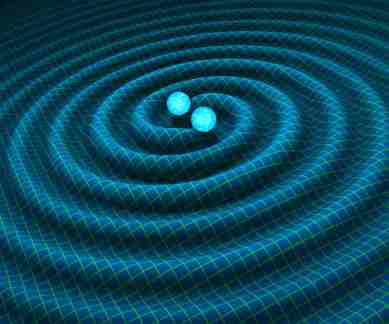
Astronomers have used gravitational waves – ripples in the fabric of space and time caused by a violent cosmic event – to measure the age of the universe. The direct detection of gravitational waves from at least five sources during the past two years offers spectacular confirmation of Einstein’s model of gravity and space-time, researchers said.
Now, astronomers at Harvard-Smithsonian Center for Astrophysics (CfA) in the US have used a single gravitational wave event (GW170817) to measure the age of the universe. A team of 1,314 scientists from around the world contributed to the detection of gravitational waves from a merging pair of binary neutron stars, followed by the detection of gamma-rays. They then identified the origin of the cataclysm in a source in the galaxy NGC4993 spotted in images taken with various time delays at wavelengths from the X-ray to the radio.


The age derived from this single event is consistent with estimates from decades of observations relying on statistical methods using two other sources: the cosmic microwave background radiation (CMBR) and the motions of galaxies, researchers said. The former relies on mapping the very faint distribution of light dating from a time about four hundred thousand years after the big bang. The latter involves a statistical analysis of the distances and motions of tens of thousands of galaxies in relatively recent times.
The fact that this one single gravitational-wave event was able to determine an age for the universe is remarkable, and not possible with every gravity wave detection. In this case there was an optical identification of the source (so that a velocity could be measured) and the source was neither too distant nor too faint. With a large statistical sample of gravitational wave events of all types, the current range of values for the age will narrow, researchers said.


