


© IE Online Media Services Pvt Ltd
Tags:


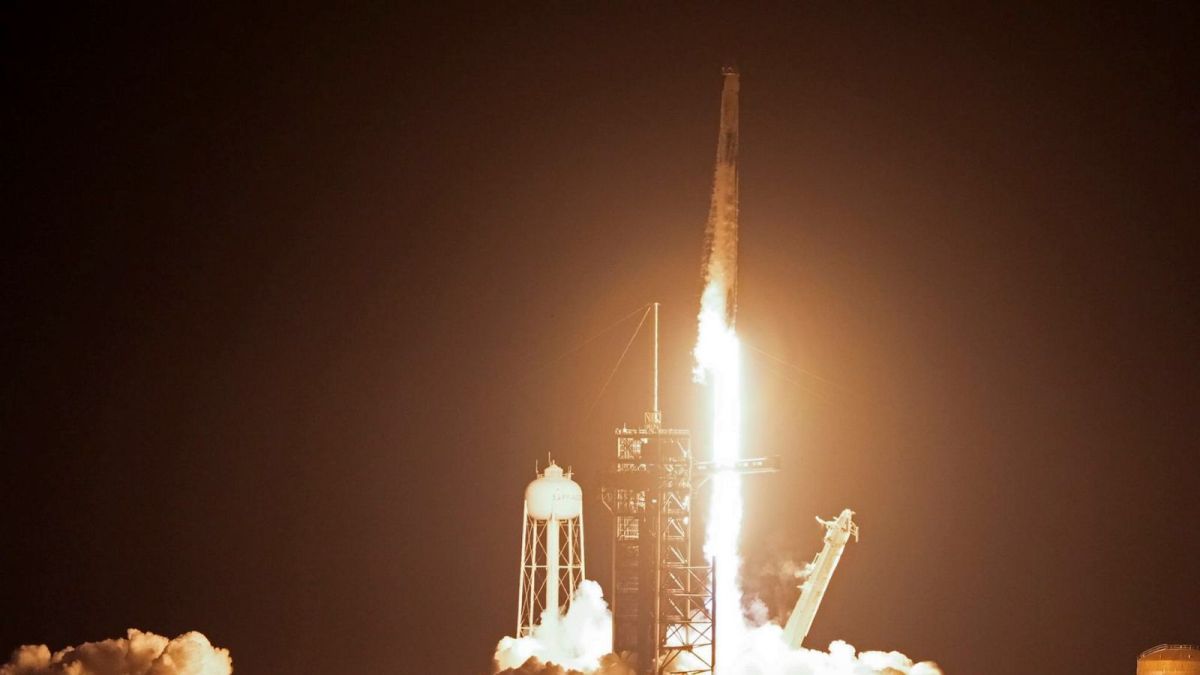
The China Aerospace Science and Technology Corporation (CASC), a state-owned contractor, plans to launch two large-diameter reusable rockets in 2025 and 2026, according to a new report.
CASC plans to launch a four-metre and five-metre diameter rockets in 2025, reported SpaceNews, citing Wang Wei, a deputy to the country’s National People’s Congress. To put that into context, SpaceX’s Falcon Heavy, the company’s biggest launch vehicle in operation currently, has a diameter of about 3.66 metres. Of course, Starship will dwarf both the planned Chinese rockets when it comes out with a diameter of 9 metres.


The new launch vehicles are part of China’s plan to put a Chinese astronaut on the Moon by the year 2030. The country already has a space station with three modules in orbit. When the International Space Station is retired at the end of its lifespan in 2030, there is a small chance that humanity’s only outpost in low-Earth orbit belongs to one country.
China also plans to expand Tiangong by adding another three modules in addition to the ones that are already in orbit.
“We will build a 180 tons, six-module assembly in the future,” said Zhang Qiao of the China Academy of Space Technology during the event at the 47th International Astronautical Congress in Baku in 2023. Even though ISS weighs over 450 tons, the expansion could make Tiangong a viable alternative for in-orbit experiments and missions.
CASC successfully completed a vertical take-off and landing hover test ahead of next year’s potential launch, reported Space.com.
This development comes in as private Chinese space technology firms are building their own reusable rockets to directly compete with Elon Musk’s SpaceX. The fact that the public sector has thrown in its weight behind the effort could mean that China will have multiple reusable launch vehicle options in the coming years.


