6 min read


© IE Online Media Services Pvt Ltd



 Google has embarked on its Google AI Now initiative with an objective of starting a conversation around the merits of AI for the environment. (Image: Google)
Even as climate change continues to show apparent signs of devastation, companies like Google are turning to Artificial Intelligence or AI to help combat and adapt to this new crisis. Google has embarked on a new series of talks illuminating cutting-edge AI innovations in real-world applications, from conversation efforts to healthcare advancements.
As part of the session called Google AI Now, several researchers and partners shared their ambitious vision for AI to conserve the lands, seas, and skies.
When it comes to land, Manish Gupta, Head, Google Research APAC, shared insights into the AI-driven innovation named AnthroKrishi that is currently underway in India. AnthroKrishi is backed by an AI model that can help detect field boundaries and boundaries of water to enable sustainable farming practices and improve crop yields. Google claims that it can support India’s 1.4 billion people and the rest of the world.
“I’ll start with a project that’s kind of very close to my heart called AnthroKrishi. Anthro means human and krishi is a Sanskrit word for agriculture,” Gupta said in his opening statement at the virtual session.
Agriculture employs nearly half of Indian households, however, it also significantly contributes to emissions. AnthroKrishi uses AI systems to analyse satellite imagery to map the boundaries of individual farms and monitor crops, yields, and farming activities. The capability provides comprehensive data to enable smarter farming, from banks issuing loans based on expected yields to governments optimising subsidy programmes.
When asked about the challenges encountered and the extent of support provided by the Indian government in implementing AI, Gupta elaborated on technical and other issues. “One is ground data – in India, it tends to be very noisy when trying to identify crops. There are errors in government survey data we’ve looked at. Another challenge is validating our models once built – we’ve done pilots with state governments like Telangana and Maharashtra along with IIT Bombay to get feedback on accuracy. The engagements with government organisations have been crucial for validating our models,” Gupta told indianexpress.com.
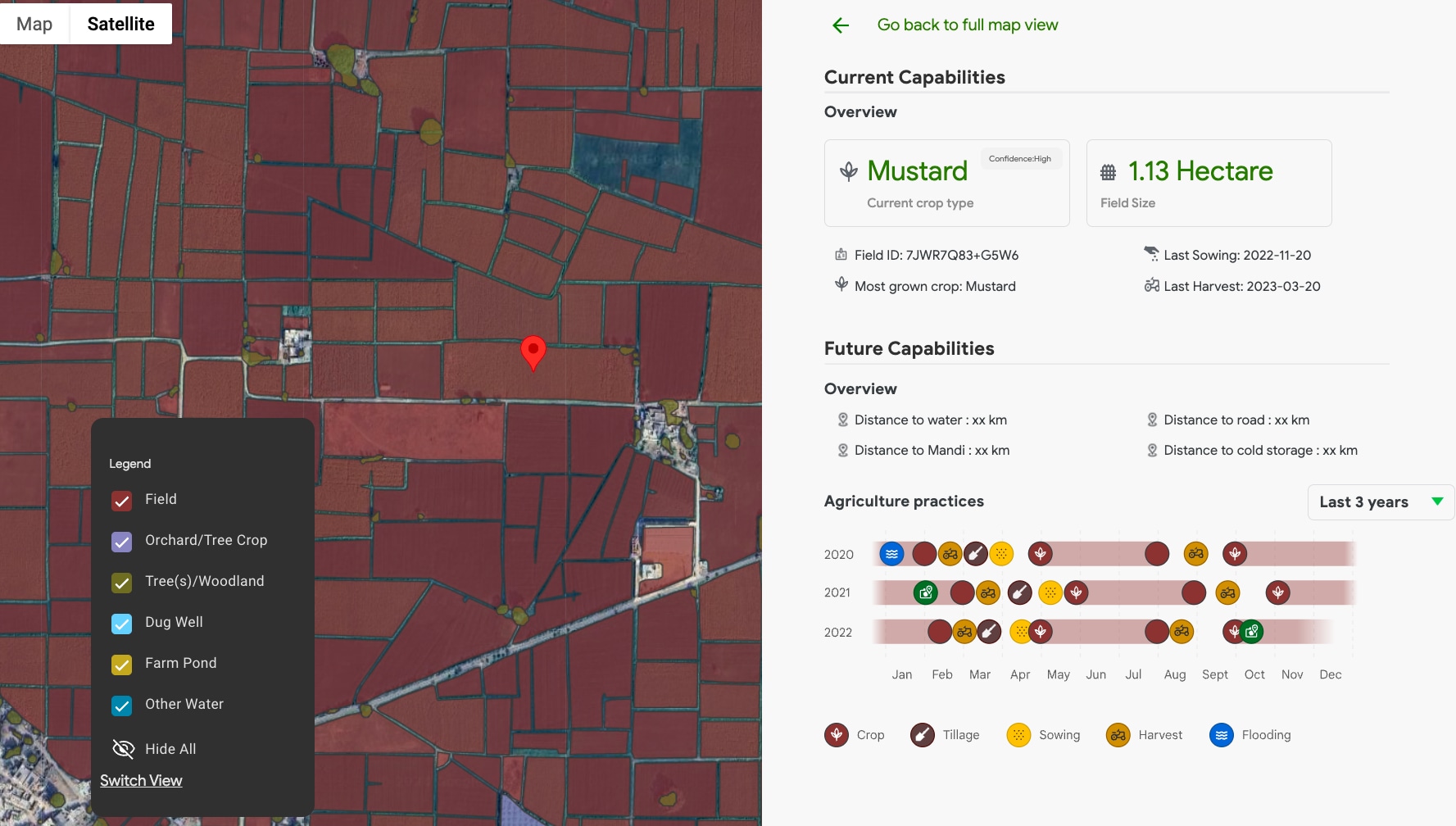 Using Al and satellite imagery, maps out critical information about individual
When asked if AnthroKrishi was an open-source network where others too can build apps, Gupta maintained that they intend to do whatever it takes to promote real-world adoption and impact. “AnthroKrishi is still at an early stage where we’re validating accuracy, but we’ve made it freely available to partners like startups integrating our farm mapping outputs. Ultimately, as we validate it further, we’ll likely take an open approach to enable broad adoption, similar to how Google open-sourced TensorFlow and is making some large language model embeddings openly available,” he said.
Google Australia has teamed up with marine ecologists to save endangered giant kelp forests that are currently being destroyed owing to warming oceans. The tech giant is using AI to analyse thousands of high-resolution satellite images of remaining kelp areas nationally, something which is virtually impossible to do using manual methods. AI is also used in accelerating genetic studies to spot heat-tolerant kelp strains that can repopulate depleting reefs.
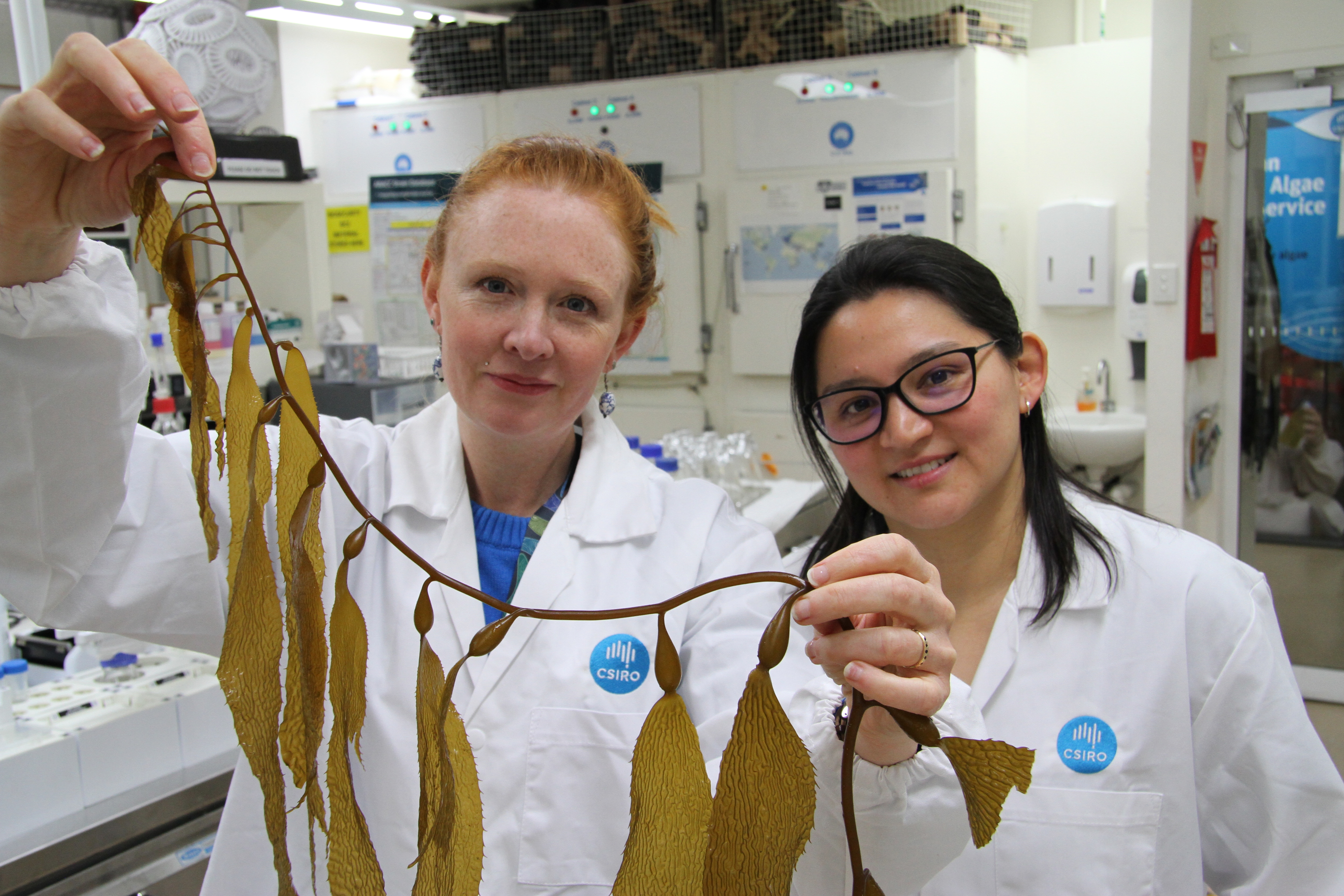 A crowd-sourced, citizen science project to help scientists analyze
“The opportunities Google has provided to map giant kelp at a national scale is a complete game changer for us,” said Dr Craig Johnson of the Institute for Marine and Antarctic Studies. “Without the AI technology that Google is bringing to the table, we would have absolutely no chance,” said Johnson as he warned that unless we address the fundamentals of the climate change problem, the efforts will be for nought.
On a similar tangent, Dinesh Sanekommu, who leads Google’s contrails team, highlighted the role of AI in both mitigating climate impacts and adapting to changes that are taking place.
When it comes to skies, Google has been developing AI systems to reduce the aviation sector’s toll on the environment by helping airlines optimise their flight routes around areas that are prone to contrail formation.
Contrails are the condensation trails planes leave in humid airspace, artificially creating cloud cover that traps heat. By forecasting these regions using weather data and past flight paths, pilots can simply reroute around them.
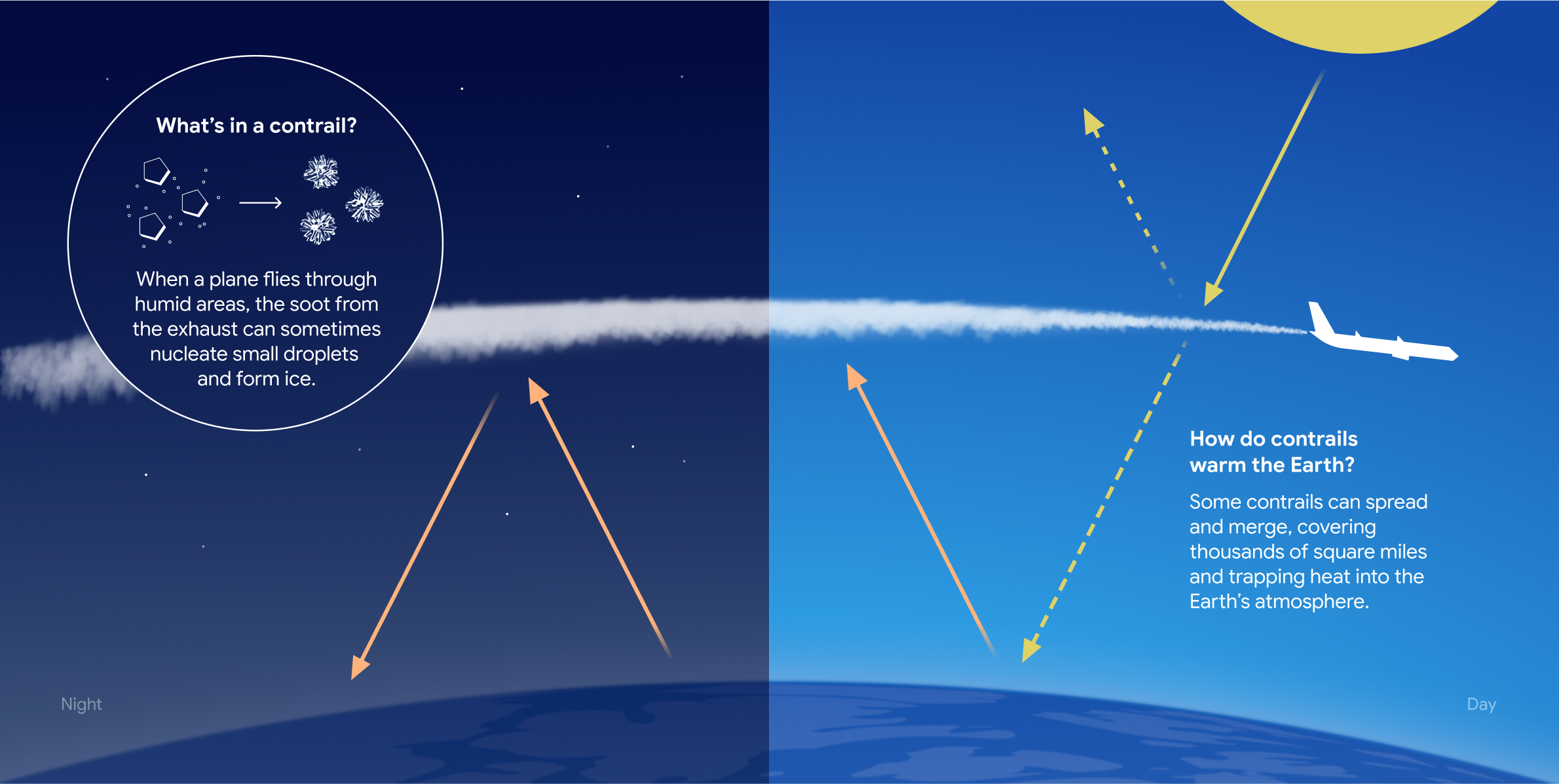 Google Research teamed up with American Airlines and Breakthrough
In trials with American Airlines last year, Google’s AI system enabled pilots to reduce contrail formation by 50 per cent on selected flights – an “encouraging initial outcome,” according to Sanekommu. The team is now working to roll out global contrail mitigation coverage.
It is well known that AI consumes tremendous amounts of energy for power and cooling for its data centres. When asked about how Google uses AI to ensure that the benefits outweigh the negatives, Gupta said that while being ambitious with AI goals, the company is also responsible through principles and research into deploying AI responsibly.
He added that Google’s existing data centres running AI workloads are already 1.5x more energy efficient than standard data centres. “We’re doing significant work on algorithmic techniques to dramatically reduce AI energy consumption further. Google has also committed to matching 100 per cent of energy use with renewable sources by 2030.”
Gupta, Johnson, and Sanekommu asserted Google’s ‘bold yet responsible’ AI mission. From respecting privacy and avoiding biases in developing models to quantifying potential negatives like data centre energy use, Google says it is driving AI innovation while adhering to ethical tenets and driving continuous efficiency improvements.
Gupta pointed to Google’s commitment to match 100 per cent of operational energy use with renewable sources by 2030 as one facet of this responsibility. He acknowledged persistent challenges like large language models hallucinating untruths, which Google is tackling through AI safety research.