4 min read

Journalism of Courage



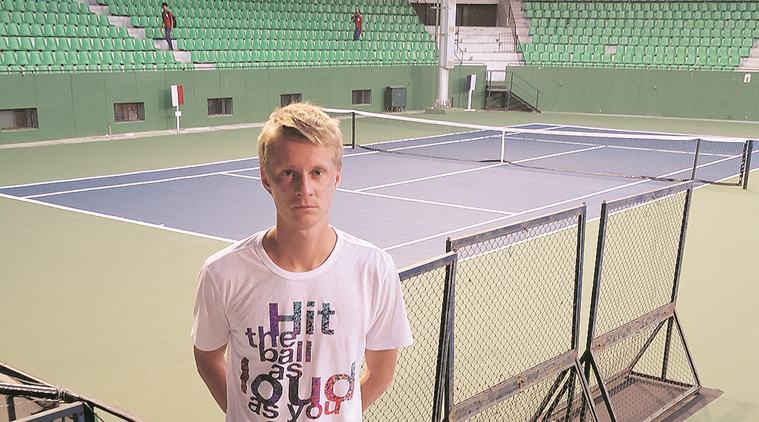 Sanjar Fayziev is just 22 years old.
An hour into their practice session at the KSLTA Stadium in Bangalore, the Uzbekistan team that will play India in the Davis Cup second round Asia/Oceania Group 1 tie on Friday had received the message they seemed to have expected. Their spearhead, world number 71 Denis Istomin, was not travelling to Bangalore owing to an injury to his left heel. But the Uzbeks were prepared for it and travelled to India with Jurabek Karimov – Istomin’s replacement. Sanjar Fayziev, the 22-year-old, who made his Davis Cup debut in 2014, has been promoted to be the team’s leading man. High pressure, but Sanjar has seen worse.
He established himself as a permanent fixture in the Davis Cup team last year, while competing in the World Group Playoff against Switzerland. That came towards the end of a year that had been marred by a heart condition that took away two months, not consecutively, away from the 2016 season.
He was diagnosed with arrhythmia – a condition that causes irregular heartbeats. Though in his case, it was a minor condition. “He had to take some time off when it got bad and just rest to get the heart to regulate itself,” says team manager Valera Lim.
Fayziev still took a few additional weeks getting back consistently into the game, yet more out of fear of the illness. “I was cleared to play, but it was mentally a bit tough because you don’t know what can happen,” Fayziev says. “But I came back and started doing well on the Futures tours. The confidence came back too.”
Towards the end of the season, the six-foot-two blonde Uzbek won two out of the four Futures finals he reached, along with the sole doubles title he won in five finals appearances. The comeback helped him improve his ranking from the lowly 684 he dropped to during his time out due to the ailment, to the 376 he’s currently on.
“Now I’m the number one, so there will be some pressure,” said Fayziev. “But we have always had good team spirit, so that helps to ease the pressure. But yes, there is more responsibility.”
He’s been playing the game for 15 years now, picking it up as a seven-year-old when his mother came across a tennis court in Tashkent. At that point he had already been an avid swimmer, and was rated as a football prodigy. “I soon realised that I was better at tennis and that just stuck,” he says. His father, meanwhile, works as an administrator in the Uzbekistan Wrestling Association, but that was one sport he asserts he could never get swayed into playing, despite its popularity in the country.
Tennis is growing now in the Central Asian nation. It became even more popular this January, when Istomin pulled off a upset over defending champion Novak Djokovic at the Australian Open. “When the Soviet Union broke, Uzbekistan was the main country for tennis because we had good weather and good courts,” Istomin told The Indian Express. “The only problem is that we don’t have that many good players, but that will soon get better.”
Since 2005, when Istomin made his Davis Cup debut, the 30-year-old had been the one taking charge of the squad. Over the past few years though, he’s been leading Fayziev into off-season training sessions, preparing the 22-year-old for the time when he will become the team spearhead.
The moment has come unexpectedly early, but Fayziev remains unperturbed. “We have our reserve player with us, and we always had a Plan B. We are ready to play,” he adds. The onus will still be on Fayziev though. And Uzbekistan will want their golden-haired boy, to turn into a man.