


Stay updated with the latest sports news across Cricket, Football, Chess, and more. Catch all the action with real-time live cricket score updates and in-depth coverage of ongoing matches.
Tags:


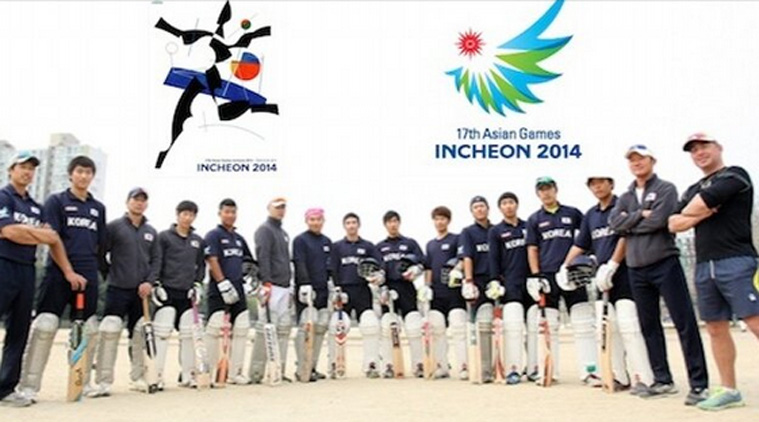
In April this year, Julien Fountain was holidaying in Sri Lanka when he stumbled upon a job advertisement on the International Cricket Council (ICC) website that read ‘Cricket Coach for Korean national team’. At first, the post didn’t really catch his fancy. Coaching in South Korea, not surprisingly, wasn’t quite a feature in the well-travelled Fountain’s bucket-list. In his two-decade career, the 44-year-old had after all been an integral part of dressing-rooms across the world, including that of the West Indies, Pakistan and England.
This was Korea, who were not even an Associate member of the ICC and instead languished in an Affiliate capacity as part of the East Asia-Pacific Division Two. To boot, they had finished fifth in their last competitive outing—some three years ago—in a tournament that pitted them against Samoa, Cook Islands, Indonesia, Philippines and Tonga.

Though not consumed by the job listing, Fountain was still intrigued, especially when he found out that the Koreans were touring Sri Lanka at the same time on an exposure tour before the Incheon Asian Games. So he decided to check them out anyway.
Prior to being a roving cricket coach, Fountain had once played baseball for the British Olympic team. And what he saw of the Koreans play cricket put a smile on his face. For, in them he envisaged proof for what had been his long-held theory—that baseball players were perfect for T20 cricket. Just then, for good measure as he recalls, a Korean batsman launched a six so big that in Fountain’s eyes it had home-run written all over it. Before long, he had signed up for the most unique assignment of his illustrious career.

“The ball landed about 20 yards over the rope. The funny thing was that they made a lot of basic mistakes but they still posted 165 in 20 overs. And they even had 59 dot balls. Some of their shots were monstrous. They just kept hitting,” recalls Fountain while reminiscing about his maiden chance-encounter with his present lot of boys.
The fountainhead
Even before he got there, Fountain was aware that baseball culture has always run deep in South Korea. For long now, they have been one of the major exporters of players to the major and minor leagues in the USA. Then at the Beijing Olympics in 2008, it was South Korea who bagged the gold medal in baseball. In stark contrast, cricket has remained an alien sport, barely ever getting a mention. The domestic league comprises entirely with teams made up of players from India, Pakistan, Sri Lanka, Australia and New Zealand. A total of 12 clubs take part in the league, with coaching that would be considered schoolboy level in regular cricket-playing countries.
It would have been easy for the Korean Cricket Association (KCA) to follow in the footsteps of either an UAE or Hong Kong by putting together a team of expats to represent their country. But unlike the majority of developing cricket nations, who rely heavily on first or second-generation immigrants from the sub-continent, South Korea has built their side entirely from local baseball talent.
Even in the present squad, Fountain reveals, a majority of them have been professional baseball players with a maximum cricket-playing experience of 18 months. A few have taken the sport up as recently as six months ago. But they have been handed professional contracts by their country’s Olympic association till the end of Asian Games. “Lee Hwayeon, former team captain and coach and KCA Director, was responsible for teaching the guys the basics. However, in order to raise the standard to a proper competitive level, they had to hire somebody with experience at international level. That’s why I am here,” says Fountain, who was one of the first specialist fielding coaches to be hired by an international team back in the 1990s.
Among the plethora of tips that he’s passed on to them, the most important one, believes Fountain, was playing with a straight bat and avoiding the tendency to play horizontally owing to their baseball background. “My biggest challenge has been to take these guys from playing a slow, amateur game of cricket and get them to increase both their skill levels and the tempo at which they play the game,” Fountain says.
Youtube coaching
But much of their learning has been off the web. It’s an idea recommended by their chief coach himself. Since Fountain took charge in April, the players were made to huddle in front of the computer screen to watch the IPL matches on YouTube. The idea, he adds, was to expose them to high-tempo cricket and also watch and learn a few quirky shots.
Fountain says the team boasts of players who can hit the ball beyond 100 metres, while also being able to play a reverse sweep and a switch hit. Over time, they have also developed their own cricketing terminology Teugjong, for instance, is the Korean for scoop. And Fountain gets excited when he talks about the variety that his bowlers possess in their repertoire. “One or two can even do a version of the Dilscoop. I have quicks that swing the ball well and spinners who bowl at a really good pace. I even have one that can bowl a doosra,” he explains.

In his two decades as a cricketing missionary, Fountain has been a sort of redeemer; for batsmen with technical flaws and fielders with butter-fingers. But in Korea, it dawned upon the Englishman that he was better off resorting to some left-field unorthodoxy to address players’ concerns instead of sticking to conventions.
He recalls the time one of his key batsmen, a left-hander, was consistently missing straight deliveries despite being adept at striking the ball. While Fountain spent sleepless nights trying to conjure up a solution for this conundrum, the batsman in question decided to bat right-handed instead. And has ever since not looked back. There are times when the cricketing novices inside them come to the surface, and Fountain finds himself trying desperately to ‘rein them in’. Reminding them about sticking to the basics is the only way out, he admits. “Park Tae-Kwan is our tall left arm fast medium bowler. Choi Ji-Won is our key all-rounder. Cho Sung-Hun is our opening batter and gun fielder. Cha In-Ho is one of our key off spinners. Sung Dae Sik is a former baseball hitter and he tends to act as our pinch hitter when we are behind the run rate,” he adds.
The expectations from the team, placed alongside Malaysia and China in Group A are low-key. In the last couple of months, the Koreans toured Fiji, where they played 11 games and won four. They played Japan at the newly-built venue—Yeonhui Cricket Ground—the first and only dedicated cricket space in Korea and won all three games. Then out of the three matches they played against an ‘all-star’ team from local league and won two.
“We want to make it out of our group and play against one of the established teams, possibly even against Sri Lanka,” he says, quietly hoping that his Korean adventure comes a full circle.
And with the Korean crowd accustomed to seeing the ball clear the fence, Fountain would hope that his big-hitters get into swing of things at Incheon.
Cricket at Asiad, FAQs
Why isn’t India participating?
The BCCI decided not to enter a men’s team because the Asian Games clashed with the CL T20. With four IPL teams participating in the tournament, the cream of Indian cricket will be playing for their franchises. Sending the women’s team was never discussed.
What about other cricket-playing nations?
India is the only Test nation from Asia to not participate. While Pakistan have entered only in the women’s event, Sri Lanka and Bangladesh will be playing in both categories.
Why no Pakistan men’s team?
Since cricket is a not an Olympic sport and the Pakistan Cricket Board is not affiliated to the Pakistan Sports Board, the PCB had to bear the cost of participation in the Asian Games. So, rather than fielding the men’s team, the PCB believed it was more worthwhile to spend on the women’s team, who are also the defending champions.
Any IPL stars?
Jeevan Mendis (Delhi Daredevils), Dinesh Chandimal (Rajasthan Royals), Tamim Iqbal (Pune Warriors) and Mashrafe Mortaza (Kolkata Knight Riders) are the four players on show to have got a first-hand taste of the IPL mania.
What about other internationals?
Bangladesh will be full-strength at Incheon, except for their skipper Mushfiqur Rahim, who is getting married during the Asian Games. Tamim Iqbal and Mahmudullah move to South Korea from West Indies, where they were playing Tests. Eleven out of the 15 Lankans have played international cricket with Dinesh Chandimal and Lahiru Thirimanne being World T20 winners.
Do they have cricket stadiums?
The Yeonhui Cricket Ground, which cost US$4.7 million, is the first dedicated cricket facility in Korea. The full-sized playing area has a seven-wicket square, with clay imported from Pakistan and has a seating capacity of 2353 spectators. In addition there are two practice grounds being constructed specially for cricket at the Asian Games.


Stay updated with the latest sports news across Cricket, Football, Chess, and more. Catch all the action with real-time live cricket score updates and in-depth coverage of ongoing matches.


