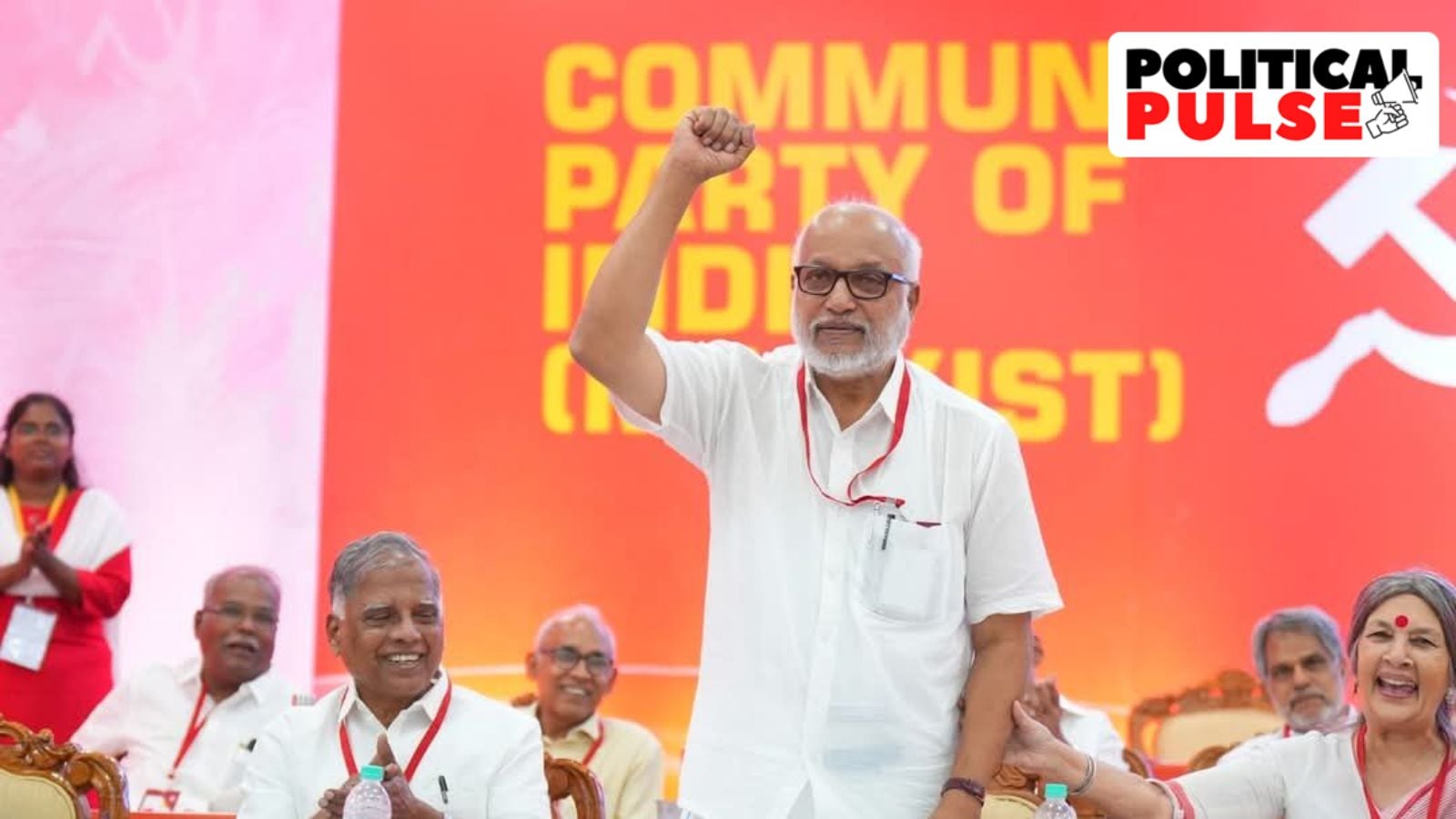
Ushering in a new generation of leadership, the CPI(M) Sunday elected M A Baby, a soft-spoken party veteran from Kerala, as its general secretary and inducted eight new members into the powerful Politburo.
The party replaced veteran leaders such as former general secretary Prakash Karat, Brinda Karat, Surjya Kanta Mishra, Subhashini Ali, Manik Sarkar, and G Ramakrishnan after applying the 75-year age cap norm. However, Kerala Chief Minister Pinarayi Vijayan, 79, was given an exemption and will continue in the Politburo, which is in charge of the day-to-day running of the party.

The six-day CPI(M) national conclave, which came to a close here, also saw the rare event of election to the Central Committee, revealing some divisions in the party. The conclave, called Party Congress in Communist parlance, also saw 30 new members get inducted into the Central Committee, the top decision-making body of the party. Karat, Brinda, Sarkar, and Ali have been made special invitees to the Central Committee to ensure change with continuity. At its last conclave in Kannur in 2022, the party had fixed 75 as the age limit for members of the Central Committee and Politburo.
The eight newly inducted Politburo members are Tripura Assembly Leader of the Opposition Jitendra Choudhury; former Tamil Nadu CPM secretary K Balakrishnan; trade union leader from Tamil Nadu U Vasuki; Lok Sabha MP from Sikar in Rajasthan, Amra Ram; West Bengal leader Srideep Bhattacharya; All India Kisan Sabha (AIKS) general secretary Vijoo Krishnan; All India Democratic Women’s Association general secretary Mariam Dhawale; and former student leader R Arun Kumar. Krishnan and Kumar are in their early 50s. All of them were members of the previous Central Committee.
The Party Congress also elected an 84-member Central Committee, inducting 30 new faces. There were some dramatic moments on the last day after Centre of Indian Trade Unions or CITU’s national vice president D L Karad, who is also the president of the union’s Maharashtra unit, threw in his hat for the election to the Central Committee, forcing a rare secret vote. Karad bagged only 31 votes. Baby, elected as the general secretary, said he had attended 15 national conclaves since the 1978 Jalandhar Congress and had seen an election for the first time.
Karad told reporters, “It is a democratic process. The Party Congress was electing the Central Committee. Some comrades suggested my name. I gave consent. There is no question of any differences, nothing, whatever be the results … I am a disciplined worker of the CPM. I will continue to work. I am not protesting against anyone..This Congress has emphasised that class struggle at the grassroots level should be waged militantly. I feel comrades who are fighting at the grassroots level should be given preference in the Central Committee and some of my colleagues thought that my name should be there.”
Sources in the CPI(M) said the Maharashtra and Bengal units of the party were in favour of the appointment of AIKS president and Politburo member Ashok Dhawale as the general secretary. However, Prakash Karat proposed the name of Baby who had the backing of the powerful Kerala unit.
Story continues below this ad
ExplainedDifficult road ahead
M A Baby faces a tough task — CPI(M)’s revival in old bastions like West Bengal and Tripura, making inroads in new areas like the Northeast and retaining power in Kerala.
Karad’s decision to contest is being seen in that light. Since its previous general secretary Sitaram Yechury’s death last September, Karat had handled the party’s affairs in an interim capacity. Sources said one delegate from Uttar Pradesh too wanted to contest, but the leadership persuaded him to change his decision.
Baby said there were no differences and suggested that his name for the top post was proposed by CPI(M)’s West Bengal state secretary and Politburo member Mohammad Salim and seconded by Ashok Dhawale.
Once a force to reckon with at the national level because of its ideological positions and often punched above its electoral heft, the CPI(M_ may have ushered in a new leadership, but the challenges it is facing are stark.
The party has not been able to either expand its mass base or regain its electoral footprint. The CPI(M) — in fact, the entire Left — has been on a steady decline since 2009 after reaching dizzying heights five years earlier. It had won 44 Lok Sabha seats in 2004, emerging as a major political force, an alternative voice, and the architect of the UPA-I government. It slumped to 16 in 2009, fell further to nine in 2014, three in 2019, and four in 2024. Two of those seats came from Tamil Nadu with the help of DMK and one from Rajasthan with the help of the Congress.
Story continues below this ad
It has only one MP in Kerala and had drawn a blank in both Bengal and Tripura, its bastions once upon a time.
The challenges before Baby are stark: revival in West Bengal and Tripura, making inroads into newer areas, such as states in the North, and retaining power in Kerala, where the party is making a bid for an unprecedented third straight term in power. Despite unemployment, price rise, and other bread-and-butter issues remaining high on its narrative, the party has not been able to rally support with a pro-worker and pro-poor language and outlook.
Following his appointment, Baby said, “I have been working as a part of the Politburo for some time. It is a continuation. Becoming the general secretary organisationally is a challenge. The challenges before the party are the challenges that the country is facing today.. Definitely, the Party Congress feels that we need to resuscitate and revitalise the party … I believe the decisions made at this Party Congress will increase the ability of the party to intervene in national politics.”
The biggest challenges before the party, he said, were countering the Sangh Parivar and the BJP government, which are showing “neo-fascist tendencies” and encroaching on the power of states; expanding the independent strength of the CPI(M) and the Left; and raising people’s issues at the local level.
Story continues below this ad
Asked if Vijayan would lead the party in the Kerala Assembly polls next year, he said, “Pinarayi Vijayan now is the leader of the Left front in Kerala. He is the Chief Minister. Vijayan naturally will lead the Left Front in terms of its political and organisational campaign. Why are you discussing with such curiosity now the question of who will be the Chief Minister in the event we retain power? When it comes, we will decide. We will make a good decision.”


 7 min read