
Before NDA, UPA too weighed pausing MGNREGA work during farm season, sharing costs with states
Sharad Pawar, the Agriculture Minister in UPA-II, called for halting NREGA works during harvesting and sowing seasons, saying the scheme was adversely affecting the agriculture sector by drawing out farm labourers from agricultural operations. However, this was contested by Rural Development Minister Jairam Ramesh.
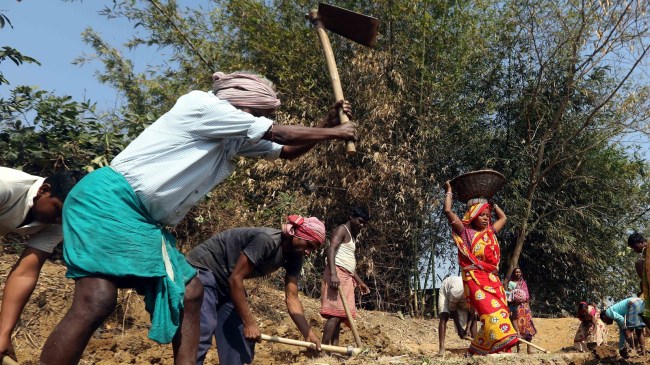 While the Opposition, including the Congress, has hit out at the government, these issues were points of debate and contention during the UPA government as well.


Among the major changes that the NDA government has proposed to the National Rural Employment Guarantee Act architecture is halting the scheme during peak farming seasons and moving it from a Centre-funded model to a cost-sharing arrangement with states. While the Opposition, including the Congress, has hit out at the government, these issues were points of debate and contention during the UPA government as well.
In 2011, Sharad Pawar, as Agriculture Minister in the UPA-II government, had called for halting NREGA works during sowing and harvesting seasons, saying the scheme was adversely affecting the agriculture sector by drawing out farm labourers from agricultural operations. Pawar then wanted the scheme to be paused for at least three months during the peak agricultural seasons.

Pawar’s argument, which he made in a letter to the then Prime Minister Manmohan Singh, was that the scheme was meant to be a fallback option when the rural economy failed to provide jobs in the agricultural sector. The issue became a bone of contention between Pawar and the then Rural Development Minister, Jairam Ramesh, who argued that the scheme had not impacted the availability of workers for the farm sector. In fact, Ramesh felt the scheme should be seen as a way to increase the bargaining power of labourers. Pawar and Ramesh exchanged letters and sent missives to Singh.
Countering Pawar’s contention, Ramesh, in fact, argued that an analysis of man-days generated by the scheme showed that most of the employment generated was during the lean agricultural season. Finally, Singh had to step in to resolve the tussle. As a compromise formula, it was then decided to include some core agricultural activities within the ambit of NREGA.
In 2012, the government decided to include 30 new works related to watershed, irrigation and flood management works, agricultural and livestock-related works, fisheries and works in coastal areas and the rural drinking water and sanitation-related works.
The UPA-II was roiled by fund cuts for MGNREGA with the Rural Development Ministry and the Finance Ministry disagreeing on the utilisation and efficacy of the scheme. The Finance Ministry’s decision to cut the allocation of Rs 40,000 crore in 2011-12 to Rs 33,000 crore in 2012-13 triggered much political heat.
In 2013, Ramesh crossed swords with the then Finance Minister P Chidambaram over the proposed fund cuts. In a letter to Chidambaram, Ramesh argued that the cuts would severely affect the scheme. The Finance Ministry had suggested cuts in Revised Estimates for key flagship schemes falling under ministries such as Rural Development, including the MGNREGA.
In fact, sources in the Congress said Chidambaram — who was the Finance Minister in the UPA-I government when the scheme was conceived — was said to be of the view that a certain percentage of the cost should be borne by the states. But the then Rural Development Minister, Raghuvansh Prasad Singh, was not in favour of this. Finally, Prime Minister Singh intervened and decided that the Centre would meet the entire cost.
Both these issues are now back in focus. While Congress president Mallikarjun Kharge has accused the NDA government of trying to finish off the scheme, Ramesh said the entire Opposition wants the Viksit Bharat – Guarantee for Rozgar and Ajeevika Mission (Gramin) (VB-G Ram G) Bill, 2025, which the government is set to table in Parliament to replace the MGNREGA — as also the Higher Education Commission Bill and the Atomic Energy Bill — to be referred to the Standing Committees as they require deep study and wide consultations.

 Share
Share


