
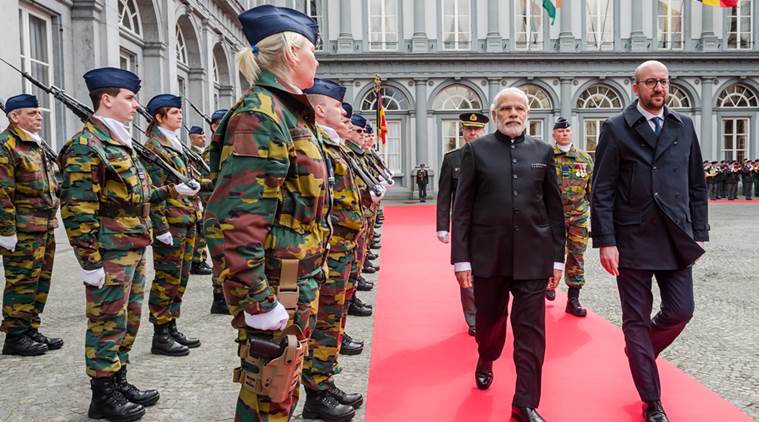
India hadn’t displayed much faith in the European project to begin with, even as the Chinese rushed in to diplomatically invest in the then new European Union (EU). Today, with the EU’s problems laid bare — from the eurozone crisis to security and questions of a British exit — New Delhi might even feel vindicated. Yet, the EU as a collective constitutes a prosperous and significant entity India must learn to work with. Europe, after all, is India’s largest trading partner and biggest foreign investor. In this context, Prime Minister Narendra Modi’s visit to Brussels has signalled a necessary injection of pragmatism into the relationship that can help relaunch India’s strategic partnership with the EU. That the visit happened exactly a week after the March 22 Brussels terror attacks added urgency to Delhi’s longstanding plea that Europe appreciate the global terrorist threat in full, a challenge India has battled for decades. The joint declaration on terrorism at the EU-India Summit — calling for “a comprehensive approach to address terrorism” and urging the adoption of the Comprehensive Convention on International Terrorism by the UN — is evidence of the convergence of interests, even as the “stronger, result-oriented” strategic partnership sets out a concrete roadmap for the next five years.
Watch Modi in Brussels: Modi Calls On All Nations To Unite Against Terrorism


The new “EU-India Agenda for Action-2020” should create the deeper political understanding needed in a rapidly morphing global context that sees a rising China, an assertive Russia, a violently fracturing Middle East, and an America in withdrawal. While India prefers to deal with key European powers like the UK, France and Germany individually, given its strong bilateral ties with each, Delhi will need to explore, together with Brussels, ways of investing in each other the attention and capacity hitherto missing.


