Journalism of Courage
 6 min read



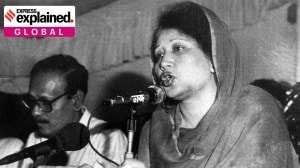
That relations between India and Bangladesh have hit the rock-bottom is evident from the simple fact that Khalida Zia8217;s visit beginning today is the first since she was elected prime minister at the end of 2001.
In these four and a half years the Indian prime minister found time to get to Dhaka only once, a few months ago to attend the annual South Asian summit. So much for being neighbours.
Few other countries are so condemned to coexist in peace and interdependence than India and Bangladesh. New Delhi is virtually the only neighbour to Dhaka, ignoring for a moment the small border between Bangladesh and Myanmar.
Yet the two countries have found so many different ways to be nasty to each other. Nothing short of a perverse genius was required to push this relationship into a crisis. New Delhi and Dhaka have managed the impossible.
The need to introspect and strategise in New Delhi, however, has been replaced by a tendency to blame Dhaka for the mess the two nations stare at today. The Indian public discourse on Bangladesh has not helped either.
A series of simplistic assessments on our eastern neighbour have begun to cloud our judgement. 8220;Bangladesh is turning towards Islamic radicalism and is headed down the road of Talibanisation. Its current leadership, led by Khalida Zia, is pro-Pakistan and is a hostage to religious extremism at home.8221;
8220;It is impossible to negotiate with Dhaka, which is completely insensitive to India8217;s security concerns. Forget being nice to India. Bangladesh does not even recognise its own self-interest in not avoiding more intensive economic engagement with India.8221;
Like all political myths, this litany of charges against Bangladesh, too, might have a grain of truth. But only a grain. When you begin to paint your neighbour black on the basis of a few strands of truth, the perspective begins to suffer.
In a self-fulfilling prophecy, India has allowed frustration and prejudice to cloud the potential for problem-solving with Bangladesh and allowed the worst-case scenario to develop by default.
By putting out positive signals on his commitment to sort out problems with Bangladesh, Prime Minister Manmohan Singh has taken the first step forward. What he now needs is a five-fold approach to his talks with Khalida Zia.
The first is to separate, in India8217;s own mind, the engagement with Bangladesh from its domestic politics. With yet another bloody election round the corner in Dhaka, the Khalida Zia visit is already coloured by domestic politics.
Is Khalida Zia seeking India8217;s support in a bid to marginalise her rival Sheikh Hasina? Should not India hold back on the deliverables to Bangladesh to be dispensed later to a more secular regime led by Sheikh Hasina?
India8217;s problem has only partly to do with the unending political confrontation between the Khalida Zia and her rival Sheikh Hasina, which has turned deadly and debilitating.
Our real problem is the larger-than-life image of India8217;s role in Bangladesh8217;s domestic politics. The perceptions across the political divide in Bangladesh about India8217;s political preferences have acquired a life of their own and have prevented New Delhi from an effective engagement with Dhaka.
Manmohan Singh must underline the importance of pursuing the long-term interests of the Indian state in Bangladesh irrespective of who is in power in Dhaka.
Second, Manmohan Singh should simply listen to the many political and economic grievances that Dhaka has nursed against New Delhi. That some of these grievances are exaggerated is beside the point.
India is seen in Bangladesh as an insensitive neighbour, which is obsessed with great power politics with no time for the region. Whether it is the question of sharing water resources or the growing trade imbalance between the two countries, India must first demonstrate some empathy with what Dhaka has to say.
Third, the Prime Minister must lay out in clear terms India8217;s own expectations on its security concerns in Bangladesh. Whether it is the Bangladeshi support to Indian insurgent groups or the question of better border management, India must move from general complaints about Dhaka8217;s policies to identification of specific benchmarks, which can actually be met and noticed in New Delhi.
Fourth, unilateral Indian gestures on the economic front have long been overdue. Despite enjoying a huge trade surplus with Bangladesh, New Delhi has been miserly in offering market access to Dhaka.
India8217;s myopic trade policy has been inexplicable from the point of view of New Delhi8217;s own long-term interest in economic integration with Bangladesh.
In his talks with Khalida Zia, Manmohan Singh must be ready to proclaim some unilateral decisions on market access and non-tariff barriers without demanding any quid pro quos on transit trade, which New Delhi has long sought.
It is up to India to convince Bangladesh that greater economic integration is in mutual interest. If India cannot act in its own self-interest in economic cooperation, it has no right to expect the same from Bangladesh.
Fifth, Manmohan Singh should strongly resist the temptation to link trade openings to Dhaka8217;s actions on India8217;s security concerns. For India both economics and security are of equal interest in dealing with Bangladesh.
By establishing a linkage between the two all these years, India has lost out on both. India needs to pursue both of its main interests in Bangladesh on their own merit.
By offering a virtual carte blanche on economic cooperation, India creates space for Dhaka to act on its own on the security front. If Dhaka does not respond, Delhi has a range of other instrumentalities to encourage Bangladesh to respect India8217;s concerns on cross-border terrorism.
Failure to act now would leave New Delhi in a much a more intractable situation when the next opportunity arises for a substantive engagement with Bangla political leadership.