


📣 For more lifestyle news, click here to join our WhatsApp Channel and also follow us on Instagram
Tags:


By: Yamini Lohia
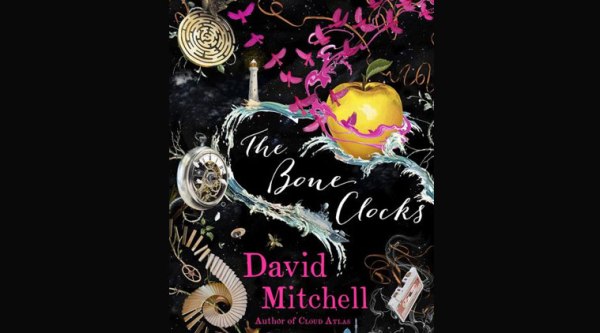
Book: The Bone Clocks
Author: David Mitchell
Publisher: Hachette
Price: Rs 699


The Bone Clocks is a giddy, freewheeling, genre-switching literary confection by itself, part young adult fantasy and part aching meditation on mortality, but as another instalment in a master conjurer’s evolving macro-novel, it is an outrageously ambitious tour de force.
The novel begins with Holly Sykes, a teenager, gushing over her first love in England in 1984. Parental discord follows, and, in the finest literary tradition of adolescents with stories to tell, Holly runs away from home. As she wanders through the countryside, her encounters unspool a supernatural thread that undergirds the narrative.
From there, the novel abruptly shifts gears, hopping time, space and voice to 1990s Cambridge. Our new narrator is Hugo Lamb, a deliciously sociopathic undergrad who becomes Holly’s lover (and who some will recognise as the cool, mean-spirited cousin from Black Swan Green). Mitchell is a gifted ventriloquist, and he is at his most consummate when inhabiting the skins of Hugo or, later, in a masterstroke of self-parody, an over-the-hill, curmudgeonly writer, with a passing resemblance to Martin Amis, who is obsessed with exacting vengeance on a reviewer who savaged his latest book.
Over its 600 pages, the book spans some 60 years in six overlapping, intricately constructed novellas, told through the eyes of five very distinct narrative voices. At different moments, it is a fantasy, a soap opera, a hard-boiled war chronicle. It is adept at straddling the line between the real and unreal — which Mitchell has always treated as permeable, anyway — taking a metaphysical thriller tinged with apocalyptic despair, and infusing it with humanity and fears of death and dying. In each of its different modes, the metafictional hijinks unfold via consistently brilliant prose.
But somewhere along the dizzying, continent-jumping adventure Mitchell takes us on, a sense of exhaustion descends, the unceasing barrage of trickery beginning to feel like a sleight of hand with no grand truths to reveal.
The final section reverses some of this, where the bombastic scope of the previous section is abandoned for something more intimate. The conclusion is genuinely affecting. Much of the novel is arresting in imagination and execution. If only Mitchell were less distracted by the razzle-dazzle, particularly in the fifth section, which even devoted fans of fantastical flourishes and tropes might find tedious, The Bone Clocks could have been the crowning glory of his glorious career.


