


Stay updated with the latest - Click here to follow us on Instagram
© The Indian Express Pvt Ltd
Tags:


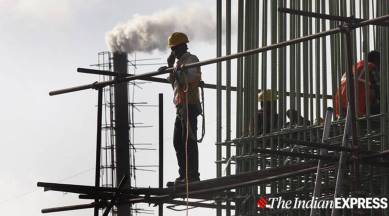
The rising heat in cities should be treated as a disaster and considered when planning urban areas, experts said on Friday while speaking at a webinar organised as a part of the Urban20 group of G20.
Speaking in the discussion on urban heat islands and mitigation plans, Minni Sastry, an extreme heat planning expert with the United Nations Environment Programme, said the way cities were being planned was contributing to the problem.

“Pockets of cities experience warmer temperatures in comparison to the outskirts or rural areas,” she said, adding that this was as a result of human activity.
“The reduction of green infrastructure is a major factor,” she said.
For example, she said, in a study of temperatures in Bengaluru in April found that the lowest temperatures were on the outskirts of the city, where green cover is more, while Commercial Street, a busy shopping area, was 4-5 degrees Celsius warmer.
She said anthropogenic heat, created by human activity, was being added by buildings that were being cooled on the insides. The heat and pollution from vehicles was also causing a rise in temperatures in cities. She said the air and surface temperature maps of cities can be studied to see what was going wrong in their planning. ISRO and United States Geological Survey satellite data was available, she said.
“It is important to raise awareness among city officials about the data that is available. Urban heat island maps are not a part of heat action plans, which needs to be done,” she said.
Later in the discussion, Umamaheshwaran Rajsekar, an advisor on urban resilience at the Coalition for Disaster Resilient Infrastructure, said the conversation around urban heat islands had been limited, while the impact was being felt for the past two decades. He said every one degree increase in temperature reduced the life of infrastructure, from transformers to roads.
He said the building bye-laws don’t consider heat as a critical impact, but should take into account not just heat but urban flooding.
“The biggest challenge is looking at heat as a disaster, right now it is being looked at as a stress. Apart from Odisha, no other state recognises it as a disaster,” he said.
He said heat should be included in town planning guidelines and taught as an elective to architecture, planning and engineering students.
The impact of rising heat in cities on the health of residents was being seen in the healthcare sector, according to Dr. Purvi Patel, a senior consultant with the National Programme on Climate Change and Human Health under the Union Health Ministry.
She said cardio-vascular, respiratory and kidney diseases were the major causes of death as a result of heat. Citing a 2019 study, she said higher temperature during pregnancy was associated with reduced birth weight of babies.
Stay updated with the latest - Click here to follow us on Instagram


