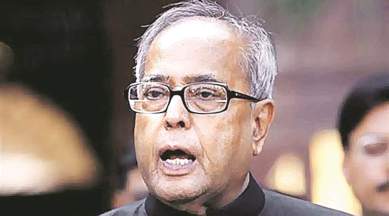
According to the RSS, Mukherjee will be the chief guest at its valedictory session of the ‘Tritiya Varsh Varg’ or the Third Year Course on June 7. Mukherjee is learnt to have given his consent to participate in the programme. “We have invited the former President of India and he has given his consent for participating in the programme,” a top RSS functionary said.
You’ve Read Your Free Stories For Now
Sign up and keep reading more stories that matter to you.
A Congress leader said it was Mukherjee who had moved the political resolution at the AICC’s Burari plenary session in 2010, asking the then UPA government to “investigate links between terrorists and the RSS and its sister organisations that have been uncovered in some recent cases”.
Several top party leaders, including A K Antony, declined to comment, saying that they were unaware of Mukherjee’s programme. “He is an intelligent person. He has been the President of India. He is secular minded. So there will be no change in his behaviour by going there. He will remain the same,” former Union Minister Sushil Kumar Shinde told The Indian Express.
“I think the best person to answer that question is the former President himself. The invitation was extended to him. He has accepted the invitation. Ostensibly he is going. So therefore, if there are any queries with regard to that, he is the best person to answer that,” said Congress spokesperson Manish Tewari when asked how the party viewed Mukherjee’s decision.
“Why are you asking me? Ask other senior leaders,” was the reaction of another senior leader.
Mukherjee has been with the Congress almost all his life. In fact, when he demitted the office of the President last year, veteran Congress leader Mani Shankar Aiyar had written that “freed of his constitutional constraints, a retired Pranabda could well become the Congress party’s principal counselor and help guide it back from its present nadir closer to the zenith.”
Story continues below this ad
Asked about his view, Aiyar, who was suspended from the Congress last year, said he was not sure whether Mukherjee had accepted the invitation. “As far as I have read, he has been invited but he will be giving his decision at the appropriate time… I am sure that he is weighing it in his mind and I am sure he is consulting others as well. So, this is quite the wrong time for an outsider to comment.”
Meanwhile, RSS sources in Nagpur said Mukherjee had met RSS chief Mohan Bhagwat at least four times after leaving Rashtrapati Bhavan. “The first meeting between the two happened when Mukherjee was President. Subsequently, the two met at least four times. Frequent exchanges do blunt the sharp edges of difference of opinion. This paved the way for Mukherjee to accept the invitation,” said a senior functionary.
Sources added that Union Minister Nitin Gadkari may have facilitated the meetings between Mukherjee and Bhagwat.
“Also, the RSS has a tradition of inviting people not belonging to its ideological line of thinking to two of its most important programmes in Nagpur — the annual camp and foundation day. In 2007, former Air Chief Marshal A Y Tipnis was invited,” said the functionary.
Manoj C G currently serves as the Chief of National Political Bureau at The Indian Express. A veteran journalist with a career spanning nearly two decades, he plays a pivotal role in shaping the publication's coverage of India's political landscape.
Experience & Career: Manoj has built a robust career in political journalism, marked by a transition from wire service reporting to in-depth newspaper analysis.
The Indian Express (2008 – Present): He joined the organization in 2008 and has risen to lead the National Political Bureau, overseeing key political coverage.
Press Trust of India (PTI): Prior to his tenure at The Indian Express, Manoj worked with India’s premier news agency, PTI, honing his skills in breaking news and accurate reporting.
Expertise & Focus Areas: As a seasoned political observer, Manoj focuses on the nuances of governance and party dynamics.
National Politics: extensive reporting on the central government, parliamentary affairs, and national elections.
Political Strategy: Deep analysis of party structures, coalition politics, and the shifting ideologies within the Indian political spectrum.
Bureau Leadership: directing a team of reporters to cover the most critical developments in the nation's capital.
Authoritativeness & Trust: Manoj’s authoritativeness is grounded in his nearly 20 years of field experience and his leadership role at a legacy newspaper. His long-standing association with The Indian Express underscores a reputation for consistency, editorial integrity, and rigorous reporting standards required of a Bureau Chief.
Find all stories by Manoj C G here. ... Read More