Journalism of Courage



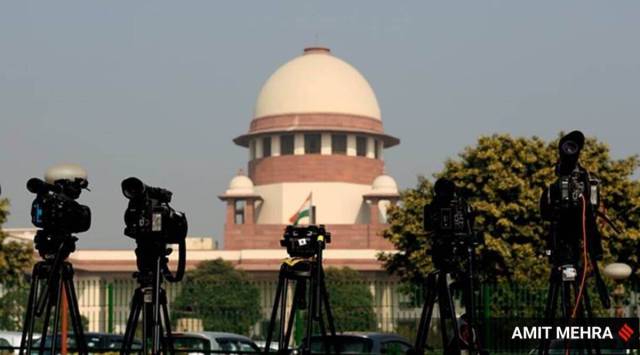 The Supreme Court of India. (File Photo)
THE SUPREME Court Friday pulled up the UP government over recovery notices to pay damages for destruction caused to public property during protests against the Citizenship (Amendment) Act in December 2019, before it had brought a law on this in 2021, and said that they were in contravention of guidelines laid down by the court.
A bench of Justices D Y Chandrachud and Surya Kant took exception to the fact that Additional District Magistrates (ADMs) and not judicial officers, as mandated by the apex court, had adjudicated these notices.
“You have become complainant, you have become adjudicator, and then you are attaching property of the accused,” Justice Surya Kant told UP Additional Advocate General Garima Prashad. “When we had directed that adjudication has to be done by a judicial officer, how is ADM conducting proceedings?” asked Justice Chandrachud.
The court’s reference was to its 2009 ruling that the claims commissioner who will estimate damages in such cases and investigate liability will be a judge. The apex court had reiterated this in a decision in 2018.
On Friday, the court said that UP will have to show “how did ADMs supervise these notices prior to the legislation” and added that “you have to show that notices issued before the Act were not in contravention to Supreme Court directions”.
“We will quash these notices and then you are at liberty to take action as per the new Act. Proceedings, which are pending, will be under the new law. You tell us next Friday what you want to do and we will close this matter for orders,” the bench said.
“You have to follow the due process under the law. Please examine this, we are giving one opportunity till February 18,” said the bench.
“This is just a suggestion. This plea concerns only a set of notices sent in December 2019, in relation to one kind of agitation or protest. You can withdraw them with a stroke of a pen…236 notices in a big state like UP is not a big thing. If you are not going to listen, then be ready to face the consequences. We will tell you how Supreme Court judgments need to be followed,” said Justice Surya Kant.
The court was hearing a plea by Parwaiz Arif Titu, who had approached it in January 2020 seeking quashing of notices sent to alleged anti-CAA protesters by district administrations for recovering losses caused by damage to public property during the protests. The petition contended that the notice was in violation of the Supreme Court’s 2009 and 2018 rulings.
UP Additional Advocate General Prashad cited a 2011 Government Order regarding the setting up of Claim Tribunals. But the Supreme Court bench pointed out that the Allahabad High Court had disapproved this in 2011 following which the state had promised to bring in a law and took eight to nine years to do so.
Prashad told the bench that the state had come up with the Uttar Pradesh Recovery of Damages to Public and Private Property Act in 2021, which had a clause that saves earlier decisions. She said that after the Act, all cases have been sent to tribunals constituted under it, and that these were headed by retired District Judges.
Prashad said proceedings against rioters have been happening since 2011 and that if the court sets aside the notices, all those adjudicated will also seek relief.
But Justice Chandrachud said: “We are not concerned with other proceedings. We are concerned with only the notices, which have been sent in December 2019, during the CAA protests. You cannot bypass our orders. How can you appoint ADMs, when we had said it should be by judicial officers. Whatever proceedings were conducted in December 2019 was contrary to the law laid down by this court.”
Last month, The Indian Express in a two-part investigation analysed 46 such recovery orders issued by the Additional District Magistrate (Lucknow East) and found a pattern, which showed the administration played not only prosecutor but judge and jury as well to assess damage, estimate cost, bring charges, and fix liability with many of the accused not even getting a hearing.
In Kanpur, the investigation found 15 families, mostly of daily wagers ranging from a tonga driver to a milkman, who paid Rs 13,476 each to the district administration for their alleged role in the protests. None was aware of how their share of payment was arrived at.
Former IPS officer S R Darapuri and Congress leader Sadaf Jafar, who were among those who received recovery orders from the ADM (Lucknow East), welcomed the Supreme Court’s remarks.
Both of them were among the 46 who were each issued recovery orders with the same amount — Rs 64.37 lakh — as per what the ADM, controversially, said was the “doctrine of joint and several liability”. Both of them had denied that they were present at the site of the protests.
Jafar, who is contesting the UP polls from Lucknow (Central), described the notices as “illegal and unconstitutional”. Darapuri said: “The procedure followed by the UP government to serve notices to us was against the apex court guidelines. I am glad the court has established the rule of law, and I am hoping that it will soon quash the proceedings on its own when the matter is heard next.”
(With ENS Lucknow)

 6 min read