Journalism of Courage



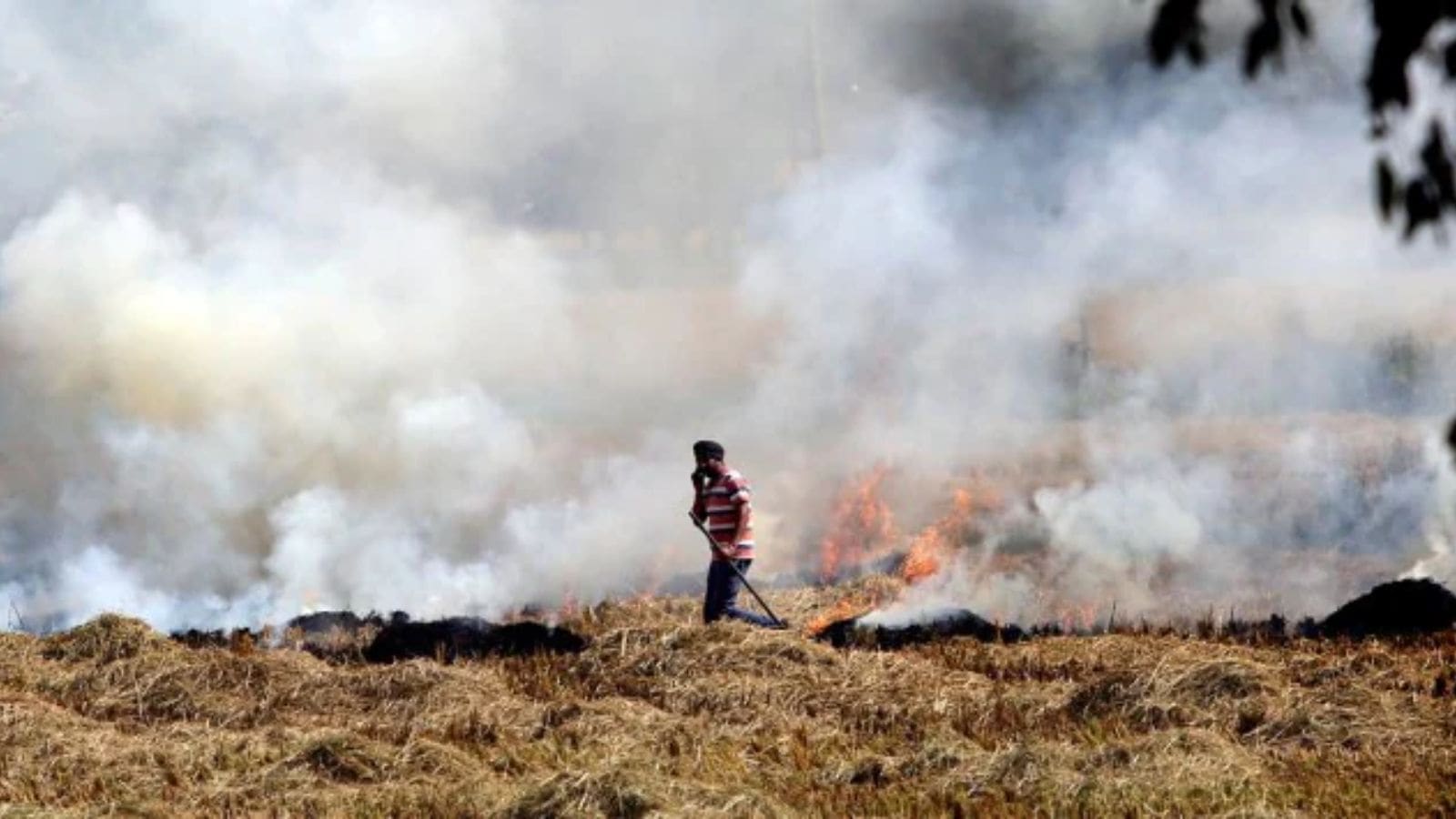 The research contends that stubble burning is the direct outcome of India’s agricultural marketing structure — shaped by state policies, market forces and farmers’ marginalisation — rather than a mere ecological lapse. (Express Archives)
The Supreme Court Thursday pulled up the air pollution monitor for the National Capital Region (NCR), saying it had made “no effort… to secure implementation of its own directions” on stubble burning.
A bench of Justices Abhay S Oka, Ahsanuddin Amanullah and Augustine George Masih also said the governments of Punjab and Haryana had done nothing except collecting nominal compensation from farmers who burn stubble.
Additional Solicitor General Aishwarya Bhati, who appeared for the Commission for Air Quality Management (CAQM), said it had issued 83 statutory directions and 15 advisories, besides various orders, official communications and guidelines, targeting each of the identified sectors since its inception.
The court, however, pointed out that the last meeting of the CAQM sub-committee on enforcement was held on August 29, 2024 “in which there is not even discussion of the implementation of directions”.
“Though there is a specific direction in the order to prosecute wrong doers under section 15 of Environment Protection Act, not a single prosecution has been launched,” the court said.
It also noted that only five out of 11 members were present at the August 29 meeting.
“This is how the subcommittees are functioning,” said the court. “They do not want to take penal action but only hold meetings.”
Punjab Advocate General Gurminder Singh submitted that states are barred from taking penal action but the court responded: “That is wrong. Under the Environment Protection Act, you can.”
It asked the states to file, in a week, affidavits showing what they had done to implement CAQM directions.
Hearing pleas highlighting the rising air pollution on account of the spurt in pre-winter stubble burning, the Supreme Court had on September 27 said that the CAQM “needs to be more active”.
It said: “We are of the view that though the commission has taken certain steps, the commission needs to be more active. The commission must ensure that its efforts and directions issued actually translate into reducing the problem of pollution.”
The court had also questioned states for not prosecuting those who were willingly flouting the directions against stubble burning.

 2 min read