Journalism of Courage



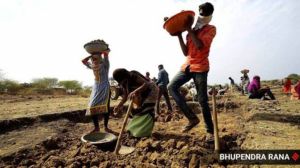
 Now grown in more than 130 countries, millets are the traditional food for more than half a billion people in Asia and Africa. (Representational/File)
 With food security and nutrition a top priority in agriculture during its G20 Presidency, India is planning to propose the launch of a global initiative to encourage the consumption and production of millets, The Indian Express has learnt.
“MIIRA” or Millet International Initiative for Research and Awareness will be aimed at coordinating millet research programmes at the international level. It is in line with the UN declaring 2023 as the International Year of Millets and the Centre’s plan to make India a global hub for millets.
While the main G20 Summit will be held on September 9-10, 2023 in New Delhi, sources said India’s Presidency year will also see five meetings on agriculture: three of Agriculture Deputies, one of chief scientists, and one where the Agriculture Ministers of all G-20 countries will gather.
“MIIRA will be launched keeping in mind the nutritional value and the climate resilient nature of millets,” one of the sources cited above said, adding a draft charter of the initiative is ready and will be placed for approval at the first meeting of the Agricultural Deputies from February 13-15 at Indore.
According to the sources, MIIRA will aim to connect the millet research organisations across the world while also supporting research on millet crops. Besides setting up a web platform to connect researchers and holding international research conferences, the plan is also to promote millet consumption by raising awareness.
For MIIRA to take off, India will contribute the “seed money” while each G20 member will later have to contribute to its budget in the form of a membership fee. The MIIRA secretariat will be in Delhi, the sources said, adding that this will, with India being a major producer of millets, ensure a flow of investment from the country’s industry and research bodies.
MIIRA is significant in view of the United Nations declaring 2023 as the International Year of Millets, the proposal for which was moved by India and supported by 72 countries. The International Year will see several activities such as conferences and issuing of stamps, among others, to raise awareness on millets, improve their production and also attract investments.
In her Budget speech, while describing various types of millets as ‘Shree Anna’, Finance Minister Nirmala Sitharaman said millets have been “an integral part of our food for centuries”. “I acknowledge with pride the huge service done by small farmers in contributing to the health of fellow citizens by growing these Shree Anna,” she said.
“Now to make India a global hub for Shree Anna, the Indian Institute of Millet Research, Hyderabad will be supported as the Centre of Excellence for sharing best practices, research and technologies at the international level,” the Minister added.
Millets are small-grained cereals such as sorghum (jowar), pearl millet (bajra), foxtail millet (kangni/ Italian millet), little millet (kutki), kodo millet, finger millet (ragi/ mandua), proso millet (cheena/ common millet), barnyard millet (sawa/ sanwa/ jhangora), and brown top millet (korale). These crops require less water than rice and wheat, and are mainly grown in rainfed areas.
Now grown in more than 130 countries, millets are the traditional food for more than half a billion people in Asia and Africa. Gobally, jowar is the most widely grown millet crop; its major producers are the US, China, Australia, India, Argentina, Nigeria, and Sudan.
Bajra, another major millet crop, is mainly grown in some African countries and India, where millets are mainly a kharif crop. During 2018-19, Agriculture Ministry data show, bajra (3.67%), jowar (2.13%), and ragi (0.48%) accounted for about 7 per cent of the gross cropped area in the country.
On April 10, 2018, the Agriculture Ministry declared millets such as jowar, bajra, ragi/ mandua, some minor millets such as kangani/ kakun, cheena, etc, and the two pseudo millets — buckwheat (kuttu) and amaranth (chaulai) — as ‘Nutri Cereals’ for their “high nutritive value”.

 4 min read