Journalism of Courage



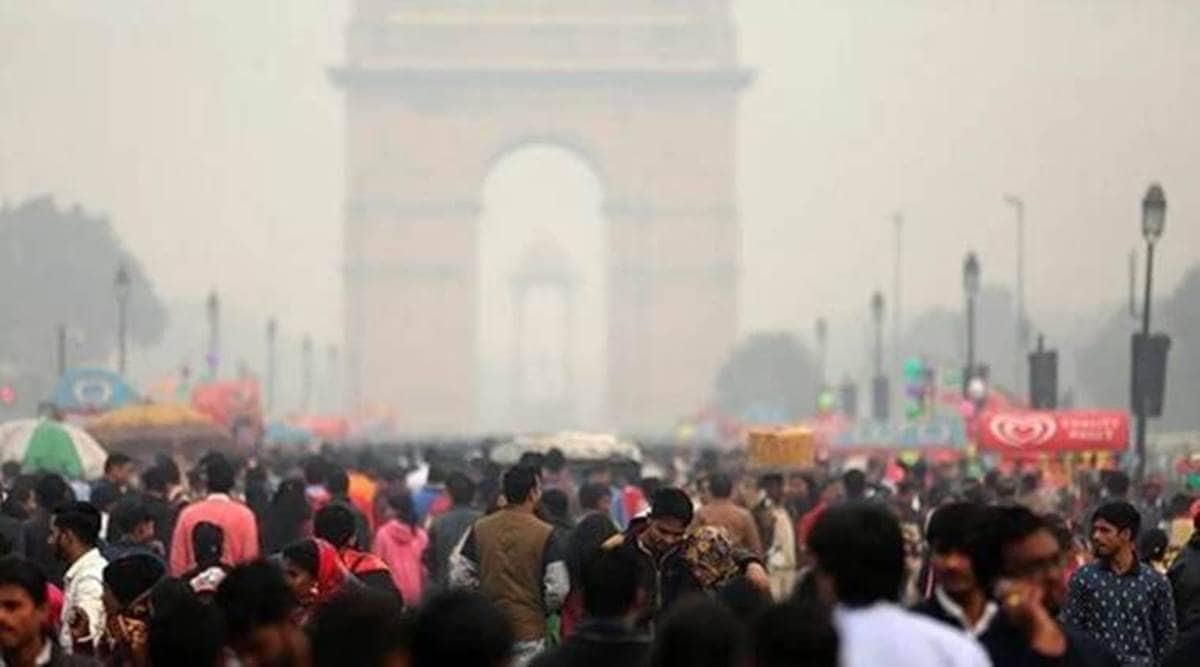 According to census 2011, the median age in India was 24.9. In 2022, according to World Population Projections, India’s median age was 28.7, making it a young country. (Express File Phoo)
 India may be on track to become the world’s most populous country, but its population growth has been slowing.
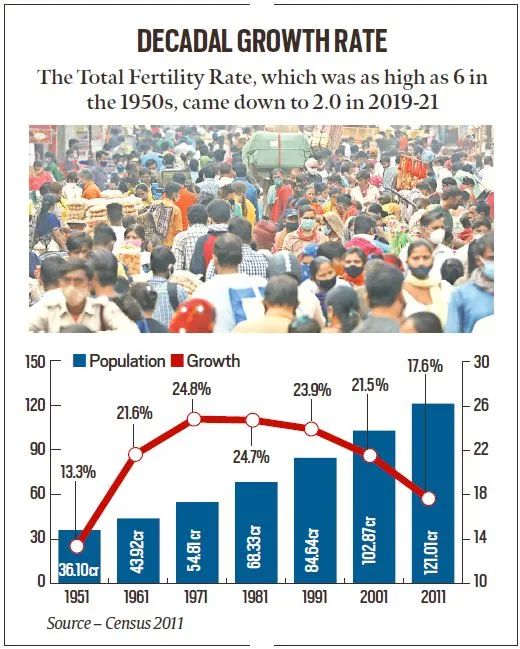
India’s Census figures show that its annual population growth rate was 1.3% in 1951, which increased to 2% in 1961. Over the next 30 years, from 1971-91, India’s annual population growth rate remained at a steady 2.2% and started to decline in the 1990s. In 2011, India’s growth rate was 1.6%.
According to the UNFPA (United Nations Population Fund), India’s population in 2021 stood at 1,393.4 million with an average annual rate of change of population of 1%.
According to census 2011, the median age in India was 24.9. In 2022, according to World Population Projections, India’s median age was 28.7, making it a young country.
India’s absolute numbers, however, continued to remain high because of a “population momentum”.
“A population momentum occurs when there is a very large young population in a country. These young people will want to have children and therefore, there is an increase in the population even when the growth rate itself may be on the decline. This occurs when a demographic transition is underway, like in India’s case. This momentum is projected to carry on for the next three decades. According to some projects, India’s population will peak in 2048, after which it will start declining. Projections also say that India will have a population of 1.1 billion in 2100, which is much less than what it is today. The UN has projected that India’s population will peak in 2053,” said Alok Vajpeyi of the Population Foundation of India (PFI).
The PFI in its studies has pointed out that the only way to slow down the momentum is to delay the age of marriage, delay the first pregnancy and ensure spacing between births.
The other issue at hand is higher fertility due to unmet need for contraception, which is the disconnect between a woman’s desired fertility and access to family planning services or contraceptive use.
According to National Family Health Survey-5 (2019-21) the unmet need for contraception among women in India is 9.4%, that is roughly 22 million women.
“The problem is that the stress remains on female sterilisation and the men are out of the picture. Permanent methods of sterilisation can be prohibitive because a couple may be unsure of whether they want to have children in future. So the government needs to expand the basket of contraception methods and increase the availability of temporary contraception methods. There are some new methods that have been introduced by the government, such as injectables, but their penetration is less than 1% so there needs to be more investment. But without a doubt the government’s Mission Parivar Vikas, which had targeted 148 high fertility districts across seven states, has been successful,” said PFI’s Poonam Muttreja, adding that the programme has now been extended to other districts in those seven states, as well as in the northeastern region.
Decadal growth rates have been seen to be declining across religious communities in India, but it has been sharper among Muslims than among Hindus over the last three decades. For instance, the decline in decadal growth rate during the last two census exercises (2001 and 2011) was 4.7 percentage points for Muslims as against 3.1 for Hindus.
During 2001-11, a steep decline was noted in the population growth rate of Jains (20.5 percentage points), Buddhists (16.7 percentage points), Sikhs (8.5 percentage points) and Christian (7 percentage points). “The decrease in growth rate differs from region to region as well. Kerala and Tamil Nadu, for instance, reached replacement level of Total Fertility Rates sometime in the 1990s because they worked on girls’ education and empowerment alongside social sector schemes. They now have an ageing population and are in an advanced demographic transition,” adds Vajpeyi.

 4 min read