This is an archive article published on December 17, 2015
Rape cases crawl as 2 forensic labs struggle with 2,500 DNA samples
The ASJ then summoned the police officer in charge of the case to appear in person and “explain why appropriate proceedings should not be initiated against them”.
In August last year, a special fast track court (FTC) dealing with cases of sexual assault on women asked for the crucial forensic report in a 2014 case of alleged rape and murder in South Delhi. After repeated reminders, the forensic department finally informed the court this September that the report’s “results are not yet ready”.
On September 8, leaving the Delhi police and forensic agencies red-faced, additional sessions judge (ASJ) Devendra Kumar Sharma said: “…in the Sheena Bora case, which is under media scrutiny, even the DNA test is carried out within one month. This kind of promptness is required in all cases related to heinous offences. But unfortunately, same is not done even in the present case where allegation is of murder after committing rape…”
The ASJ then summoned the police officer in charge of the case to appear in person and “explain why appropriate proceedings should not be initiated against them”.
The number of FTCs, created in 2013 after the December 16 gangrape and murder of a 23-year-old woman, has gone up to nine but the rate of disposal of cases has been hit due to delays in filing of crucial forensic reports.
According to Delhi police data, at least 2,500 DNA sample are pending in forensic laboratories in cases involving rape and murder of women and minors. With 11 police districts, there are only two forensic laboratories in the capital to deal with evidence sent for examination.
“No cross examination of the victim can take place if the crucial forensic report is not placed before the court,” said public prosecutor A T Ansari, who represented the state in the December 16 gangrape case.
“Also, filing of supplementary chargesheets are delayed due to non-filing of forensic reports. The other impediment is that case property sent to laboratories for forensic examination needs to be produced in the court during the recording of evidence. This is also delayed by probe agencies and courts have to defer the trial,” Ansari said.
Story continues below this ad
Concerns over the alarming rate of delay in forensic reports has also been echoed in Parliament. In its report, the parliamentary standing committee on Home Affairs has “expressed its anguish” on the sorry state of affairs.
“The committee strongly recommends that early action should be taken to enhance the capacity and strength of forensic labs in Delhi to ensure proper and speedy investigation and trial,” the standing committee said.
It further recommended that the Delhi police “must work upon implementing the strategy on upgrading police capacities in forensic science and augmentation”.
On September 8, ASJ Sharma also slammed the forensic agency for similar delays in two other rape cases.
Story continues below this ad
In the first, registered by Vasant Kunj police station, the victim could not be cross-examined due to a nine-month delay in filing the forensic report. In the other, registered by Inderpuri police station, the investigating officer (IO) could not be examined because the forensic report was not filed.
The court then warned the directors of the Central Forensic Science Laboratories in Rohini and Lodhi Colony that it would impose a fine by deducting Rs 10,000 from their salaries, if they failed to “ensure speedy preparation of CFSL results in all the cases pending in this court related to sexual assault on women within two months from the date of receipt of the sample/exhibits”.
“This court is created for fast-tracking the trial of cases pertaining to sexual assault cases on women. However, trial of cases are being delayed due to non-filing of CFSL result,” ASJ Sharma said.
Kaunain Sheriff M is an award-winning investigative journalist and the National Health Editor at The Indian Express. He is the author of Johnson & Johnson Files: The Indian Secrets of a Global Giant, an investigation into one of the world’s most powerful pharmaceutical companies.
With over a decade of experience, Kaunain brings deep expertise in three areas of investigative journalism: law, health, and data. He currently leads The Indian Express newsroom’s in-depth coverage of health.
His work has earned some of the most prestigious honours in journalism, including the Ramnath Goenka Award for Excellence in Journalism, the Society of Publishers in Asia (SOPA) Award, and the Mumbai Press Club’s Red Ink Award.
Kaunain has also collaborated on major global investigations. He was part of the Implant Files project with the International Consortium of Investigative Journalists (ICIJ), which exposed malpractices in the medical device industry across the world. He also contributed to an international investigation that uncovered how a Chinese big-data firm was monitoring thousands of prominent Indian individuals and institutions in real time.
Over the years, he has reported on several high-profile criminal trials, including the Hashimpura massacre, the 2G spectrum scam, and the coal block allocation case. Within The Indian Express, he has been honoured three times with the Indian Express Excellence Award for his investigations—on the anti-Sikh riots, the Vyapam exam scam, and the abuse of the National Security Act in Uttar Pradesh. ... Read More


 4 min read


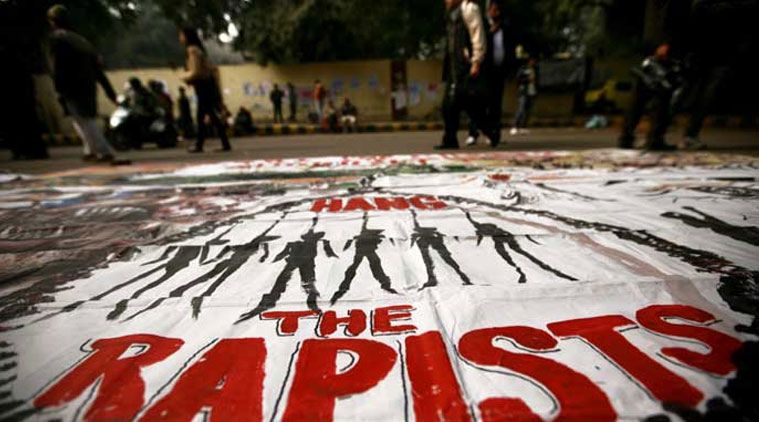 (IE Photo: Praveen Khanna)


