


Stay updated with the latest - Click here to follow us on Instagram
© The Indian Express Pvt Ltd
Tags:


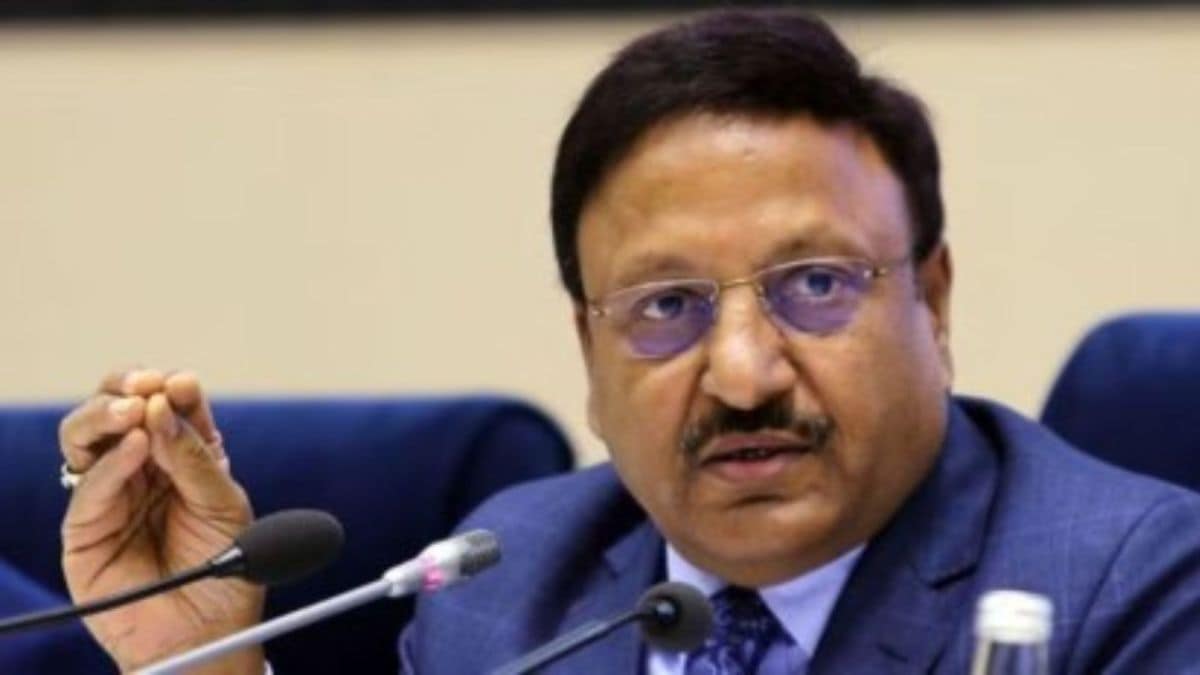
ON HIS last full day in office on Monday, outgoing Chief Election Commissioner Rajiv Kumar said court proceedings in “long-pending” cases related to polls should be scheduled “with due consideration to the election period” so as to ensure a “smooth” electoral process.
Kumar, who will demit office on Tuesday, expressed concern over the “live reporting” of hearings during “critical” periods of elections.


His remarks come in the backdrop of the court orders in the cases regarding Electronic Voting Machines and voter turnout data during the 2024 Lok Sabha elections.
In the case of EVMs, the Supreme Court in April last year declined to order 100% verification of VVPAT slips, but ordered the EC to seal Symbol Loading Units — which are used to input symbols of candidates onto the EVMs — for 45 days after polling and to offer the runners-up the chance to seek verification of the microcontrollers of 5% of the EVMs and VVPATs per Assembly constituency or segment.
In May 2024, the Supreme Court also heard a petition asking for the EC to release booth-wise voter turnout; the court eventually declined the petition.
These cases, according to EC sources, had been pending in the court for five years and were revived at the time of elections.
In his speech, Kumar also expressed concern over “rumours” being spread during elections. “I have observed a pattern in the timing of certain narratives. During peak polling or counting hours, a wave of fake allegations and rumours begins to spread across media and social media, misleading people and creating confusion. Narratives are deliberately set to distort facts. However, the Commission follows a policy of restraint, choosing not to respond while the election process is underway, ensuring that focus remains on the integrity and smooth conduct of the elections,” he said.
In an apparent reference to the recent allegations by Opposition parties after the Haryana and Maharashtra elections, Kumar said the ECI has been “unfairly blamed by those unwilling to accept electoral outcomes”. After the Maharashtra elections in November last year, the Congress had alleged that the electoral roll had seen a “shocking” increase.
“A pressing concern is the growing tendency to target election officials in the aftermath of electoral contests. It is perceived as a convenient scapegoat. All candidates and parties are involved in every stage of the process with utmost transparency. Having participated in each step, without raising objections or filing appeals during the process, then attempting to create doubt afterward is undesirable,” he said.
On his way out after completing a four-and-a-half year tenure at the Election Commission, Kumar reflected on the “nature of election campaigns”. “A concerning trend has emerged in recent years, with political discourse increasingly becoming such that scars are left even after campaign period. This not only lowers the quality of debate but also risks disillusioning our youth with the electoral process,” he said.
He suggested that it was time to consider introducing a totaliser machine and build consensus on implementing remote voting for migrants as well as offering NRIs a chance to exercise their franchise.
Stay updated with the latest - Click here to follow us on Instagram


