A lot has passed Rangammal by. Nicknamed ‘Gandhi’ in infancy, in the flush of the Independence movement, Delhi has meant little for the 75-year-old since prime minister Indira Gandhi’s time. She has not heard of Sonia, Rahul or Priyanka, or even the new generation of DMK leaders. She has a faint memory of M Karunanidhi, but remembers MGR fondly for ensuring the family at least had “kanji (a mix of rice with water)” during hard times in the early ‘70s.
Living next door to each other in the remote Poomalur village near Tirupur, Rangammal and her younger sister, ‘Chinna (small)’ Rangammal, 73, never went to school. With weakening eyesight, television is a drain.

Towards the end of November though, the world beyond Poomalur came crashing into the lives of the two sisters. As did a new name, Narendra Modi. Almost three years after the Prime Minister announced demonetisation on November 8, 2016, they realised that the Rs 46,000 they had painstakingly saved over decades was worthless.
Rangammal’s son Selvaraj, a construction worker, recalls their shock. “‘How is it possible? How do currencies go invalid?’, Amma asked,” says the 42-year-old, the eldest of three siblings. Rangammal kept holding on to her Rs 24,000, most of them in Rs 500 and Rs 1,000 denominations, till a local politician dropped in to explain after hearing about their case, Selvaraj adds.
Rangammal’s husband was a stone mason, who mostly worked in sites near Kerala’s Palakkad, and died of tuberculosis. The family says he got the disease due to his work. Rangammal raised cattle and worked as a farm labourer to supplement the family income, as did her younger sister, a mother of two.
While Rangammal kept her money in an old iron trunk at home, her sister used a pillow. They say they never considered bank as an option.
Rangammal decided to tap into her savings after a local doctor advised her to undergo cataract surgery to cure her eye pain and loss of sight. Chinna was happy to pitch in with her Rs 22,000. “Only after she had brought her share and we calculated the total amount did we realise that the notes were invalid. We didn’t believe our children when they told us that. Who can make savings invalid like this? Why should people save money then?” asks Rangammal.
Story continues below this ad
Selvaraj says he was taken aback to hear the two had so much money at home. He himself has little cash to spare, he says, and so was unaffected by demonetisation. “I never knew about these savings,” he says. “Whenever I would ask Amma for money, she never gave me more than a penny fearing I would buy liquor with it, and said the little that she saved was for her daughters-in-law and grandchildren.”
Selvaraj isn’t surprised though that they didn’t think of going to a bank, pointing out that formalities such as even a proper name have little meaning in his mother’s life. “Everyone always called her Gandhi or Thankamma.”
Hearing about their plight, Mani Gounder, a local politician of Vaiko’s DMDK, was among those who dropped in and explained to the sisters about demonetisation at length. Later, he took them to meet Tirupur Collector K Vijayakarthikeyan.
The Collector arranged to provide the two Rs 1,000 monthly under a state government old-age pension scheme. He also put together money with the help of donations for Rangammal to undergo her operation in the second week of December.
Story continues below this ad
While Vijayakarthikeyan didn’t want to talk, sources close to him say he approached the authorities to explore if the old notes could be exchanged as a special case, but didn’t succeed.
A few days ago, during the local body elections, Rangammal had another encounter with changed times. For the first time, Selvaraj claims, she was not allowed to cast her vote without an electoral ID card.
The donation money left over after Rangammal’s surgery is now in her newly opened bank account. Says Selvaraj, “Amma says I can touch it only after her death.”
Chinna though won’t be able to use her share. Around 15 days after getting to know that her money was useless, and a fortnight before she would have got her first month’s pension installment, the 73-year-old who had been ailing for a long time passed away.


 5 min read


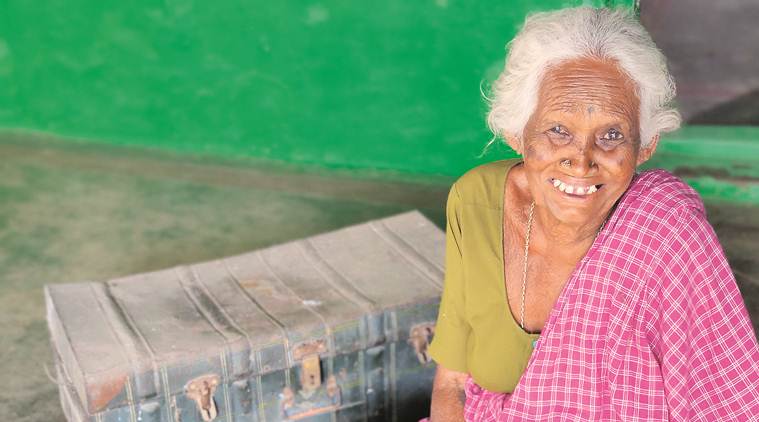 Rangammal kept money in this trunk. Her sister, she lost Rs 46,000. Arun Janardhanan