


© The Indian Express Pvt Ltd
Tags:


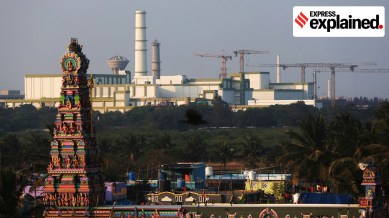
The Sustainable Harnessing and Advancement of Nuclear Energy for Transforming India (SHANTI) Bill, 2025, which was passed in Parliament Thursday, allows private players to enter the operations side of the tightly-governed nuclear power sector.
Once notified, the law will replace two key legislations — the Atomic Energy Act, 1962 (AE Act) and the Civil Liability for Nuclear Damage Act, 2010 (CLNDA) —and effectively redraw India’s N-power regime, tweaking norms regarding who can build and operate plants, how accident liability is capped, the role of the safety regulator, and mechanisms for dispute resolution and compensation, among other things.


The new law allows public and private companies to set up nuclear power plants and undertake activities related to the transport, storage, import and export of nuclear fuel, technology, equipment and minerals. Until now, these activities were restricted to public sector entities only.
That said, it nonetheless retains a strict safety regime, especially in some areas.
All entities involved in the nuclear energy activities will be required to obtain safety authorisation from the Atomic Energy Regulatory Board (AERB); such authorisation is also mandatory for the manufacture, possession, use, transport, import, export or disposal of radioactive substances and radiation-generating equipment, as well as for establishing, operating or decommissioning radiation facilities.
Although there are some indications of opening the N-power sector to foreign investment, the SHANTI Bill does not explicitly provide for it. Section 3(e) simply permits “any other person (a broadly defined term to include individuals, companies, associations, governments, etc.) expressly permitted by the Central Government, by notification,” to set up nuclear facilities or undertake related activities.
The subsequently notified rules are expected to provide more clarity. Sources in the government indicate that the equity infusion rules in the N-power sector would be aligned to the government’s foreign equity participation guidelines, which are in line with other sectors and in accordance with Ministry of Commerce and Industry (DPIIT) norms.
The law also retains exclusive central government control over certain critical and sensitive activities. These include the enrichment and isotopic separation of radioactive substances, the management and reprocessing of spent fuel and high-level radioactive waste, and the production and upgradation of heavy water, among others.
One key contentious change in the new law is the removal of an earlier provision regarding the “right of recourse”, which had allowed nuclear plant operators to seek compensation from their equipment suppliers in the event of a nuclear accident.
According to Section 17 of the CLNDA, the operator of a nuclear installation, after paying the compensation for nuclear damage, shall have the right to recourse where (a) such right is expressly provided for in a contract in writing; (b) the nuclear incident has resulted as a consequence of an act of supplier or his employee, which includes supply of equipment or material with patent or latent defects or sub-standard services; and (c) the nuclear incident has resulted from the act of commission or omission of an individual done with the intent to cause nuclear damage.
The new law retains provisions (a) and (c) but omits provision (b), which previously exposed nuclear equipment vendors to long-term and uncertain liability risk in the event of a nuclear accident.
Moreover, marking a departure from the previous flat liability limit of Rs 1,500 crore for any nuclear reactors having thermal power equal to or above ten megawatt, the new law adopts graded liability caps for nuclear power operators based on their size of installation (See Box).
The obligation to maintain an insurance policy or other financial security to cover liability applies only to private operators, and exempts nuclear installations owned by the Centre. However, the law does empower the Centre to establish a Nuclear Liability Fund for the purpose of meeting its liability in case of a nuclear incident.
On the penalty front, the SHANTI Bill provides for both monetary penalties for violations of less severe nature and
imprisonment for grave offences. Previously, there was no provision for monetary penalties.
In another major shift, the new law grants statutory status to the AERB. Established in 1983 under Section 27 of the AE Act, 1962, the AERB was created to carry out certain regulatory and safety functions.
Section 27 of the old act allowed the Centre to pass on its powers or responsibilities under the law to officers or authorities working under it. But this provision did not provide for the creation of an independent authority or board, and instead only enabled the delegation of powers to a subordinate body. As a result, the AERB functioned as an authority exercising powers assigned by the Centre, rather than as a statutory regulator with independent legal authority.
In 2012, the Comptroller and Auditor General of India (CAG) highlighted the AERB’s dependence on the Department of Atomic Energy (DAE) for its budget and administration, the absence of separation between regulatory and non-regulatory functions, and the subordination of its chairperson to the Secretary of the DAE. The CAG noted that the chairperson of AERB reports to the Chairperson of the Atomic Energy Commission, who is also the Secretary of the DAE — one of the bodies regulated by the AERB — resulting in a conflict of responsibilities and interest.
The new law fixes this. It also provides for the establishment of the Atomic Energy Redressal Advisory Council, which will address grievances of licensees, facilitate dispute resolution, review orders of the central government, and handle complaints referred by the AERB.
Additionally, it provides for a Nuclear Damage Claims Commission to handle cases involving severe nuclear damage. It also designates the Appellate Tribunal for Electricity as the appellate authority to hear and dispose of appeals under the bill, including those against orders of the
Council or penalties imposed by the adjudicating officer.


