


© The Indian Express Pvt Ltd
Tags:


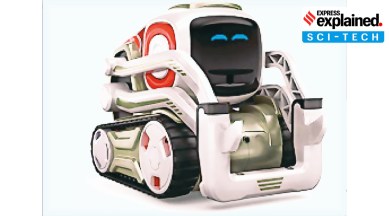
RobotICs has been used as teaching aids for children with autism spectrum disorder (ASD), but these interventions have often been expensive humanoids. A research paper examines whether non-humanoid robots can act as teaching aids, and whether they can reduce the workload of human special educators. Experiments by researchers from the Indian Institute of Science (IISc) and the Academy for Severe Handicaps and Autism (ASHA), Bengaluru, indicated that non-humanoid toy robots indeed may have significant potential in aiding special educators in autism education.
The paper was presented at IEEE International Conference on Robotics and Automation in Xi’an, China in 2021. It has now won the IISc’s Murthy Govindaraju ‘Women in Computer Science’ Research Endowment Award for one of its lead authors, Nabanita Paul.


The researchers measured and compared learning outcomes with these interventions and without them.
“All three studies showed improvement in learning outcomes and reduction in prompts from the Ses (special educators), denoting reduced workload,” the paper said.
🚨 Limited Time Offer | Express Premium with ad-lite for just Rs 2/ day 👉🏽 Click here to subscribe 🚨
“Our results show that children spent more time on lessons in online intervention with Cozmo, suggesting that using robots should also be considered when designing online interventions. Furthermore, the roles of Cozmo were analysed, and we found children showed increased spontaneous interaction when Cozmo acts as a co-instructor,” it said.


