This is an archive article published on March 1, 2022
Lamb: The folk horror set in Iceland is a poignant portrayal of motherhood and loneliness
Writer-director Valdimar Jóhannsson and lead actor Noomi Rapace talk about the making of Lamb, a visually-rich thriller set in rural Iceland that attempts to show a poignant portrayal of motherhood and loneliness.
Written by Alaka SahaniUpdated: March 1, 2022 06:16 PM IST
6 min read
Whatsapp
twitter
Facebook
Reddit
Lamb is streaming on MUBI.
For his debut feature, Valdimar Jóhannsson took inspiration from his childhood memories of spending time at his grandparents’ sheep farm. The Reykjavík-based filmmaker always wanted to tell a story that was based on Icelandic folktales. He found a collaborator in the writer Sjón, whom he met in 2010, and the two began to develop the script of Lamb – the story of a woman named Maria, who lives in a remote sheep farm with her husband Ingvar (played by Hilmir Snær Guðnason). When Maria and Ingvar find a mysterious newborn in their farm, they decide to raise it as their own, defying the will of nature. There are, however, consequences that they have to face.
To essay the central character of Maria, Jóhannsson approached Swedish actor Noomi Rapace, who with her powerful performance added a rich layer to the character. Rapace, who shot to global fame with her critically-acclaimed portrayal of Lisbeth Salander in the screen adaptations of Stieg Larsson’s Millennium Trilogy: The Girl With The Dragon Tattoo, The Girl Who Played With Fire, and The Girl Who Kicked The Hornet’s Nest, immersed herself in depicting Maria. Lamb, which won the Prize of Originality award at the Cannes Film Festival 2021, is currently streaming on MUBI. During a video interview, Jóhannsson and Rapace talked about their challenges and collaborative process to tell this unusual story. Excerpts:
Lamb director Valdimar Jóhannsson.
Valdimar, you worked on developing Lamb for eight years. At what stage, did you think of collaborating with Noomi Rapace?
Valdimar Jóhannsson: Early on. But we thought it would be difficult to get Noomi. We reached out to her two years before the filming of Lamb started.
Noomi Rapace: I was not hard to get. This kind of material and opportunity comes once in a lifetime. I straightway felt this project was special. Though Valdimar had done only short films before, he had worked in every position of a film crew. He knew cinema and filmmaking. It was like an invitation to his world.
How did the process of developing the character of Maria change once Rapace joined the project?
VJ: We created Maria together. We talked about all the details for nearly a year and a half. She came one day before the shooting began but Maria was there (in her).
Story continues below this ad
Noomi has lived in Iceland for three years. Was that connection important when you considered her for the role?
VJ: It was important because she speaks Icelandic. The fact that she had grown up on a farm was also important. When we reached out to her, we knew no one else could play the role of Maria except her.
NR: I felt that too. It seems I have been practising for this role my whole life (laughs). I knew the film would take me to places where I couldn’t hide or pretend. I tried to be as truthful as possible.
Noomi, how did you re-acclimate yourself to Iceland?
Story continues below this ad
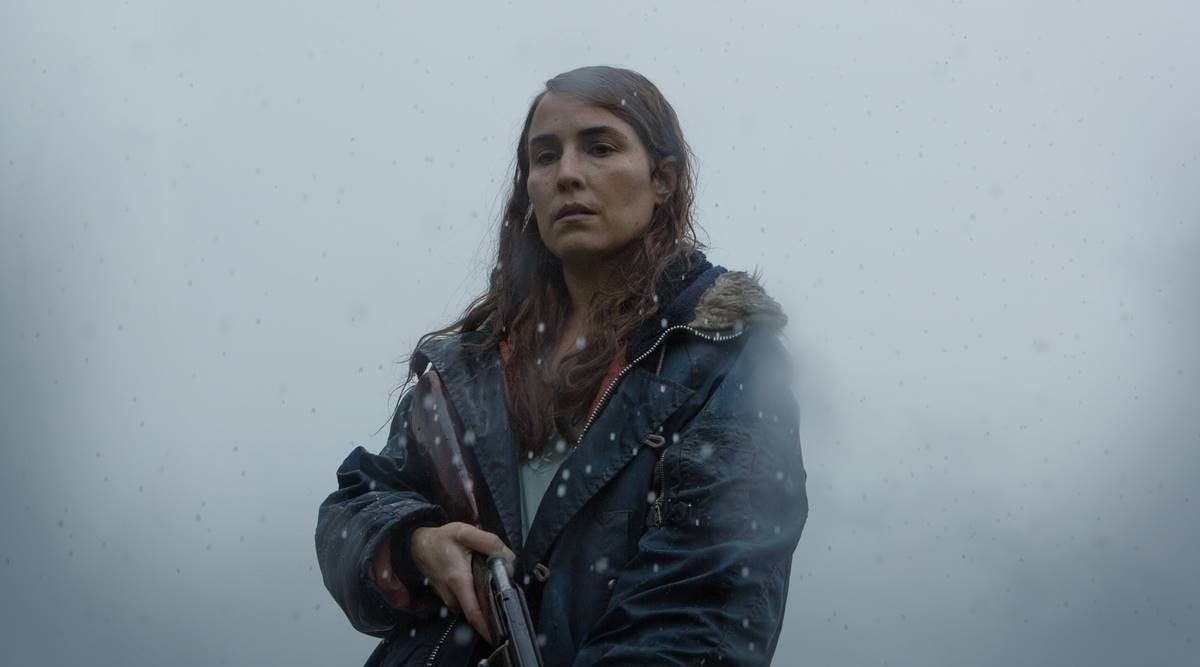
NR: Before we started shooting, we drove around, met farmers. We were also trying to find my husband and checking my chemistry (with a possible co-actor). My main preparation with Maria was internal — to understand her grief and pain. I knew the physical part would come easily. The movie has hardly any dialogues. I had to allow Maria to take over.
It is intriguing how you created the scenes with Ada (the animal-human baby Maria adopts).
VJ: We worked with children, lambs, and puppets. Noomi basically had to work with these elements while filming the scenes with Ada. We used visual effects only in a few scenes. Ada came to life on the sets. We didn’t have green screens.
NR: While shooting a scene in which I am feeding her, we filmed with a lamb. During that time an animal keeper was holding her still. Then, we switched to a human baby who was moving. When both the animal and child were tired, we had the puppet. We tried to tune in and go with whatever they wanted to do.
Story continues below this ad
You shot the film in the North of Iceland in different seasons. How challenging was that?
VJ: Since it’s my first feature, I was super stressed about everything. After a week, I realised I was surrounded by so many nice people. My actors were always helping me. My cinematographer Eli Arensson and I carefully studied the available natural light for the exterior scenes and made the most of it.
NR: Having Maria within me was painful. I had twisted dreams. I couldn’t sleep. The loss of first Ada, I could feel all the time. It was like I was missing a body part. I was away from my son (Lev Rapace) for a long time. However, we had such great energy around us all the time. The difficulties and inner pain that I was struggling with were evened out with the belief that we were creating something that’s truly special.
A still from Lamb.
After being hailed as an “action star”, Noomi seems to have returned to arthouse cinema.
Story continues below this ad
NR: It is like coming back to where I started. I did work in arthouse movies in Scandinavia (such as the 2007 movie Daisy Diamond) and lots of stage work. Theatre demanded pure acting. I was really craving that when I was asked to play Maria. I wanted to go back to that side of filmmaking, which always felt like my original family. The biggest thing, for me, was that my son thinks this is my best performance. He had tears in his eyes after watching Lamb.
Alaka Sahani is a prominent film critic and journalist based in Mumbai. With a career spanning over two decades, she has established herself as one of India’s most authoritative voices in cinematic journalism, known for an analytical approach and insights that transcend the standard cycle of celebrity journalism.
Expertise & Accolades
In 2014, Alaka was honoured with the National Film Award for Best Film Critic. Her Swarna Kamal (Golden Lotus) citation specifically lauded her for "highlighting facets of cinema beyond glamour and gossip" and for her ability to delve into the contemporary relevance of iconic filmmakers. Her commitment to journalistic integrity was further recognised in 2019 with a Special Mention at the Red Ink Awards for her investigative feature, 'In Search of a Star'. Her article titled 'People Like Us', published in The Indian Express on March 27, 2022, was shortlisted for Red Ink Award, 2023.
Global Industry Leadership
Alaka’s expertise is sought after by major international and domestic film bodies:
Golden Globes: In 2025, she joined the international voting body for the 83rd Annual Golden Globes.
National Film Awards: She served on the prestigious jury for the 68th National Film Awards, helping select the finest contributions to Indian cinema.
Global Perspective: Her work consistently bridges the gap between commercial Bollywood A-listers and emerging independent talents, offering nuanced insights into both Indian regional cinema and international film trends.
Focus & Vision
Beyond the screen, Alaka is a dedicated observer of Mumbai’s vibrant theatre scene and the historical evolution of the moving image. Through her long-form articles and deep-dive interviews, she continues to challenge "tried-and-tested" templates, providing readers with a deep understanding of the artistic and systemic workings of the Indian and global film industry. ... Read More


 6 min read


 Lamb director Valdimar Jóhannsson.
 A still from Lamb.