Journalism of Courage



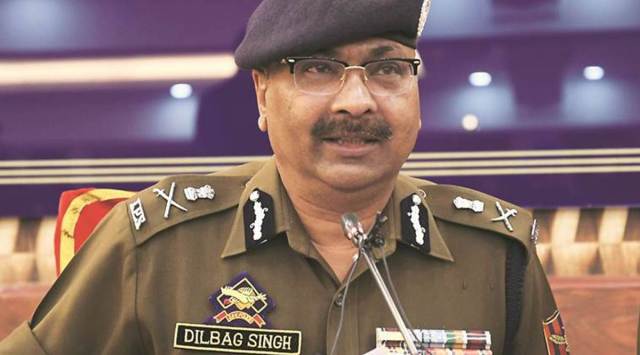 Jammu and Kashmir Director General of Police Dilbag Singh. (File)
Highlighting a “strategic shift” in Jammu and Kashmir, J&K Police DGP Dilbag Singh said that a “faceless militancy”, in which militants have no past record, is now the biggest security challenge in the Valley.
With August 5 marking three years since the revocation of special status to J&K, Singh told The Indian Express that the new modus operandi of militants’ handlers is “they immediately ask them (recruits) to commit an act of terror violence — throw a grenade, fire at somebody or kill someone”.
“Once they are involved, it becomes a way of preventing their return to society,” he said.
Singh attributed this shift to the senior militant leadership having been neutralised and not available for planning, identifying targets and executing attacks. The militant outfits “have started reviving old connections”, said Singh, who has been DGP of J&K Police since October 2018.
The top police officer also underscored that in most of the recent killings in J&K, especially through targeted attacks on the migrant population and police personnel, the suspect has no past history — and is mostly “only a social media sort of follower, looking at some propaganda, being motivated by these things on the Internet”.
The challenge in such cases, he said, was that “you cannot check their identities against any database”.
According to police records, at least 80 individuals were identified as new recruits this year of whom 60 per cent have been eliminated.
“What have they achieved in the process? Other than their own death and the grief they have brought to their families. Therefore, that is the only worrying factor… social institutions, families, religious and political leaders — it is their responsibility to advise young people not to get swayed by such machinations or Pakistani media propaganda,” Singh said.
Since January 2019, at least 690 militants have been killed across J&K. During the same period, records show, 149 security personnel and 57 J&K Police personnel lost their lives. At present, police records list at least 129 active militants in the region.
The DGP also expressed concern over the lower age of militant recruits. “Recruitment is being seen among school dropouts….sometimes in their teens. It has shifted to a younger demographic. Earlier, they would be 25 or 27 or 30. Now it is 16 or 17 even. This is unfortunate,” he said.
Singh also said that the decision not to return the bodies of militants killed in encounters to their families, thereby preventing large funerals, has been “effective” in checking recruitment. He said that “social media alone is a big factor” in the current phase of militancy in the valley.
“Earlier a young terrorist would become an iconic figure in his area. People would follow and try to emulate him. There is hardly any leader of that kind or vintage today,” Singh said adding that at least 29 militant commanders from various terror organisations were killed in the Valley this year.

 3 min read