

Journalism of Courage

Genres often complicate the experience of music. If you believe in labels,you will find them abundantly in the musical context. They could cripple you into definite moulds,or inspire you to experiment. ‘Sufi’ is one word that has borne some abuse of late. Bollywood is said to have embraced it in its search for foolproof hit-formulae,and the Indian version of Coke Studio has faced flak for its ill-thought versions. ‘Sufi Rock’ is an accepted genre that is tossed around liberally to define certain fusion outfits. This raises the question as to what is Sufi,and does it survive in its original form anymore?
When Pakistani band Junoon released their seminal song Sayyoni in 1997,they brought the images of swirling dervishes and spiritual poetry into the pop/rock realm. The integration of Sufi poetry (poems by Rumi,Hafez,Faiz Ahmed Faiz,and more),and the modern sounds of guitars and drums was quickly tagged as ‘Sufi Rock’. Since then,many Pakistani and Indian bands have tried to replicate and redefine the sound. The very word was invented by some media folks as a shorthand to comprehend and repackage the vaguely Islamic/Devotional music by Abida Parveen and Nusrat Fateh Ali Khan,and so on,that suddenly burst forth in the early 1990s due to the media explosion. A new category was swiftly created,and along with it,the chain reaction that creating categories entails. It created boxes that had to be filled and sold. Musicians started filling those boxes almost on suggestion,press stamped/certified them and the marketing machine proceeded to sell it, singer Rabbi Shergill explains the trajectory.


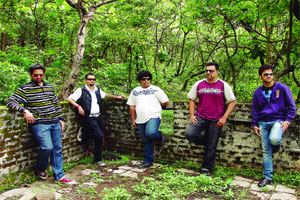
For bands like Highway 61 and Chakra,a band which tags its music as “sufi-rock,Hindi rock and Western progressive fusion”,the genre holds importance not for its purist meaning,but for the sentiment Sufism stands for. There are different ways to express Sufism; expressing ourselves,what we go through in our everyday lives,exploring the purpose of life that is what Sufism stands for. It’s like thinking that the band which improvises with a sitar,guitar and tabla is a fusion band. Fusion needs to follow a structure. Similarly,we as a sufi rock band may not play the pure sufi form,but we have converted it into rock,at the same time staying close to its ideas, says Chakra drummer-percussionist,Salil Gupte.
Traditionalists can debate ad nauseum about the significance of mixing two forms of music. But fusion is inescapable in times like these when music is viewed as a means to freedom from strictures and rules. “I,as an artist have not found categories to be helpful,” argues Shergill. “But they have their uses for music screeners when applied professionally and accurately. As for very many current categorisations and this one (sufi rock) in particular – it’s just amateurish music journalism.”


