Journalism of Courage
 3 min read


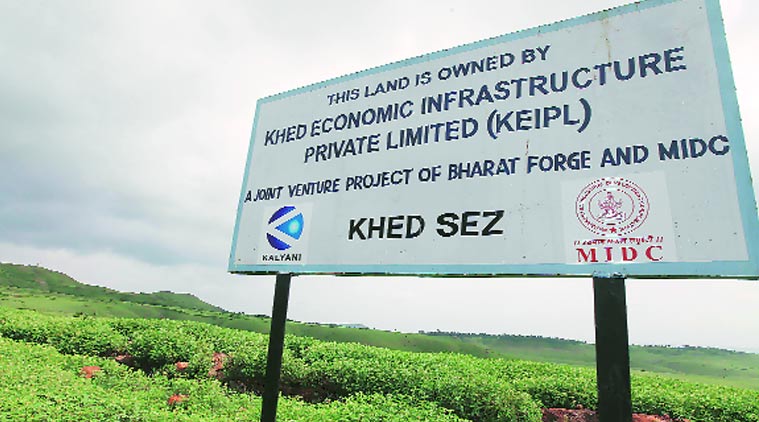 Of the over 4 lakh jobs promised in the 19 operational SEZs in the state to date, only 34,999 jobs were created, which means a shortfall of over 93 per cent.
As the controversy over land acquisition for business continues to rage unabated, reports show that many of the Special Economic Zones (SEZs) in the state have failed to meet their primary objective of job creation, according to an audit report by Comptroller and Auditor General (CAG).
Of the over 4 lakh jobs promised in the 19 operational SEZs in the state to date, only 34,999 jobs were created, which means a shortfall of over 93 per cent.
Of the 19 operational SEZs in the state, Pune district has the lion’s share of eight. Phases I-III of Hinjewadi, the SEZ in Magarpatta, EON Kharadi are some of the operational SEZs in the Pune city.
[related-post]
Maharashtra has the highest number (118) of approved SEZs in the country. Pune district has 23 approved SEZs. Of the 118 approved SEZs in the state, 65 were notified, of which 19 are functional.
After conducting a special performance audit of SEZs across the the country last year, the CAG noted that the shortfall was against the primary assumption that that SEZs would see job generation due to more industrial activity. Also, the SEZs tended to come up near the existing industrialised districts, belying the assumption that these would act as new avenues of employment generations, the audit report says.
Besides failing in employment generation, SEZs have also fallen woefully short of their export targets. It was estimated that SEZs in the state would result in exports to the tune of Rs 55,134 crore, but the actual exports revenue generated from the SEZs was just Rs 13,865 crore.
While the SEZs were supposed to be major boosters for the growth of manufacturing industry, only IT and ITES industry has grown in the SEZs in the state.
In many instances, land acquired for SEZ in the state was diverted to other purposes. Maharashtra has been named as one of the six states where substantial portion of SEZ land has been diverted for commercial purposes. “Many tracts of these land were acquired invoking the public purpose clause. Thus, land acquired was not serving the SEZ Act,” the CAG had noted.
According to Anant Sardeshmukh, director general of the Mahratta Chamber of Commerce Industries and Agriculture (MCCIA), the failure of the SEZs to act as drivers for job generation was due to the industrial slowdown coupled with the government’s failure to clear up the bottlenecks in the tax administration. “The launch of SEZs coincided with the global and local slowdown. So, job generation and exports also naturally slowed down,” he says.
Sardeshmukh says that in Maharashtra, the state government had failed to come up with a state-specific SEZ policy. Also, the decision to withdraw tax holidays and imposition of Minimum Alternate Tax (MAT) had led to failure of SEZ as a model, he says.