

Journalism of Courage

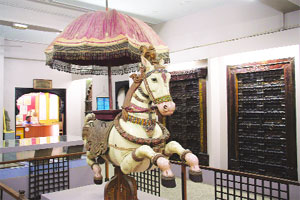
Barring a few popular names,museums in the city
find few takers and remain in forgotten corners


A similar thought is mirrored by Ramesh Raghatnan,cultural officer at the Tribal Cultural Museum situated on Queens Road,Camp. The museum is currently in the initial stages of a renovation. “Our primary visitors are school students. They are interested in knowing and the school authorities also get them here often,” says Raghatnan,as he heads to the section of the museum where musical instruments of various tribes are on display. “Undoubtedly,there is a lot to learn here about tribal art and craft. We are planning to put sound systems here which will play the sound that these instruments produce. We are also planning a separate gallery where three-four artistes can sit every week and show live on how they make their instruments. We will add a sale counter too then.” Raghatnan is sure that the sale counter will ensure more footfall. “People like to come and buy stuff. In fact,there is more demand to buy these articrafts than to actually understand the story behind it.”
As one walks around the room,one can spot a Dhak,a rhythm instrument played by Warli shamans; a Mandari,which is made of clay; and a Hirobai Kingari,a string instrument played by the tribes of Thotis and Pardhan,among others on display.
Among the more popular hangouts are the Raja Dinkar Kelkar Museum at Shukrawar Peth and the Aga Khan Palace in Kalyani Nagar. “I walk into a museum in Pune and there is not much I understand, confesses Megha Sood,a student of Pune University,”I think there is not much in terms of the way these exhibits are explained. In places like Delhi and Mumbai and even Jaipur,there are sound guides which make the entire experience a memorable one. In this audio-visual age,with so many distractions mere handouts and brochures wont attract many.”


